Battle for Downforce: How Formula 1 Engineers Crack the 2026 Regulations
F1 NewsWednesday, 20 May 2026 at 05:53
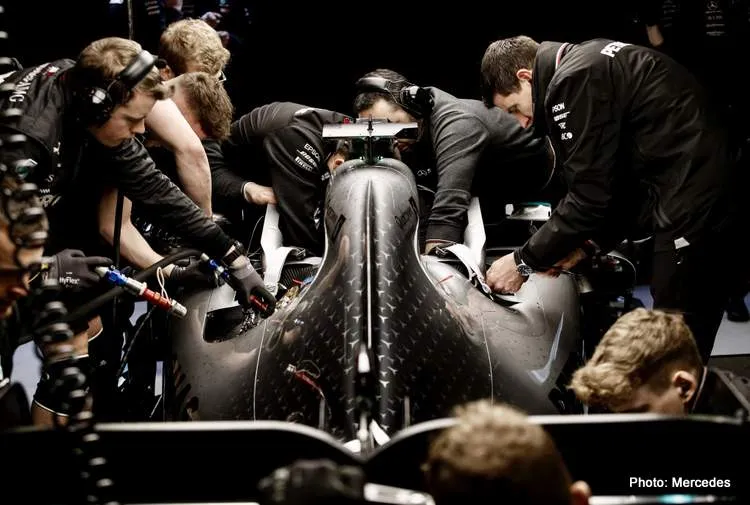
A new technical regulation always turns the paddock upside down, forcing the best engineering minds in the world to start designing from a clean sheet of paper.
This year,
the challenge has become the most serious in the last decade, as the chassis
concept changes cardinally. The cars are becoming narrower, shorter, and
significantly lighter, which completely reshapes the aerodynamic philosophy of
each team.
While designers spend sleepless nights in simulators and wind
tunnels, fans eagerly await the first confirmations of the speed indicators of
the new cars. During long pauses between sessions or while analyzing technical
reports, a great way to relieve tension is the Pinco Kazino
platform, which offers quality relaxation and light entertainment for fans of
speed and excitement. On the track, a real war of ideas is unfolding.
The Nimble Car Concept: A Return to Roots or a Technical Dead End
The main vector
set by the International Automobile Federation for this regulatory cycle has
received the official name Nimble Car. The organizers decided to get rid of the
bulky, heavy cars of past seasons, which were criticized for the inability to
perform close overtaking on street circuits. The wheels became narrower, and
the overall width of the car decreased by 10 centimeters.
Reducing the
dimensions automatically means a loss of basic downforce, which was previously
generated by a huge floor. Engineers are forced to look for hidden reserves in
the upper part of the fuselage and sidepods.
The behavior of the car on slow
sections of the track becomes more nervous. Pilots have to change their driving
style, as the reduced wheelbase makes the vehicle much more sensitive to sharp
steering wheel movements. This will add spectacle, but will complicate life for
drivers who are used to the stability of the platforms of past years.
Active Aero: A Headache and Dangerous Simulations
The most
controversial element of the new rules was the Active Aero system, which
features controllable elements on both the rear and front wings. The idea is to
reduce drag on straights to save hybrid power unit energy, and return the
maximum level of downforce before entering a corner.
During the first
digital tests, teams faced catastrophic instability in aerodynamic balance.
When the rear wing switched to low drag mode while the front wing remained
loaded, the car was simply spun around on the straight.
Designers had to
completely rewrite the wing synchronization algorithms. Now, the electronics
must work without the slightest delay, because any failure at a speed of over
300 kilometers per hour will lead to a serious accident.
The Strategy of Three Giants: Mercedes, Ferrari, and Red Bull Accept the Challenge
Each of the
paddock leaders chose their own way to solve the technical equation. The
availability of powerful financial resources and their own engine manufacturers
gives these three teams a huge advantage at the start of a new era.
The British base
where the Mercedes car is created made a bet on the maximum integration of the
new power unit with the chassis elements. The German engine manufacturer is
traditionally strong in creating efficient compressors, so the architecture of
their car looks very compact in the engine cover area. This allows optimizing
the airflows going to the rear of the car.
Scuderia Ferrari
went down the path of aggressive sidepod design. Maranello is trying to
compensate for regulatory restrictions through complex geometry of suspension
channels, directing the airflow under the wing at a special angle. Their car
demonstrates stable performance in the simulator during simulations of long
race stints.
The Red Bull team
is experiencing a unique moment, as they are preparing a car under their own
engine for the first time, created in cooperation with Ford. The loss of some
key engineers forced the team to rebuild the structure of the design bureau.
However, their aerodynamic department is still considered the best in the
paddock, and they found several gray areas in the rules regarding air
distribution around the front wheel arches.
When the
discussion of technical innovations and spy photos from tests fills all news
feeds, fans look for an opportunity to switch their attention to something less
analytical. The entertainment brand Pinco online becomes a great place to
relax, allowing you to get positive emotions without the need to calculate
millimeters of aerodynamic surfaces.
Comparative Characteristics of 2026 Chassis Concepts
For clarity, let
us look at the specific changes in car parameters introduced by the new F1
regulations compared to the previous generation of technology.
| Chassis Parameter | Previous Generation (until 2025) | New Regulations (2026) | Impact on Car Behavior |
| Wheelbase (max) | 3600 mm | 3400 mm | Higher maneuverability in slow corners |
| Overall width | 2000 mm | 1900 mm | Reduction of aerodynamic drag |
| Minimum weight | 798 kg | 768 kg | Faster acceleration, higher requirements for material strength |
| Movable wing elements | Only DRS (rear wing) | Active Aero (front and rear wings) | Constant change of aerodynamic balance |
These figures
clearly show why designers call the current work a radical restructuring. It is
necessary to make the car much lighter while simultaneously installing
additional hydraulic or electric actuators on it to control the movable wings.
Logistics Challenges and a Tight Race Calendar
In addition to
purely technical tasks, teams are forced to consider the logistics factor. The
modern F1 schedule includes 24 stages, which requires incredible endurance from
the staff. There is almost no time left for refining the car at the base
between races, so the first basic decisions laid down in the construction in
winter will determine the fate of the entire championship.
Stages of Car Upgrading Under Budget Cap Restrictions
In conditions of
a strict financial limit, teams develop a clear update plan so as not to waste
money on ineffective parts:
- Creation of a basic chassis specification with maximum safety margin to pass the mandatory crash tests of the International Automobile Federation.
- Conducting the first series of real tests to verify compliance of wind tunnel data with real performance on asphalt.
- Releasing the first major update package for the front wing after the first three away stages of the season.
- Modification of the floor configuration during the transition to the European part of the championship, where tracks require higher stability.
The Future of Royal Racing
The new rules
always give a chance to teams from the middle of the standings to make a leap
forward. The presence of restrictions on work in the wind tunnel for the
leaders allows the catchers to spend more time researching new concepts. This
can completely mix up the usual hierarchy of the paddock.
Large automakers
have invested hundreds of millions in the development of new sustainable fuels
and powerful electrical systems. Success on the track now depends on how
efficiently the chassis can interact with the power units at moments of peak
loads. Spectators will get a unique season, where each Grand Prix will bring
technical surprises and unexpected results.
After the end of
the Sunday race, when the roar of engines subsides and experts begin to write
their first columns, the time for a calm evening rest comes for the fans. A
reliable gaming platform Pinco offers quality entertainment content that helps
to end the weekend on a positive note.
A long development marathon lies ahead,
and the first races will show which of the chief designers was best able to
tame the concept of moving aerodynamics, and who made a fatal mistake at the
design stage.

Latest News



Loading