The Death of Formula 1? What do female Generation Z fans really think about our sport?
F1 OpinionThursday, 14 May 2026 at 12:58
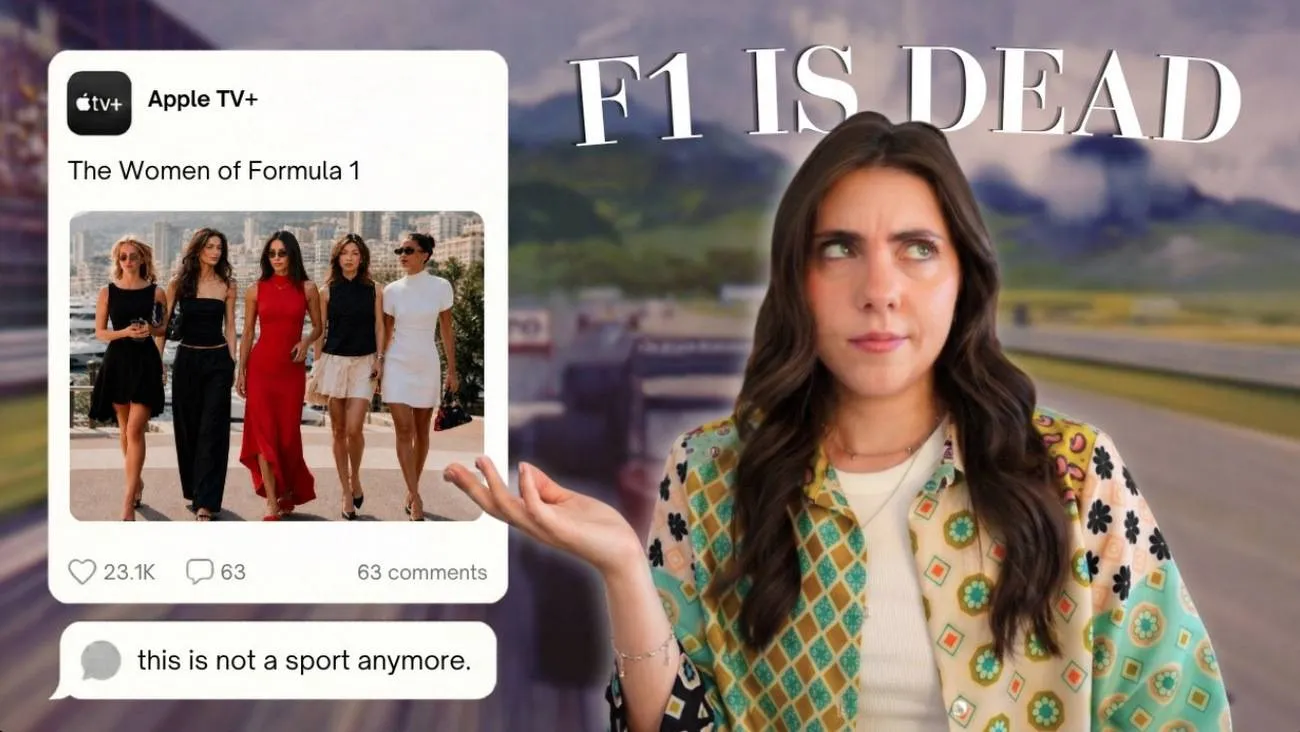
Generation Z voices to be taken seriously in Formula 1 tend to be rare; hence, a female vlogger sharing her thoughts on the sport is not only refreshing but also important to take seriously.
In a sport dominated by male pundits on the telly, on streams, in vlogs and podcasts, and for an independent website like ours, and as a Baby Boomer, it is like hitting an information jackpot to stumble upon someone like YouTuber Martina Rubino on her channel Martiboard providing her thoughts on Formula 1.
Piqued and somewhat amused by the title of her latest show, "The Death of F1? How Luxury Took Over the Sport", and impressed by Martina's obvious passion, knowledge, research and confidence as she delivered some truth bombs for Formula 1 to consider.
Below, find the full unedited transcript of her narrative, which can also be seen in the video embedded at the foot of this post. Also, if like me you are impressed, give her a follow, subscribe and share her content.
The Death of F1? How Luxury Took Over the Sport
Chapter 1: Apple’s F1 Post: The Controversy Explained
If Formula 1 has started to feel less like a sporting event and more like a luxury influencer event, the Apple Miami Grand Prix controversy explains exactly why. Because when Apple posted influencers and WAGs as the women of Formula 1, everyone said they misunderstood the sport. But personally, I think they understand modern Formula 1 better than most fans do because this was not a mistake. It was an accurate reflection of what Formula 1 has chosen to become.
Everyone, welcome back to my channel. My name is Martina. I'm an international relations graduate and today we are talking again about Formula 1, which I love. I've been a fan since I was little. Sunday was the day that I sat with my dad and either watched football, tennis, or Formula 1. But this sport, throughout this decade, has been changing so much that for some fans it does not even feel like a sport anymore, but more like another runway for celebrity influencers to show off.
And a good way to analyse that is to talk about the very recent Miami Grand Prix controversy that saw Apple at the centre. So if you missed the controversy, Apple, together with Lily, who is Alex Albon’s girlfriend and one of the partners of a Formula 1 driver at Williams, hosted an event during the Miami Grand Prix. After the event, they posted a picture on Instagram where the caption said: “The women of Formula 1.”
The only problem was that the picture they posted featured Formula 1 WAGs, so girlfriends or wives of the drivers, plus influencers. The majority of them probably never even watched one Grand Prix in their lives. There were no engineers, no mechanics, and no women from the driver academy. There were not any women who actually work in Formula 1.
And yes, after the backlash, there was also a talk and interview hosted by Apple with Susie Wolff, although it was probably already programmed beforehand. But by then, the controversy had already started and shifted because people were not just upset about the post itself. They were reacting to something they had been feeling for a while: that Formula 1 has become less about racing and more about spectacle and aesthetics.
And honestly, they are right. Formula 1 has always been glamorous. It has always been expensive, elite, and visually tied to wealth.
Chapter 2: From Sport to Spectacle: The Evolution of F1
But historically, the glamour was the atmosphere. It was not the main narrative. The product being sold was still the engineering, the danger, the rivalries, the technical excellence, and the mythology of the drivers.
As a matter of fact, before Liberty Media, Formula 1 was many things: elitist, inaccessible, sometimes frustrating, and traditional, but it was still primarily viewed as a sport.
Yes, women were still underrepresented, but in a different way. They were not hyper visible as part of the sport. They were mostly just ignored. Women in strategy, engineering, development, and mechanics did exist, but they received zero attention. That invisibility was its own problem.
But what we are seeing now is very different because now women are visible in Formula 1 more than ever, just not always the women who actually contribute to the sport. When Liberty Media acquired Formula 1, they understood something crucial.
Chapter 3: The Liberty Media F1 Branding Strategy
Motorsport alone limits your audience. Lifestyle sells bigger.
They did not just modernise Formula 1, they repositioned it. They transformed it from a racing championship into an aspirational cultural product. That is why we have Drive to Survive, celebrity integration, American expansion, luxury fashion partnerships, and VIP content.
And this is where I think people misunderstood the WAG conversation. Drivers’ girlfriends and influencers are not accidentally becoming central figures in Formula 1. They are useful for the brand because modern Formula 1 is not only selling speed. It is selling fantasy, access, beauty, luxury, status, and exclusivity. The paddock is not just a workplace anymore. It is a stage.
And this is why the Apple post is so revealing because people treated it like Apple made an ignorant mistake, as if some intern just did not know who the women of Formula 1 are. But Apple understands branding better than almost any company in the world. They know how imagery communicates. They know framing matters.
Chapter 4: Why the Apple F1 Post Wasn’t a Mistake
So when they chose to caption that post “The women of Formula 1” while showing mostly glamorous, photogenic, social media marketable women, that was not confusion. That was branding alignment.
Apple reflected the version of Formula 1 that is most legible to mainstream luxury culture. And Formula 1 let that happen because their representation is consistent with the image that the sport now projects.
The uncomfortable truth is Apple did not misrepresent Formula 1. They mirrored its current brand identity. And I think that realisation is what made people most uncomfortable because it forced fans, me included, to confront something they might not want to admit: Formula 1 itself is encouraging this shift.
So maybe the better question to ask is not why WAGs are getting so much attention, but why Formula 1 benefits from giving them so much attention. Because once you ask yourself that question, the whole thing starts making much more sense.
And what makes this so frustrating is that there are genuinely incredible women in Formula 1.
Chapter 5: Aesthetic vs. Competence: Women in Motorsports
There are women leading initiatives to change the future of motorsport. Women working race weekends in elite technical roles, fighting for representation. Women building careers in one of the most competitive male dominated industries in sport.
There is Susie Wolff. There is the Formula 1 Academy. There are engineers, mechanics, strategists, and team personnel whose work directly shapes race outcomes every single weekend. And yet their stories are often secondary in the media ecosystem.
Because competence is not as visually consumable as glamour. Because expertise is not as algorithmically seductive as aesthetics. Because a woman discussing aerodynamics in team uniform does not generate the same engagement as luxury paddock outfit carousels. That is not fair. But it is commercially true.
And this is the real issue. Not that glamorous women exist in Formula 1, not the fact that they exist, but that they are often amplified rather than presented alongside the women who actually work in the sport.
To be clear, this is not about blaming the WAGs. They are not doing anything wrong. They are participating in an ecosystem exactly as it currently rewards them for doing.
Chapter 6: The Future of F1: Luxury Lifestyle or Sport?
The problem is structural. Formula 1 is now selling two parallel narratives. One is sport, engineering, competition, and performance. The other is spectacle, aesthetics, luxury, lifestyle, and fantasy.
And right now, the second narrative is often louder than the first one.
So no, the Apple post was not just an unfortunate mistake. It was a perfect case study of how Formula 1 now chooses to represent itself.
And as a fan, you can absolutely enjoy both sides. I do. I enjoy the luxury and I enjoy the proper core of the sport: the racing.
But you have to recognise that Formula 1 is now selling two completely different products at the same time. And that also works because it attracts more mainstream fans, which brings in more money, which is the whole point, of course, if that was not already clear.
But I am curious. Do you think Formula 1’s rebrand has gone a little too far, or do you think this evolution was needed? Let me know below because I think both things can exist at the same time.
I do think, however, that we need to give far more visibility to the women who actually work in Formula 1, and that is the truth.
Editor's Note: Any Generation Z Formula 1 fan wishing to debunk Martina's report above, contact us. Meanwhile to Martina and her Martiboard team, keep up the good work. We have you bookmarked and hope to hear a lot more from you in the future.


Latest News


Loading