Beating the Formula 1 regulations must be at least twenty per cent of achieving track success, with avoiding being discovered another ten.
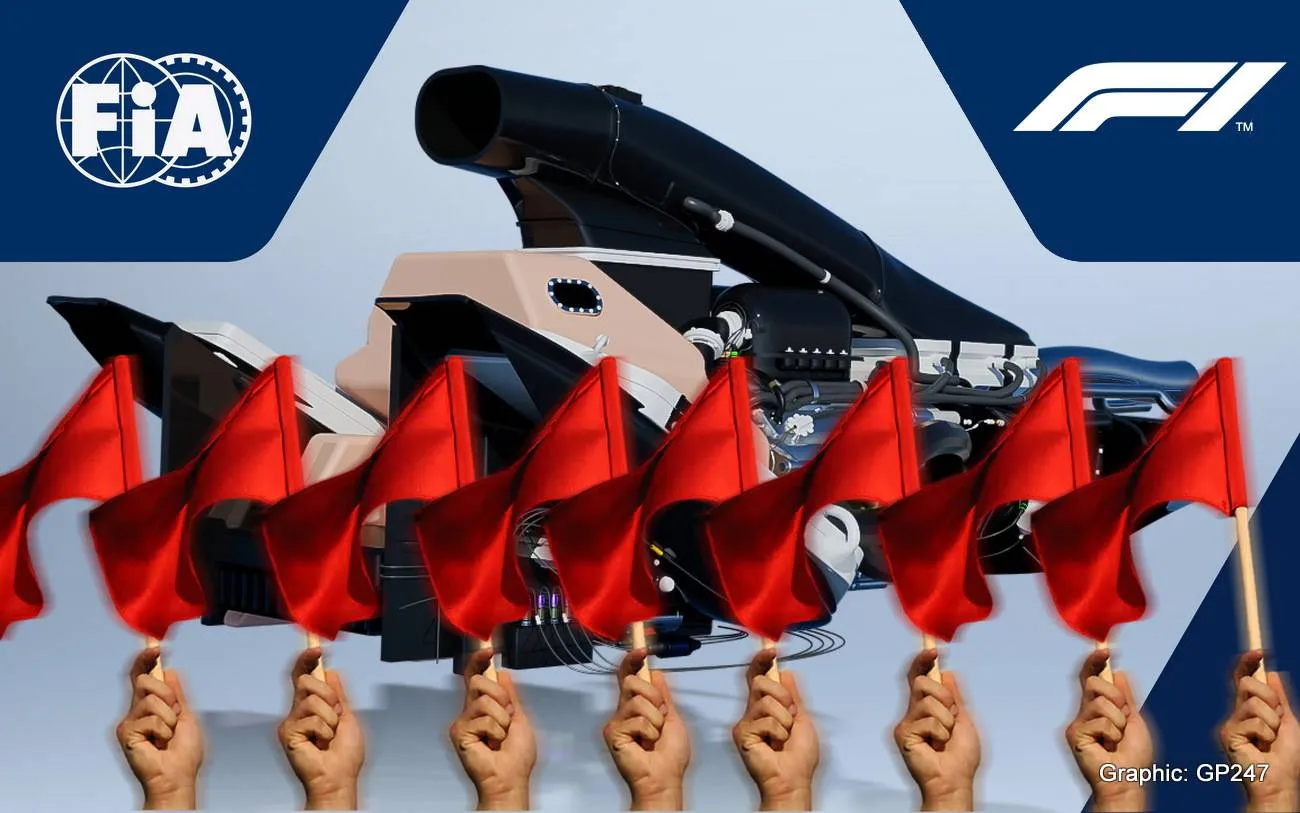
As Formula 1 cars become ever more reliant on sensors, data, and algorithms, is there not a danger that these will create greater opportunities for cheating and manipulation?
Option 13
This kind of shenanigans is not new to the sport. Teams have historically hidden prohibited systems, such as launch control, deep within complex software menus that required a specific sequence of buttons to activate, making it nearly impossible for the FIA to find during static inspections.
Back in 1994 Benneton managed to do this successfully up until the San Marino Grand Prix when the FIA caught up with them. Fortunately for ‘Flavio Briatore and Co’, the argument that it was a ‘mothballed’ remnant from the 1993 car, and that the FIA could not prove they used or were using it, meant they were not disqualified.
Sensory deprivation

Another famous known breach was in 2019. Ferrari were suspected of bypassing the fuel flow sensor by delivering fuel in "pulses". Because the sensor sampled data only at specific intervals, Ferrari allegedly increased fuel flow between those samples, achieving massive straight-line speed without the FIA's software detecting a breach.
Throughout the sport
This kind of software rule-bending isn’t even restricted to F1. I remember a team in Formula Opel Lotus (the Formula 4 of its day) got rumbled, back in the early 90s.
At the time, engine ECU chips were checked after qualifying and after races. On one occasion, after the process was completed, the scrutineer told their young mechanic to drive off, which he duly did, unaware that the wily official still had the chip in his hands! The car was promptly recalled. It turned out there was a second ECU under the driver’s seat…
Tweaking teammate results

Gerhard Berger claimed that Ferrari favored Nigel Mansell during his stint with the Maranello squad, suggesting that he got better fuel, development engines, etc.
He wouldn’t be the first driver to complain or be a victim of such blatant favoritism. However, with the increased reliance on software, disguising performance preferences between teammates arguably offers a more subtle option; especially when we’re looking at tenths between them.
Mental game
It’s not even something that needs to be repeated across the whole season. It’s easy to undermine a driver’s confidence when having dominated over a few races, suddenly and for no apparent reason, they go off the boil. The loss of form normally leads the driver to try harder in order to make up for it, an approach that generally results in diminishing returns.
In control, but…

The FIA operates some highly efficient systems these days, with the cars full of their own sensors. But the battle between teams and the officials is a never-ending story.
However, imagine if a team were able to influence things remotely from the pits, maybe even modify a competitor’s software!
There is no suggestion that this has happened, but the more complicated the cars become, the more backdoors are created. With AI and the future power of quantum computing, all things become possible.
As F1's powers that be discuss ways to adjust the current set of regulations, maybe they should also consider these potential issues. Sometimes it’s better to keep things simple and let the cigar remain just a cigar.
Latest News
Loading