Outside Line: Who will tell Lewis Hamilton that his time is up with Ferrari and Formula 1?
F1 OpinionTuesday, 12 May 2026 at 20:50
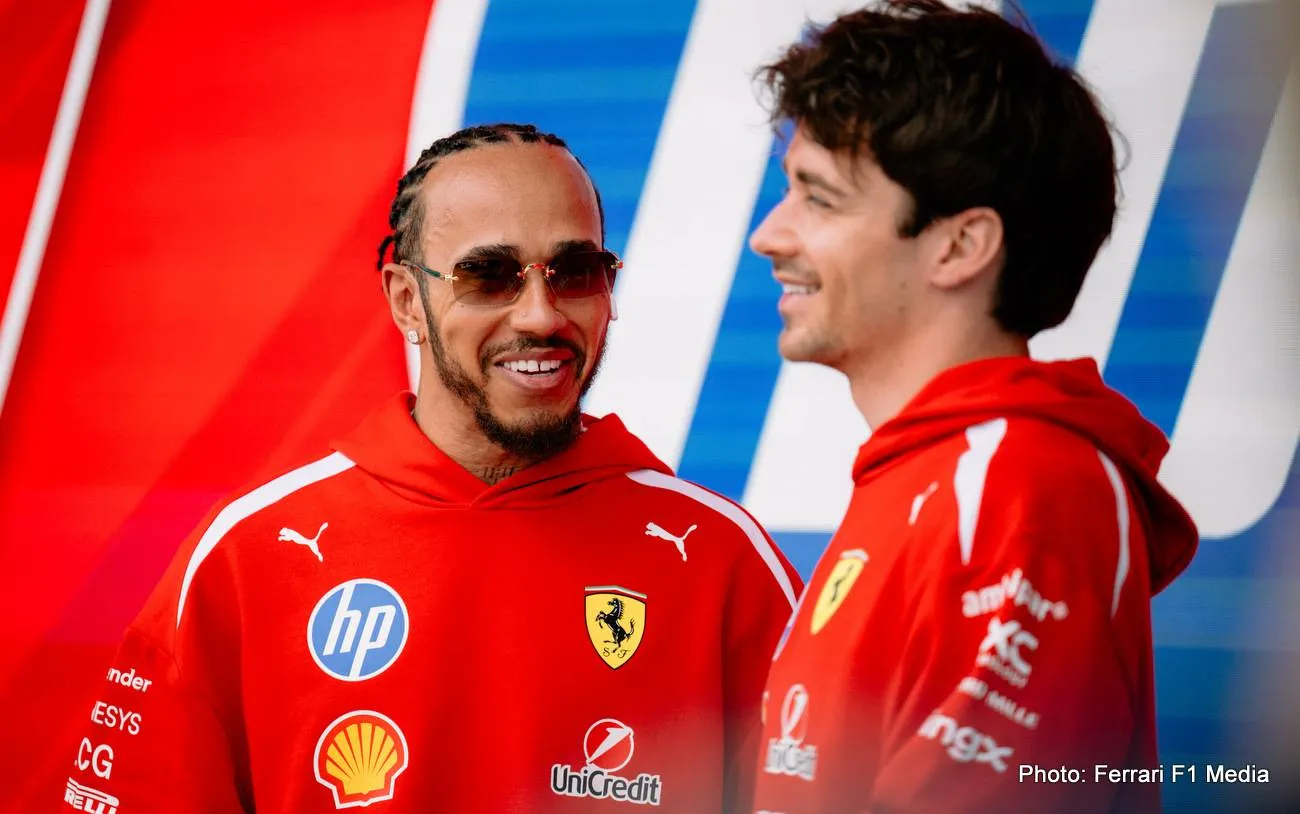
Lewis Hamilton's predicament at Ferrari is well documented. In a nutshell, his eighth Formula 1 title fairytale can only happen if he beats teammate Charles Leclerc, regularly.
And, as it seems increasingly unlikely this will happen as Leclerc has basically 'owned' Hamilton since they started sharing a Red garage. Prompting the question: Who tells Sir Lewis enough is enough?
For me, it is sad to see the demise of such a great driver in this way. It saddened me and even disturbed me in the same way Michael Schumacher's career ended in a disappointing flurry of years when he returned to Mercedes for his swan song.
Ditto Kimi Räikkönen. Sebastian Vettel. They overstayed their welcome, drivers loved by many, but eventually, when they departed Formula 1, with all due respect, it was good riddance to the sadness.
The common reason is that during their respective eras as the greatest drivers in the world, which the trio all were at some point in their careers, Formula 1 was built for them. The narrative was about who could beat Michael, who could beat Lewis, or Sebastian and, to a lesser extent, Kimi. In their heydays.
But they all became victims of staying too long in a sport that changed vastly from when they first entered to when they eventually departed. Notably, all four were adverse to sims. That's telling, as that is a crucial element of the modern Formula 1 driver's area of expertise.
Over the past decade and a half, the sport has gone on a totally different trajectory than anyone could have imagined, not only in terms of size, but also in terms of where the technology has taken us today.
The harsh reality for Hamilton and Formula 1 drivers over 30

Therein lies the problem for Hamilton. As Jad Mallak so aptly put it while we were discussing the saga of the seven-time F1 world champion's future: "He's an analogue guy in a Formula 1 world that has gone digital."
Over the past few years, there have been several shifts in the reporting narrative regarding Hamilton's career, which can be traced back to him departing Mercedes after two decades of spearheading the brand.
Until he arrived at Ferrari, he had only driven Mercedes-powered cars in the top flight. And of course, that move in early 2025 was an essential chapter in the history of the sport: Formula 1's greatest driver racing for Formula 1's greatest team.
It was an irresistible and inevitable fairy tale, and everybody trumpeted it across the entire media spectrum. Undeniably, it boosted incredible interest, because that's what Hamilton was, the GOAT of his era. And, it has to be said, most Formula 1 greats passed through or ended up at Maranello.
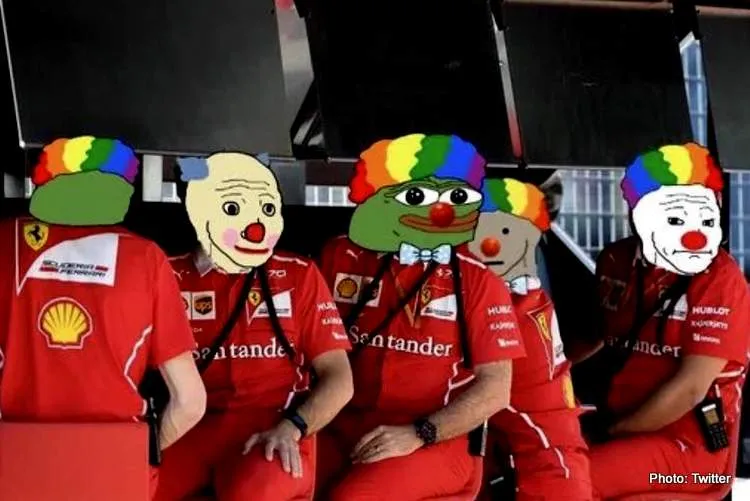
Off track it was a beautiful story; on track it was bleak. Hamilton struggled with his all-new surroundings, team operations, communication, you name it and a false dawn. Winning the Chinese Grand Prix Sprint Race last year was as good as it got for Sir Lewis.
Records show that since 41-year-old Hamilton and 28-year-old Charles Leclerc became teammates, the Monegasque driver has beaten the Briton 20 to 5 in races. In qualifying, the score is 22 to 6 in favour of the younger driver.
The iPad generation taking over Formula 1

Hamilton's era of relentless dominance has passed. Leclerc is very good, but the new GOAT on the block is Max Verstappen. He is the benchmark.
One could also argue that the benchmark of the next era has already emerged in the form of the prodigious 19-year-old Kimi Antonelli, who ironically (and poetically) replaced Lewis Hamilton at Mercedes.
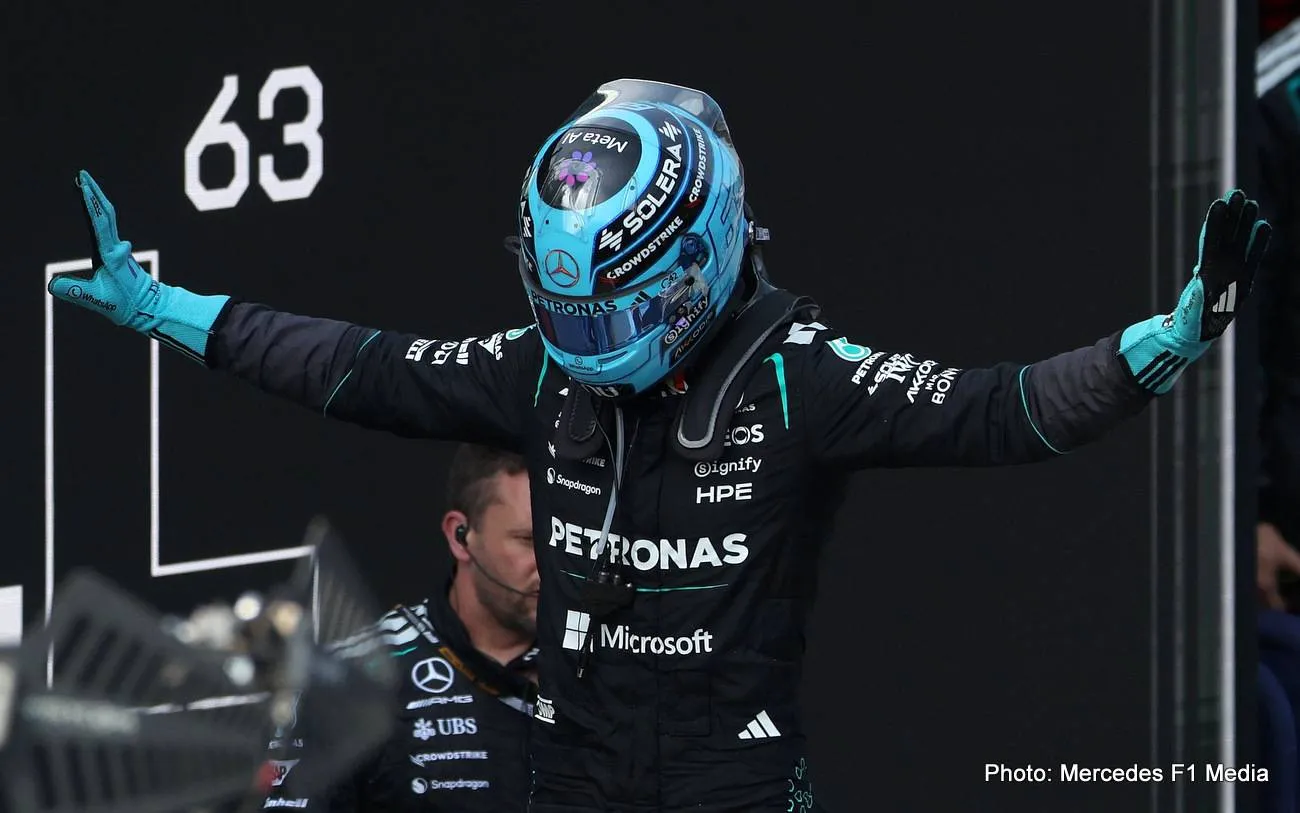
Antonelli, being of the iPad generation, has taken to these awkward and highly complex new era Formula 1 cars like a duck to water. He's won three races in a row. He's the youngest guy on the grid, which tells you something stark for all of the old guys.
As mentioned, maybe for drivers over 30 in Formula 1, their days are numbered. Maybe a thing of the past soon because we have too many good young drivers, well developed and in touch with today's technology, modern gizmos, and all the reflexes and nuances required to drive increasingly computerised cars.
It is something the old brigade can never catch up with. It's not how they evolved or grew up as human beings. It's not the way they were brought up. Not the way the new kids on the block are wired. Anyone over 30 is analogue; younger than that is digital!
Now, in three races, the youngest of them all, Antonelli, has delivered three victories. Why is that? And if you consider that Hamilton last won in 2024. Why is that? Let me suggest that the writing has probably been on the wall since then. Afterall Russell beat him that year, and look who has owned George three races in a row...
As much as we love Lewis...

Until Hamilton starts beating Leclerc on a regular basis - much like Verstappen does to his teammates, or how Ferrari's protégé (and next in line for a drive with the fabled team) Ollie Bearman, is doing to Esteban Ocon - we cannot escape the feeling that maybe he has overstayed his welcome, like Michael, Seb, and Kimi before him.
It has not only been difficult for Hamilton himself, but also painful for all those who admire him and have been so entertained by him. A fan like I am. Last year, there was desperation when he called himself "useless", with it making his problems and self-doubt very public. It was the heart-on-sleeve kind of revelation that would have delighted his rivals.
Most of all, Leclerc who is clearly getting under his teammate's skin. And let's be honest, he still is the fly in the ointment of the Hamilton-Ferrari fairytale and the pursuit of that increasingly elusive eighth F1 title, which a few years ago seemed a foregone conclusion. Not so anymore.
Leclerc remains the benchmark for Lewis to beat this year. Until he does that with regularity, we cannot stop thinking that maybe Bearman should be the guy Ferrari fast-tracks into that position. It would save them a tonne of money. It would anchor their future around a very talented young driver. It would also give them an option should Leclerc want to leave.
But the question is: Who's going to tell Lewis Hamilton when it's time to go?
Latest News

Loading