Outside Line: Sad destruction of Renault from Formula 1 powerhouse to a handbag branding exercise
F1 OpinionThursday, 28 May 2026 at 07:30
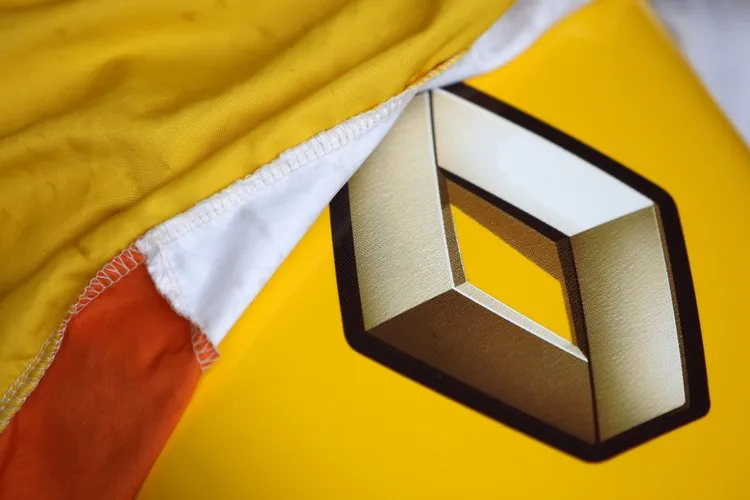
The legendary Renault Formula 1 team as we knew is all but dead. Yes, Alpine still rolls onto the grid draped in French colours, pretending to represent some continuation of its parent company's racing legacy but next year will see the final nail hammered into a slow closing coffin.
Make no mistake, the soul of Renault in Formula 1 was ripped out the moment the company decided to stop building its own engines and bolt Mercedes power units into the back of its cars. More so as they are to become Gucci Racing as of next year.
Renault becomes Gucci Racing powered by Mercedes. Read that again slowly because even now it sounds absurd.
It is the equivalent of Ferrari turning up powered by Honda and renaming themselves Dolce & Gabbana. Or Mercedes asking Renault for engines and naming themselves Hugo Boss Racing. For generations of F1 racing fans this is humiliation disguised as strategy.
A once-mighty manufacturer that pioneered turbo technology, conquered Le Mans, won many F1 World Championships and powered some of the greatest drivers in Formula 1 history is reduced to a Mercedes customer team, a branding exercise with the handbag people!
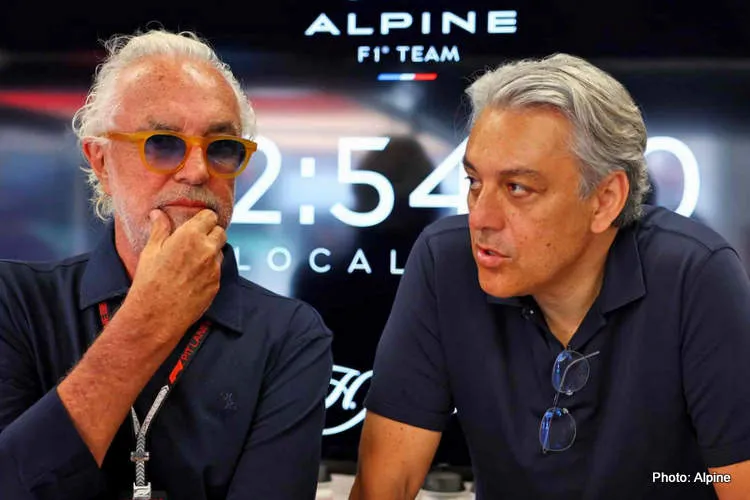
Blame it all on Luca de Meo, who came to Renault, saw what he saw, destroyed its formula legacy single-handedly and wanted people to believe this made sense. At the time it didn't and still hasn't. De Meo proved his heart was never in it, resigning from Renault last year. Meanwhile, Alpine became a 'WTF do we do with this project?'
But the damage was done. Good riddance to De Meo. Not really, he is back for more as he pops up as Dering CEO, who own Gucci! Hence Gucci Racing.
This after as Renault CEO, he spent his time dismantling one of Formula 1’s great institutions piece by piece. Also he also did the sport no favours bringing back disgraced F1 cheat Flavio Briatore, out of deserved exile from the sport, to do his dirty work.
Renault changed Formula 1 forever

Meanwhile the Renault racing operation collapsed into dysfunction. The tragedy is that the French were not just another of many manufacturers that came and went during over the course of Formula 1 history. Renault had changed Formula 1 forever.
Back in the seventies, the French manufacturer arrived as innovators. Pioneers. Outsiders willing to challenge convention while the rest of the paddock laughed. Turbocharging was considered madness. Heavy. Complicated. Unreliable. Dangerous even. The established Formula 1 world mocked Renault relentlessly in those early years. How things changed!
It's important to retrace the proud Renault legacy that truly began with Amédée Gordini, the engineering genius recruited to create high-performance Renault machinery. Viry Châtillon became the beating heart of the operation after its inauguration in 1969. That facility would go on to become one of the most important engine centres in motorsport history.
The first major project was a new 2-litre V6 engine launched in 1973. Success in sportscar racing followed quickly before Renault shifted focus toward the FIA World Sportscar Championship with turbocharged power.
Then came the moment that altered Formula 1 forever. Renault Sport was officially founded in 1976, and alongside its single-seater ambitions came a radical idea nobody else had the courage to pursue seriously: turbocharged Formula 1 engines.
At the time the regulations allowed turbo engines, but nobody believed they were viable. Nobody except Renault.
Silverstone 1977: a humble beginning

Quietly the French engineers developed a 1.5-litre turbocharged V6. They tested in secrecy. They experimented obsessively. They endured failures that would have caused most manufacturers to quit before even arriving at a Grand Prix.
The Renault RS01 made its debut at the British Grand Prix driven by Jean Pierre Jabouille. Formula 1’s first turbocharged car arrived in bright yellow and instantly became one of the most fascinating machines the sport had ever seen. It also exploded regularly.
The paddock mocked the car mercilessly. The nickname “Yellow Teapot” emerged because the Renault frequently retired trailing clouds of smoke. Rivals laughed at the French lunatics trying to reinvent Formula 1 with overheating turbochargers and impossible lag.
But Renault kept going. Bernard Dudot and his young group of engineers at Viry-Châtillon understood what others could not yet see. They were not building for the present. They were building the future.
Dudot later recalled, "We were a group of young engineers at Viry-Châtillon, all very enthusiastic but having a rare understanding of the future.”
That vision changed Formula 1 permanently. The challenges were immense. Turbo-lag was savage. Drivers had to rethink completely how to drive a racing car. Heat management was a nightmare. Packaging the engine inside a competitive chassis proved incredibly difficult.
Drivers had to totally change their driving style

Renault engineeer Jean Pierre Menrath recalled: “The most recurrent problem we had was to do with lag. The drivers had to totally change their driving style.”
The engineers fought constantly against heat, reliability and drivability. Yet despite the failures, the speed was obvious. Renault kept taking poles. Fastest laps. Moments of brilliance. The potential terrified rivals.
Then in 1979 the breakthrough arrived. A twin-turbo setup introduced at Monaco helped solve much of the lag problem, and at Dijon, on home soil, Jabouille delivered Renault’s first Formula 1 victory from pole position. That win changed the sport.
Suddenly Formula 1 stopped laughing. Suddenly every major manufacturer realised Renault had cracked the code. Turbocharging was not stupidity. It was the future.
Menrath later reflected: “People started looking at us differently when we won our first race, the French Grand Prix. Suddenly the turbo-powered cars posed a real threat.”
Within a few years the entire grid followed Renault down the turbo route. That is Renault’s true Formula 1 legacy. They were not followers. They were revolutionaries. They dragged Formula 1 into a new era while everyone else resisted change. And the progress was staggering.
Renault power outputs exploded from around 530bhp in 1979 to well over 1000bhp within five years. By the mid-eighties the French engineers were producing qualifying engines approaching 1200 bhp. Absolute monsters.
Then came Alain Prost, and after him, Ayrton Senna

By 1981 Renault had transformed into a genuine title contender, and Prost nearly delivered the championship in 1983. The turbo era demanded precision, anticipation and bravery unlike anything modern Formula 1 drivers experience today.
Prost explained it perfectly: “You had to find the right moment to accelerate and anticipate when the power would come through.”
Turbo Formula 1 was violent. Brutal. Unpredictable. Renault created that era. Meanwhile, other teams rushed to copy them. Lotus joined Renault as an engine customer in 1983. Ligier and Tyrrell followed. Then came Ayrton Senna.
At Estoril in 1985, Senna took his first Grand Prix victory powered by Renault. By then Renault engines had become the benchmark. In 1986 every single Formula 1 team used turbocharged engines. Every one of them. Because Renault forced the entire sport to evolve.
Eventually the FIA killed the first turbo era because the power levels had become absurd. But Renault’s influence never disappeared. They adapted again. They returned again. They won again.
Fernando Alonso delivered Renault two F1 drivers’ titles and two constructors’ crowns in 2005 and 2006. As an engine supplier, Renault powered teams and drivers to 23 World Championships.
Twenty-three. That is not a small manufacturer. That is not a marketing exercise. That is one of Formula 1’s greatest engine legacies. Which is exactly why the current situation feels so grotesque.
From a legendary Formula 1 team to a handbag pimp

The Alpine experiment has been an embarrassing disaster from the beginning. Identity crisis after identity crisis. Management chaos. Political infighting. Empty slogans. Endless executive reshuffles. Fashion collaborations. Celebrity branding. Expensive nonsense.
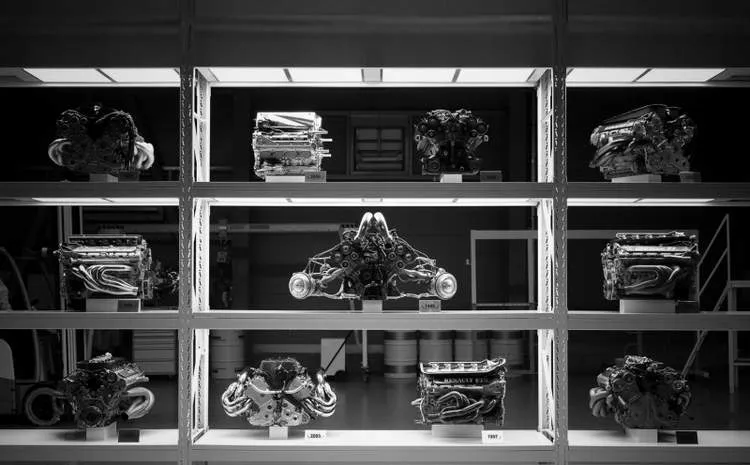
Beneath all of it the actual Renault Formula 1 project was slowly suffocated. The decision to kill Renault power unit production was the final betrayal. Viry-Châtillon, the birthplace of one of motorsport’s greatest engineering revolutions, reduced to irrelevance while Mercedes engines get bolted into a French chassis.
The company that once made Formula 1 bow before turbo power now buys engines from rivals because it no longer believes in itself. That is the real tragedy here.
Renault did not lose because Formula 1 defeated them. Renault lost because its own leadership stopped understanding what Renault once stood for. Innovation. Engineering bravery. French pride. Racing ambition. And passion.
Those values built the turbo revolution. Those values conquered Le Mans. Those values made Renault world champions. Those values mean nothing, as from 2027, they are reduced to Gucci Racing powered by Mercedes. Very sad. The sport is poorer since their demise.
Latest News
Loading