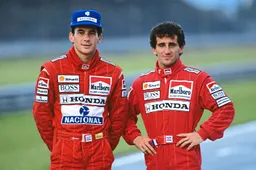
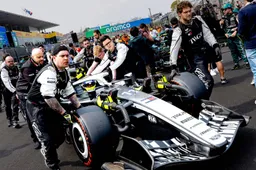
What's it really like to drive for a Formula 1 team with Adrian Newey leading the technical side?
F1 HistoryTuesday, 07 April 2026 at 07:30
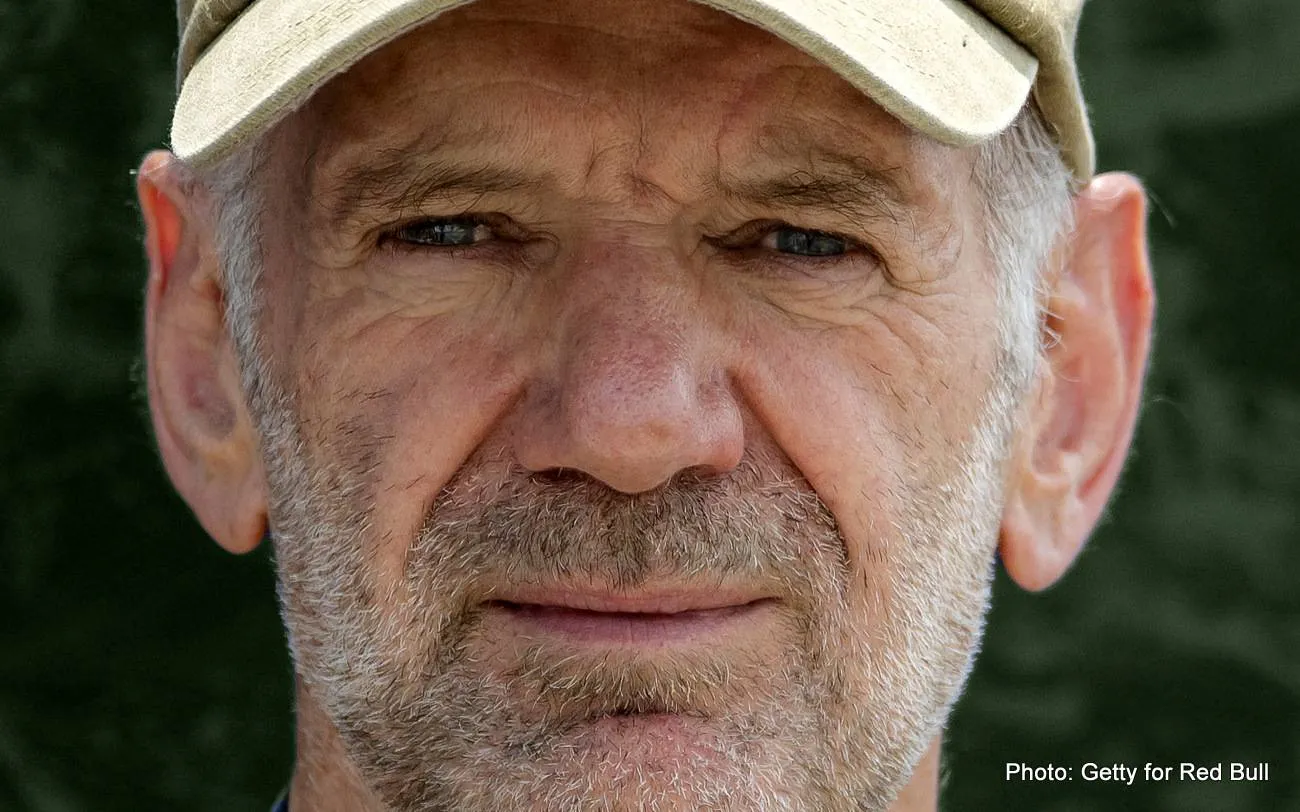
Damon Hill offered a revealing insight into working with Adrian Newey during their time together at Williams, describing a designer who constantly pushed beyond conventional limits in pursuit of performance.
Hill’s relationship with Newey began in the early 1990s when he joined Williams as a test driver, overlapping with Newey’s arrival at the team. That collaboration continued through Hill’s rise to a full time race seat and ultimately his 1996 Formula 1 World Championship, achieved in one of Newey’s most dominant designs.
Reflecting on those years, Hill made clear that Newey’s approach was never about playing safe: “I think he gets a kick out of if you said to Adrian, we’d be safe if we stayed within that circle. What happens when you go outside the circle?”
That mindset defined Newey’s early work at Williams, where he introduced radical aerodynamic thinking that moved Formula 1 away from simple box-shaped designs toward fully integrated airflow concepts.
Hill recalled how Newey’s obsession with detail extended to every aspect of the car, including the physical profile of the driver: “The trouble is, he’s too big from the waist up. In other words, he was taking into account the effect on the chassis of the guy’s physique as being sufficiently negative to offset whatever benefit he brought as a driver.”
Balancing innovation and risk at the edge of performance

That level of precision shaped the Williams cars Hill drove between 1993 and 1996, including the title winning FW18, where Newey even adapted cockpit ergonomics to suit Hill’s driving position.
For Hill, the philosophy was clear. Nothing was too small to matter, and no compromise was acceptable if performance could be gained: “Every little bit is calculated. Any kind of extra weight above the centre line of the car is no good."
Working with Newey also meant living with the risks that came from pushing designs to their limits. Hill described a constant tension between durability and outright performance.
He contrasted Newey’s thinking with more conservative engineering approaches, explaining how success often required stepping beyond established boundaries: “If you want to win, you have to go beyond where other people are prepared to go."
That philosophy echoed through some of Formula 1’s most iconic design eras, where the pursuit of performance sometimes came at the expense of comfort or reliability.
An artist’s mindset behind

Hill also pointed to Newey’s relentless pursuit of perfection as a defining trait: “He’s not satisfied with ‘that will do’. And I think that is the defining thing for me about the people in Formula 1.”
Beyond the technical detail, Hill described Newey as closer to an artist than a conventional engineer, driven by creativity and an inability to stop refining ideas: “I think the comparison to an artist is probably more apt than a designer."
That creative drive underpinned one of the most successful partnerships in Formula 1 history, culminating in Hill’s 1996 title and a period of dominance for Williams.
Hill also highlighted Newey’s ability to connect with drivers, understanding not just the numbers but the feel behind the wheel: "He’s trying to understand what it is that the driver is experiencing and taking it as an indicator that his job is not done yet.”
That combination of technical vision, obsessive detail and human understanding defined Hill’s experience working alongside Newey, and helped deliver one of the most successful chapters in Formula 1 history.
Newey cars during Hill's era at Williams

Damon Hill raced the following Adrian Newey-designed Williams Formula 1 cars during his time as a full-time driver for the team (1993–1996):
- Williams FW15C (1993): Hill shared driving duties with Alain Prost. The car was highly advanced (featuring active suspension and other driver aids before they were banned) and helped Williams dominate, winning the Constructors' Championship. Hill finished 3rd in the Drivers' Championship. f1oversteer.com
- Williams FW16 (1994): A challenging year marked by the tragic death of teammate Ayrton Senna early in the season and the ban on many electronic aids. Newey later acknowledged aerodynamic issues in adapting to passive suspension. Hill won several races and narrowly finished 2nd in the Drivers' Championship behind Michael Schumacher, while Williams still took the Constructors' title. formula1.com
- Williams FW17 (1995): An evolution from the previous car. Hill competed against Benetton and a resurgent Ferrari; the car was competitive but not as dominant as prior or subsequent models. Williams finished 2nd in the Constructors' Championship, with Hill 2nd in Drivers'. racecar-engineering.com
- Williams FW18 (1996): Widely regarded as one of Newey's masterpieces and one of the most dominant cars in F1 history. It won 12 of 16 races (Hill took 8 wins). Hill secured his only Drivers' World Championship, and Williams easily won the Constructors' title. Newey addressed cockpit ergonomics specifically with Hill's height in mind, reclining the driving position. en.wikipedia.org
Hill did not race the earlier FW14 or FW14B (1991–1992) in Grands Prix as a full-time driver (those were primarily for Nigel Mansell and Riccardo Patrese, though Hill was testing and made limited appearances elsewhere). He also did not race the FW19 (1997), as he left Williams at the end of 1996.
Newey's Formula 1 World Champion Cars

Adrian Newey has designed (or led the design of) 12 Constructors' Championship-winning F1 cars across his time at Williams, McLaren, and Red Bull Racing. His designs have also secured 14 Drivers' Championships in total.
- FW14B (1992): Newey's first title-winning car. Extremely dominant with 10 wins; Nigel Mansell won the Drivers' title, Williams took Constructors'. formula1.com
- FW15C (1993): Sophisticated design with advanced electronics; Alain Prost won Drivers', Williams Constructors'. formula1.com
- FW16 (1994): Adapted to passive suspension rules after major regulation changes; Williams won Constructors' (Damon Hill 2nd in Drivers'). f1oversteer.com
- FW18 (1996): Highly dominant evolution; Damon Hill won his Drivers' title with 8 victories, Williams Constructors'. motorsport.com
- FW19 (1997): Strong performer; Jacques Villeneuve won Drivers', Williams Constructors'. arstechnica.com
McLaren-Mercedes (1998–1999)Newey joined mid-1997 and quickly delivered success under narrow-track/grooved-tyre regulations.
- MP4/13 (1998): Newey's first McLaren design; dominant with 9 wins. Mika Häkkinen won Drivers', McLaren Constructors' (their last until much later). formula1.com
- MP4/14 (1999): Häkkinen retained the Drivers' title; McLaren finished 2nd in Constructors' (not a Constructors' winner). motorsport.com
Red Bull-Renault/Honda (2010–2023+)After joining in 2006, Newey helped Red Bull rise to dominance with innovative aerodynamics, first under V8 rules, then the ground-effect era.
- RB6 (2010): Breakthrough car with clever double-diffuser concept; Sebastian Vettel won Drivers', Red Bull Constructors' (team's first). formula1.com
- RB7 (2011): Highly consistent and dominant (12 wins); Vettel and Red Bull took both titles. formula1.com
- RB8 (2012): Less dominant but consistent; secured both titles for Vettel and Red Bull despite regulation tweaks. f1oversteer.com
- RB9 (2013): Strong evolution (13 wins, including a record 9 in a row for Vettel); both titles won. topgear.com
- RB18 (2022): Return to dominance in the ground-effect era (17 wins); Max Verstappen won Drivers', Red Bull Constructors'. planetf1.com
- RB19 (2023): One of the most dominant F1 cars ever (21 wins out of 22 races); Verstappen and Red Bull took both titles. planetf1.com
The major title-winning Adrian Newey-designed chassis is a testament to his long-standing genius that has set the benchmark for three decades in the top flight. His influence has shaped modern Formula 1 more than any other single designer.


Latest News
Loading