Outside Line: Triple Crown Winner aka Mr Monaco aka Graham Hill is probably the GOAT
F1 HistorySunday, 31 May 2026 at 10:37
The mist of time has no friends. That is the sad reality of life, sport included. Heroes fade, achievements gather dust and new generations arrive with little understanding of the giants upon whose shoulders modern champions stand. Which is why it is time we stopped overlooking Graham Hill.
I love Ayrton Senna. He is my sporting idol. Entire generations know every detail of his remarkable life and career, and rightly so. His legend deserves every documentary, every book and every tribute that continues to keep his memory alive.
But somewhere along the way, relatively speaking, motorsport has sadly all but forgotten Graham Hill and many, many more heroes of the pre internet era. That is remarkable when you consider that the, most English of, Englishmen achieved something no racing driver has managed before or since.
More than half a century later, he remains alone at the summit of one of the sport's greatest accomplishments. Will it ever be matched?
If a documentary of the ilk Senna has been honoured with were ever directed at this remarkable story of Hill's quest it would break Netflix records I have no doubt. You simply could not script the incredible tale if it were not true.
When Hill died in a plane crash on 29 November 1975, I was 14-years-old. Already a massive Formula 1 and motorsport at the time, I remember opening Autosport and seeing those haunting black and white photographs of the wreckage.
Mr Monaco conquered three different worlds

Embassy Hill Lola, one felt at the time, were going places finally. We will never know. British and world motorsport had lost one of its towering figures and a lot more. But this story is not about that tragic day.
This is about the remarkable decade-long journey of survival and triumph, Hill undertook to complete the Triple Crown of Motorsport. The Monaco Grand Prix, the Indianapolis 500 and the 24 Hours of Le Mans represent three vastly different challenges requiring entirely different skills. Only one man conquered all three.
The modern Formula 1 driver lives in a bubble. They race Formula 1, train for Formula 1, drive Formula 1 simulators and are protected by Formula 1 contracts. Their entire existence revolves around one championship and one type of racing car.
Hill came from another era, when the world's best drivers raced everywhere. They jumped from Formula 1 cars to sports cars and Indy cars, crossed continents and adapted to completely different disciplines. Success depended not only on speed, but on versatility.
Surviving the most dangerous years in motorsport history

Survival was often the greatest challenge of all. Every season carried the possibility that one of your rivals or friends would not make it home. Against that backdrop of danger and uncertainty, Hill mastered every discipline placed before him and built a career unlike any other.
Monaco demanded precision. Indianapolis demanded bravery and adaptability. Le Mans demanded endurance, patience and judgement. They were three completely different forms of racing, requiring three completely different skill sets, yet Hill conquered every one of them.
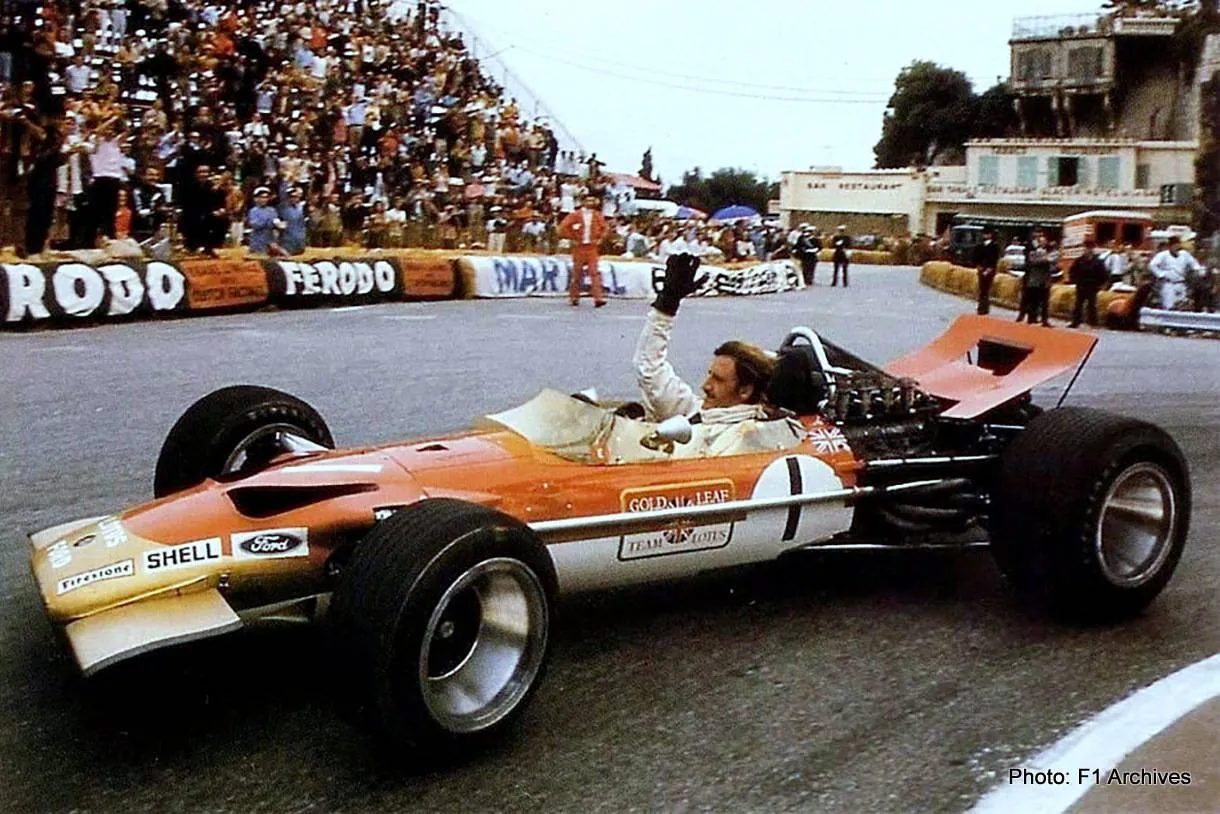
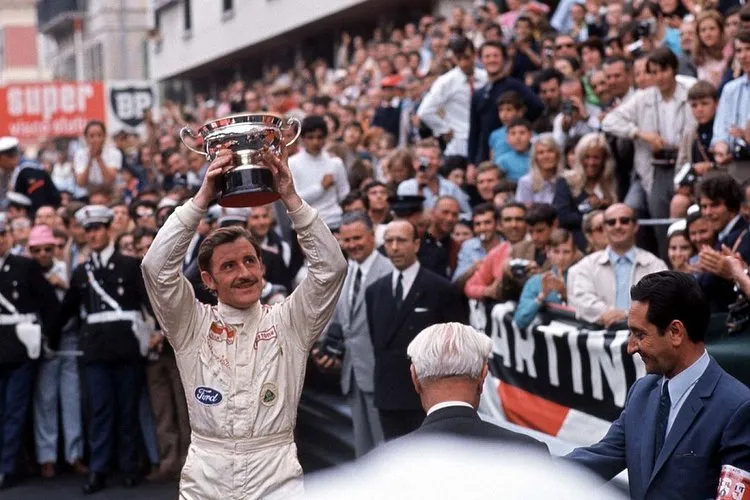
Long before Senna became known as the King of Monaco, there was Graham Hill. He won the Monaco Grand Prix five times in 1963, 1964, 1965, 1968 and 1969, establishing a record that stood for decades and earning the nickname "Mr Monaco."
The streets of Monte Carlo became his personal playground. Hill understood Monaco better than anyone of his generation and danced between the barriers with a confidence that bordered on arrogance. At a circuit where the smallest mistake ended your race, he made excellence look routine.
Conquering America

The "Mr Monaco" nickname was not a marketing invention or a media creation. It was earned through repeated mastery of the most demanding street circuit in motorsport. Every victory reinforced the belief that Monaco belonged to Graham Hill.
The second jewel of the Triple Crown came at Indianapolis, the world's most famous oval and a venue where many European drivers arrived with confidence only to leave humbled. The Indianapolis 500 demanded a completely different mindset from Formula 1.
Hill adapted immediately. In 1966 he arrived as a rookie and left as the winner, becoming the first rookie to win the Indianapolis 500 since 1927. Even today, that achievement remains one of the most remarkable debut performances in motorsport history.
The Indianapolis victory alone would have defined the career of most racing drivers. Winning the world's biggest oval race at the first attempt is the type of accomplishment many spend a lifetime chasing. For Graham Hill, however, it was only the second chapter.
The final piece

By 1972, Hill was already a two-time Formula 1 World Champion. He had conquered Monaco and Indianapolis and had little left to prove. Many drivers would have been content to protect their legacy and enjoy the closing years of their careers.
Instead, Hill pursued the final missing piece. At 43 years old, he climbed into a Matra alongside Henri Pescarolo and tackled the 24 Hours of Le Mans. It was the world's greatest endurance race and the final obstacle standing between Hill and history.
Pescarolo initially doubted his teammate. Hill was older, his Formula 1 peak appeared behind him and he had already won almost everything there was to win. Yet when the race began, Hill quickly demonstrated that greatness does not disappear with age.
Particularly in the darkness and rain, the conditions that separate good drivers from great ones, Hill delivered. Pescarolo later admitted he had been wrong, and together they guided the Matra MS670 to victory. The final piece of the puzzle was finally in place.
Why nobody has repeated it

Many greats have tried to match Hill's achievement. Mario Andretti came close. Jacques Villeneuve came close. Fernando Alonso came close. Juan Pablo Montoya remains one overall Le Mans victory away from joining the club.
None have succeeded. That reality only increases the value of Hill's accomplishment with every passing decade. The longer the record survives, the greater it becomes.
Modern Formula 1 drivers are more specialised than ever before. Commercial obligations, simulator programmes, crowded calendars and contractual restrictions make it increasingly difficult to compete across multiple disciplines, let alone win their biggest events.
Hill did not merely participate in different forms of motorsport. He won the most prestigious race in Formula 1, the most prestigious race in American open-wheel racing and the most prestigious race in endurance racing. That level of versatility may never be seen again.
The forgotten GOAT

Whenever Formula 1 fans debate the greatest driver of all time, the same names inevitably appear. Fangio, Clark, Stewart, Lauda, Senna, Schumacher, Hamilton and Verstappen all deserve their place in the conversation because of their extraordinary achievements.
Yet Graham Hill is rarely mentioned. That omission becomes harder to understand when you consider that he remains the only man to have conquered Formula 1's most famous race, America's most famous race and endurance racing's most famous race.
Which raises an uncomfortable question. If the greatest racing driver is the one capable of mastering every discipline placed before him, should Graham Hill not be near the very front of the queue? Perhaps he is not merely a GOAT contender.
The mists of time may have obscured his achievements, but they have not diminished them. More than 50 years after completing motorsport's ultimate challenge, Graham Hill still stands alone on the highest peak in the sport. Until somebody joins him there, Formula 1's only Triple Crown winner deserves far more respect than history currently gives him.
Graham Hill RIP

Hill's remarkable career ended in tragedy on 29 November 1975 when the light aircraft he was piloting crashed in dense fog while approaching Elstree Airfield outside London.
The two time Formula 1 World Champion was returning from a successful test at Circuit Paul Ricard with key members of his Embassy Hill team when the Piper Aztec struck trees on Arkley Golf Course before crashing and bursting into flames. All 6 people on board were killed.
Among the victims were promising young driver Tony Brise, team manager Ray Brimble, designer Andy Smallman and mechanics Tony Alcock and Terry Richards, effectively wiping out the core of the Embassy Hill operation.
An official investigation found no evidence of mechanical failure, alcohol, drugs or fatigue. Investigators concluded that disorientation and errors during the approach in extremely poor visibility were the most likely causes of the accident.
The disaster ended Hill's transition from driver to team owner and plunged his family into financial difficulty. It remains one of the darkest days in British motorsport history and brought a tragic close to the life of Formula 1's only Triple Crown winner.
Latest News

Loading