Monaco Grand Prix: Remembering Lorenzo Bandini and a dark day for Formula 1
F1 HistoryMonday, 01 June 2026 at 07:30
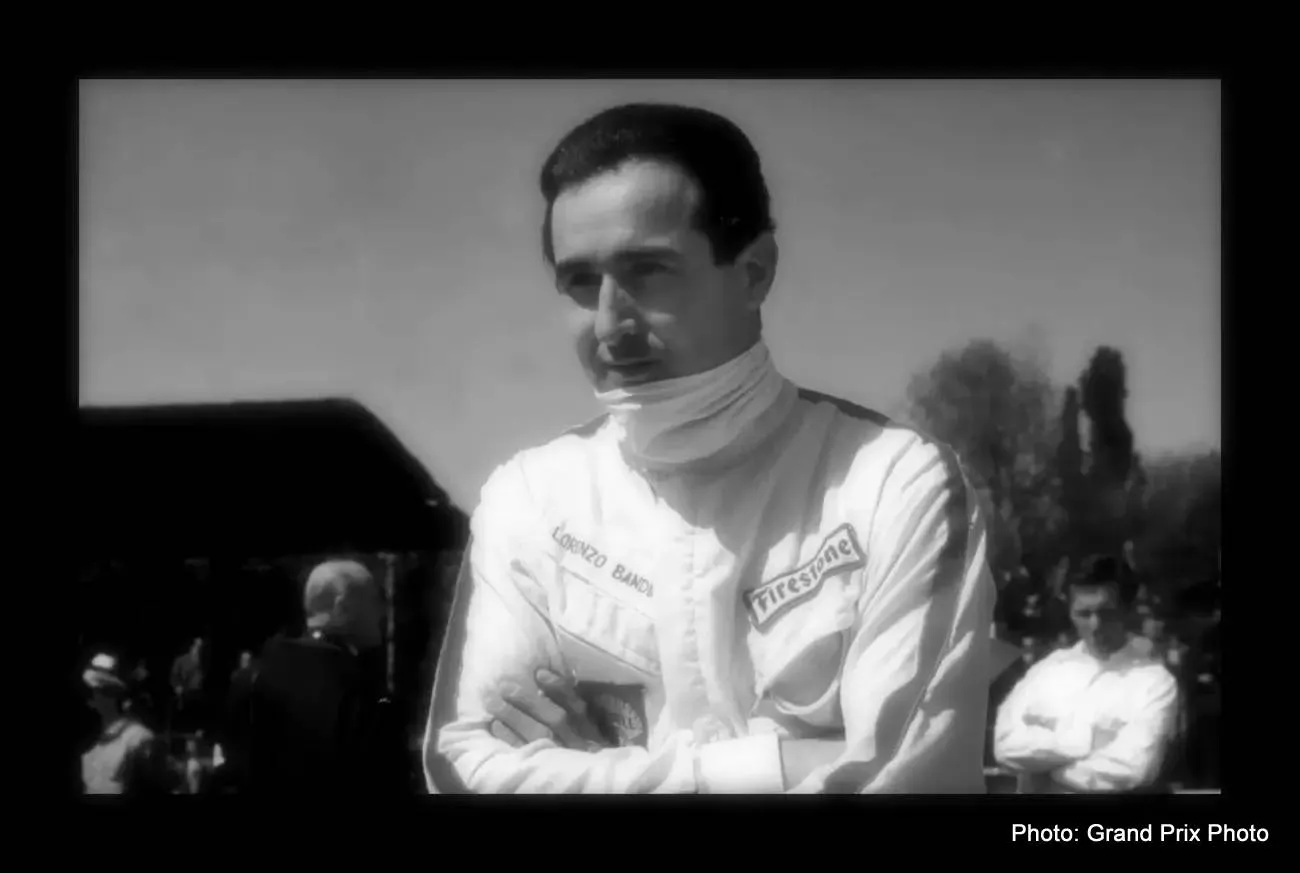
Ahead of the Monaco Grand Prix approaches, Round 6 of the 2026 Formula 1 World Championship, it is fitting to remember the late Lorenzo Bandini, who raced his last race at the legendary venue on a day the harbour resembled a warzone.
Bandini died just as what promised to be a magnificent season was unfolding for him. Before becoming a racing driver, he worked as a mechanic in a garage. Thanks to the owner, he gained access to cars with which he began his motorsport career.
In 1959, he moved into Formula Junior and enjoyed two outstanding seasons, attracting the attention of Ferrari. The Scuderia initially offered him a Formula 1 drive for 1961, but the seat ultimately went to Giancarlo Baghetti.
Bandini made his Formula 1 World Championship debut in June at the Belgian Grand Prix at Spa-Francorchamps. Entered by Scuderia Centro Sud in a Cooper-Maserati, he qualified at the back of the field and retired with an oil pressure problem. In July, he competed in the British Grand Prix, finishing 12th. After a retirement caused by engine failure in Germany, he contested the Italian Grand Prix and finished eighth.
In endurance racing, he competed in the Targa Florio in a works Ferrari 250 TR. Partnering Giorgio Scarlatti, he finished third. The pair then won the 4 Hours of Pescara. This transitional period between private teams and occasional appearances for the Maranello marque paved the way for his official Ferrari role the following season.
Living the Formula 1 dream

Bandini began his Formula 1 World Championship campaign in June at the Monaco Grand Prix. Driving the Ferrari 156, he delivered a strong performance and crossed the line in third place, securing a podium on his first appearance for the Maranello team.
Because of labour disputes in Italy and strategic decisions taken by Enzo Ferrari, he competed in only a handful of Grands Prix during the season. He concluded his brief campaign with appearances in Germany and Italy. At the Nürburgring, he retired following an accident, while at Monza he finished eighth. Despite contesting only three World Championship races, he ended the year 12th in the drivers' standings.
He also demonstrated his speed in non-championship Formula 1 events, notably winning the Mediterranean Grand Prix at Enna-Pergusa in August after dominating the race.
At the same time, he impressed in endurance racing. In May, he finished second in the Targa Florio alongside Giancarlo Baghetti in a Ferrari 266 SP. In June, he competed in the 24 Hours of Le Mans, but a clutch failure forced him to retire.
Despite his performances, Ferrari retained him at the end of the season for sports car racing rather than Formula 1.
Back with Scuderia Centro Sud, Bandini entered three Grands Prix driving a BRM P57. He finished 10th in the French Grand Prix and fifth in the British Grand Prix. Although he retired in Germany, his convincing performances, combined with the serious accident suffered by Willy Mairesse, prompted Enzo Ferrari to recall him to the Formula 1 team.
Return to Ferrari

Bandini contested the Italian Grand Prix in the Ferrari 156/63 but retired with a gearbox problem. At the United States Grand Prix, he finished fifth to score his first points of the season. After retiring in Mexico, he again finished fifth in South Africa. These consistent results earned him 10th place in the championship.
His greatest achievement of the year came in endurance racing. In June, he competed in the 24 Hours of Le Mans in a factory Ferrari 250 P alongside Ludovico Scarfiotti. The Italian pairing dominated the race and claimed a historic victory, becoming the first all-Italian crew to win Le Mans in an Italian car. The success cemented his status as one of Ferrari's leading drivers.
In 1964, Bandini served as Ferrari's number two driver alongside John Surtees. He began the season with three consecutive retirements before finishing ninth in France. He then produced a series of strong results, including fifth place in Britain and third in Germany.
His finest hour came in August. At the only Austrian Grand Prix held on the bumpy Zeltweg airfield circuit, he claimed victory in his Ferrari 156. After finishing third in Italy, he played a crucial role in Ferrari's championship campaign at the Mexican Grand Prix.
Ferrari team player

Running third late in the race, Bandini deliberately slowed to allow teammate John Surtees through. The strategic sacrifice gave Surtees the points required to secure the World Championship and helped Ferrari clinch the Constructors' title. Bandini finished fourth in the Drivers' Championship.
In endurance racing, he started the year by winning the 2,000 km of Daytona alongside Phil Hill in a Ferrari 250 GTO. In June, he finished third at Le Mans, sharing a Ferrari 330 P with Surtees, before winning the 1,000 km of Paris at Montlhéry in October.
The 1965 season took place during a period of technical transition for Ferrari. In Formula 1, Bandini alternated between the Ferrari 158 with its V8 engine and the new 1512 powered by a flat-12.
His best result came at the Monaco Grand Prix in May, where he finished second behind Graham Hill. Despite that promising performance, the remainder of the season was dominated by the superiority of the British teams and Ferrari's reliability issues.
He nevertheless scored points consistently, finishing fourth in both the Italian and United States Grands Prix, and ended the season sixth in the World Championship.
An impressive spell

His most significant achievement of the year came on the roads of Sicily. In May, he won the Targa Florio alongside Nino Vaccarella in a Ferrari 275 P2. He further demonstrated his endurance racing abilities by finishing second in the 1,000 km of Nürburgring.
Bandini began the season in the Ferrari 246 and immediately impressed by finishing second in the Monaco Grand Prix after an intense battle. A few weeks later, at Spa-Francorchamps, he led the Belgian Grand Prix in torrential rain before finishing third.
Those back-to-back podiums briefly put him at the top of the World Championship standings.
However, John Surtees' sudden departure from Ferrari in June dramatically changed Bandini's role. He became the team's lead driver and technical leader.
At the French Grand Prix, he secured pole position in the new Ferrari 312, powered by a 12-cylinder engine. He led the race and set the fastest lap, but a broken throttle cable ended his challenge. He later finished sixth in both the Dutch and German Grands Prix.
The latter part of the season proved more difficult because of mechanical failures, forcing retirements in Italy and the United States. He eventually finished ninth in the championship. Despite the modest final result, his performances in the first half of the year and his leadership during Ferrari's internal turmoil demonstrated his growing maturity.
Away from Formula 1, he remained highly competitive in sports prototypes, finishing second in both the 1,000 km of Monza and the 1,000 km of Spa in the powerful Ferrari 330 P3.
The Day Lorenzo died

By 1967, Lorenzo Bandini was at the peak of his powers and reputation, fully embracing his role as Ferrari's team leader.
In February, he led Ferrari to a historic triumph in the 24 Hours of Daytona. Partnering Chris Amon in the new Ferrari 330 P4, he won the race as part of Ferrari's famous 1-2-3 finish. In April, the pair reinforced their endurance racing dominance by winning the 1,000 km of Monza.
The Formula 1 season began for Bandini in May at the Monaco Grand Prix after Ferrari skipped the opening round in South Africa.
Bandini's fatal accident occurred during the 1967 Monaco Grand Prix on 7 May, a race he had started as Ferrari's team leader and one of the favourites for victory.
After Ferrari skipped the season-opening South African Grand Prix, Monaco was Bandini's first Formula 1 appearance of the year. He qualified second on the grid alongside the Brabham of Denny Hulme and quickly established himself as one of the fastest drivers in the race.
Horrific scenes

Jack Brabham initially led before retiring with mechanical problems. Hulme then inherited the lead, with Bandini chasing hard in second place. As the race entered its closing stages, Bandini was pushing aggressively to reduce the gap to the New Zealander.
On lap 82 of the 100-lap race, Bandini approached the harbour chicane carrying considerable speed. Accounts differ on whether he clipped a kerb, lost control under braking, or simply made a rare driving error under pressure. His Ferrari 312 struck a mooring bollard that was partially hidden behind straw bales protecting the harbour front.
The impact launched the Ferrari into the air. The car overturned, struck a lamp post and crashed upside down beside the harbour. Fuel spilled from the ruptured tanks and immediately ignited.
The accident scene quickly became chaotic. The overturned Ferrari trapped Bandini underneath as flames engulfed the wreckage. Marshals and spectators rushed to help, but firefighting equipment and rescue procedures were primitive by modern standards.
Lorenzo Bandini RIP 1935-1967

Several fire extinguishers proved ineffective, and valuable seconds were lost as rescuers struggled to reach him. Bandini remained trapped beneath the burning car for several minutes before marshals and spectators managed to lift the wreckage sufficiently for him to be extracted.
He suffered severe burns over much of his body, along with significant chest injuries caused by the impact. After receiving emergency treatment at the circuit, he was transferred to the Princess Grace Hospital in Monaco.
For three days doctors fought to save him. Despite periods of cautious optimism, his condition deteriorated as complications developed from the extensive burns. Lorenzo Bandini died on 10 May 1967 at the age of 31.
His death shocked the Formula 1 world. Bandini was widely regarded as one of the sport's most respected and popular drivers and was entering what many believed would be the prime years of his career.
Ferrari lost not only its leading driver but also the man expected to carry the Scuderia forward following John Surtees' departure the previous season.
The dark age of motorsports

The tragedy also highlighted the inadequate safety standards of the era. Monaco's harbour section remained lined with poles, bollards and straw bales, while rescue and firefighting capabilities were rudimentary.
Bandini's accident became one of several high-profile tragedies during the 1960s that accelerated calls for improved circuit safety, better fire protection and more effective medical response procedures in Formula 1.
The Trofeo Lorenzo Bandini (Lorenzo Bandini Trophy) is a prestigious annual award established in 1992 in Brisighella, Italy, to honor the memory of the Italian Formula 1 driver.
Presented by the Associazione Trofeo Lorenzo Bandini, it recognizes outstanding achievements, talent, and sportsmanship in Formula 1 by drivers or teams. The trophy is a unique ceramic replica of Bandini’s Ferrari F1 car bearing his number 18, and each winner can receive it only once.
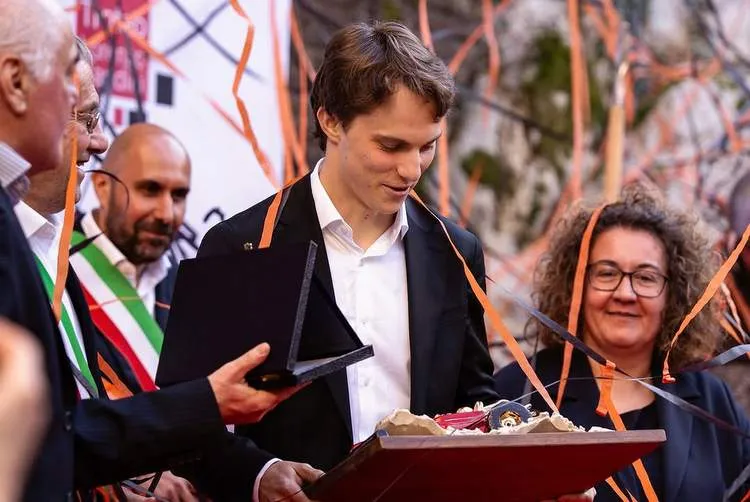
Past recipients include legends like Michael Schumacher, Fernando Alonso, Sebastian Vettel, Lewis Hamilton, Max Verstappen, Lando Norris, and Oscar Piastri (2025), with Kimi Antonelli winning in 2026. The event is held in the Emilia-Romagna Motor Valley, often near Imola.
Latest News
Loading