Canadian F1 Drivers and Their Place in Formula One History
F1 HistorySunday, 25 January 2026 at 01:17
Formula 1 is a global motorsport championship defined by engineering precision, elite athletic performance, and international representation.
Among the countries contributing to the sport’s legacy, Canada has produced several notable competitors. This article provides a structured and factual overview of Canadian F1 drivers, and contextual insights into technical and commercial aspects of the sport.
Outside race weekends, Formula 1 drivers follow well-structured routines that balance physical preparation and personal interests. Physical conditioning remains a priority, with emphasis on neck strength, cardiovascular endurance, and reaction training to handle high g-forces and long race distances.
Many drivers also use racing simulators to analyze telemetry and refine racecraft, and in their downtime, some explore related entertainment options such as motorsport-themed games or find the best online casino available for regulated, licensed play — always with awareness of responsible gambling principles and personal limits.
Leisure activities vary. Some popular F1 drivers engage in cycling, tennis, or golf to maintain fitness while reducing impact strain. Others pursue interests in music, fashion, esports, or charitable initiatives. Media appearances and sponsor obligations also form part of their off-track responsibilities. While motorsport is central, drivers balance professional preparation with personal development and recovery periods.
Notable Canadian F1 Drivers
Canada’s representation in Formula One includes world champions and modern competitors.
Gilles Villeneuve
The illustrious era of Canadian drivers began with Gilles Villeneuve, undoubtedly the most famous Canadian Formula One driver.
Born on January 18, 1950, in Richelieu, Quebec, Villeneuve debuted in Formula One in 1977 with the McLaren team before moving to Ferrari, where he achieved his greatest successes.
Villeneuve became known for his aggressive driving style and fearless approach to racing. During his brief Formula One career, he secured 6 wins and stood on the podium 13 times. Gilles Villeneuve tragically died during qualifying at the Belgian Grand Prix in 1982, but his legacy lives on in the memory of fans and the motorsport community.
Racing for the Ferrari team, Gilles Villeneuve won the hearts of millions of motorsport enthusiasts. His vibrant and fearless driving style made him an icon of Formula One.
Villeneuve’s tragic death in 1982 only enhanced his legendary status. In his honor, the racing circuit in Montreal was renamed Circuit Gilles Villeneuve. This venue has become sacred for motorsport fans, hosting the Canadian Grand Prix annually. The event attracts thousands of spectators who support their teams and revel in the spirit of racing.
Jacques Villeneuve
Jacques Villeneuve remains actively involved in motorsport events and esports, contributing to the sport’s development. His achievements and expertise help popularise motorsport among young people, encouraging their participation in racing and simulators.
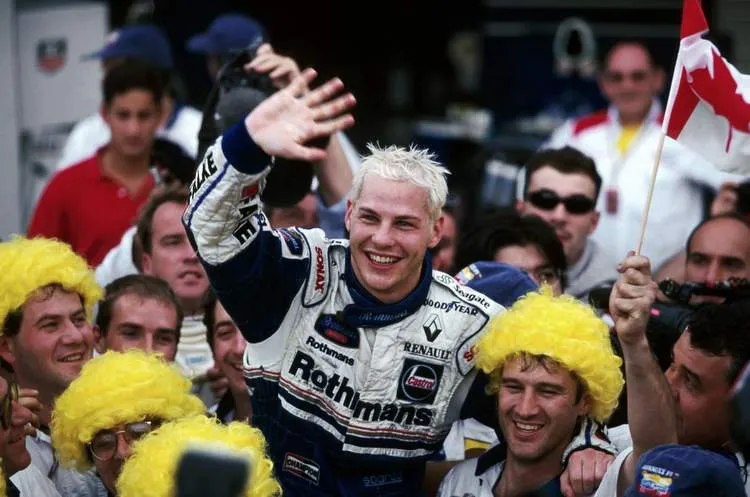
Gilles will remain a legend in everyone’s heart while his son Jacques Villeneuve followed his path and became a Formula One World Champion in 1997. These include, first of all, the date of birth, namely April 9th, 1971, and the place of birth, Saint-Jean-sur-Richelieu, Quebec. He got his first taste of F1 in 1996 joining the Williams team and would go on to have a dyer second season in the championships.
The following year he won the championship; to date, he is the only unique Canadian to capture the title. Villeneuve already had a different outlook towards racing, being highly intellectual and incredibly fast. During his Formula One campaigning, Jacques Villeneuve managed to clinch 11 victories and 級 finish in 23 races.
Lance Stroll
Lance Stroll is a young Canadian driver born on October 29, 1998, in Montreal, Quebec, Canada, his arrival is a Generation’s next big hope and future of Canadian racing.
Lando Norris: Born on the 22nd of November, 1999, Norris has been aggressive in his approach from the get-go, making his Formula One debut in 2017 with the backing of the McLaren team.
In 2020, he drove for Racing Point (current Aston Martin), with a podium finish at Mugello – Italy and Monza – Italy. It seems that Stroll is also progressing and he performs well all the time and gives good hope for his future in Formula One.
The above drivers deserve their seats along with racer Lance Stroll, who often employs the use of modern technology and simulators in preparation for a race. His achievements include scores in several races and positions on the podium at Italian and Turkish Grand Prix races, thus promoting Formula One racing in Canada among fans.
Stroll also contributes to the strengthening of virtual racing and can be attributed to the promotion of training and participating in online races by young drivers.
Canadian F1 Drivers Overview
| Driver | Active Years | Notable Achievement |
| Gilles Villeneuve | 1977–1982 | Multiple podiums with Ferrari |
| Jacques Villeneuve | 1996–2006 | 1997 World Champion |
| Lance Stroll | 2017–present | Multiple podium finishes |
| Driver | Active Era | Notable Achievement |
| Alain Prost | 1980–1993 | Four-time World Champion |
| René Arnoux | 1978–1989 | Multiple Grand Prix victories |
| Pierre Gasly | 2017–present | Grand Prix winner |
French F1 Drivers in Context
France has historically played a significant role in Formula One, both through drivers and manufacturers.
| Driver | Active Years | Notable Achievement |
| Gilles Villeneuve | 1977–1982 | Multiple podiums with Ferrari |
| Jacques Villeneuve | 1996–2006 | 1997 World Champion |
| Lance Stroll | 2017–present | Multiple podium finishes |
| Driver | Active Era | Notable Achievement |
| Alain Prost | 1980–1993 | Four-time World Champion |
| René Arnoux | 1978–1989 | Multiple Grand Prix victories |
| Pierre Gasly | 2017–present | Grand Prix winner |
French F1 drivers have contributed to championship battles, team development, and technical evolution.
Technical Considerations: The Max Moment Formula
Engineering principles are central to Formula One performance. The max moment formula, commonly expressed as torque equals force multiplied by distance (M = F × d), illustrates how rotational force affects components such as suspension systems and aerodynamics. Engineers apply such mechanical principles to optimize car balance, braking stability, and cornering efficiency.
Although simplified in explanation, torque management directly influences lap times and tire degradation. Technical precision remains fundamental to competitive outcomes.
Commercial and Gambling Context
Formula One has commercial partnerships across multiple industries, including regulated betting markets. Casino F1 is sometimes used to describe sponsorship or betting-related branding linked to motorsport events. Betting markets may involve race winners, podium finishes, or championship outcomes.
It is important to note that gambling carries financial risk. Participation in wagering activities should follow legal frameworks and responsible gambling guidelines within relevant jurisdictions. Setting financial limits and seeking independent support services where necessary are widely recommended safeguards.
Canadian F1 drivers have contributed to the international history of Formula One through championship success and ongoing participation. Alongside French F1 drivers and other international competitors, they represent the sport’s global character.
Technical foundations such as the max moment formula underpin engineering development, while commercial dimensions, including casino F1 associations, reflect broader market influences. This overview is intended for informational purposes and maintains a neutral and factual perspective.
Latest News
Loading