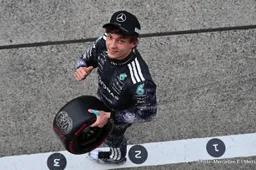
Fernando Alonso: The great challenges of Suzuka are gone, driver skill is not needed anymore
F1 Drivers NewsSaturday, 28 March 2026 at 17:25

Double Formula 1 World Champion and the sport's elder statesman, Fernando Alonso delivered a brutal verdict on what was once the ultimate driver test, declaring that Suzuka no longer represents a challenge under the current regulations.
Alonso did not hold back when speaking to reporters in Japan, including our correspondent Agnes Carlier, laying bare a reality Formula 1 chief Stefano Domenicali and FIA president Mohammed Ben Sulayem will not want to hear.
For decades, Suzuka Circuit has been revered as the purest measure of driver ability. Fast, unforgiving and relentless. A place where only the elite prevailed. From Ayrton Senna to Michael Schumacher, Suzuka crowned greatness. Alonso says those days are gone.
Asked about the challenges of driving the new F1 cars at Suzuka, the Spaniard declared: “It’s gone. I told you in Bahrain, even the chef could drive the car. Now, maybe not the chef, but yeah, 50% of the team members, I think, can drive in Suzuka.
“Because, as I said a few times already, high-speed corners now become the charging station for the car. So you go slow there, you charge the battery, and then you have full power on the straight.
"So driver skill is not really needed anymore. You just need to back off the throttle or turn down the battery and you charge the thing. So yeah, no more a challenge in the high speed.”
What Alonso is describing cuts to the core of the 2026 regulations. The shift to heavy energy management and deployment has flipped the traditional demands of circuits like Suzuka on their head. Exacerbated by a highly complicated engine that has all the teams, except for Mercedes, baffled.
The cars reward saving, not pushing

Corners such as 130R and the Esses, once taken on the absolute limit of commitment and bravery, are now compromised by energy harvesting requirements. Drivers are no longer threading the needle at full attack. They are managing systems.
The result, according to Alonso, is a dilution of what defined Formula 1: “Difficult, because I think it will always be biased towards the straights and saving energy. So it will improve the superclipping and all the derates. That’s something that should be fixed.
“It’s very possible that a quick fix in the regulations will improve that theme, but in terms of how much you will push the car to the limit, that will not be needed ever with these regulations, I think.”
The implication is stark. The current generation of cars does not reward bravery or precision in the corners. It rewards optimisation of energy usage. That is a fundamental shift in the DNA of the sport.
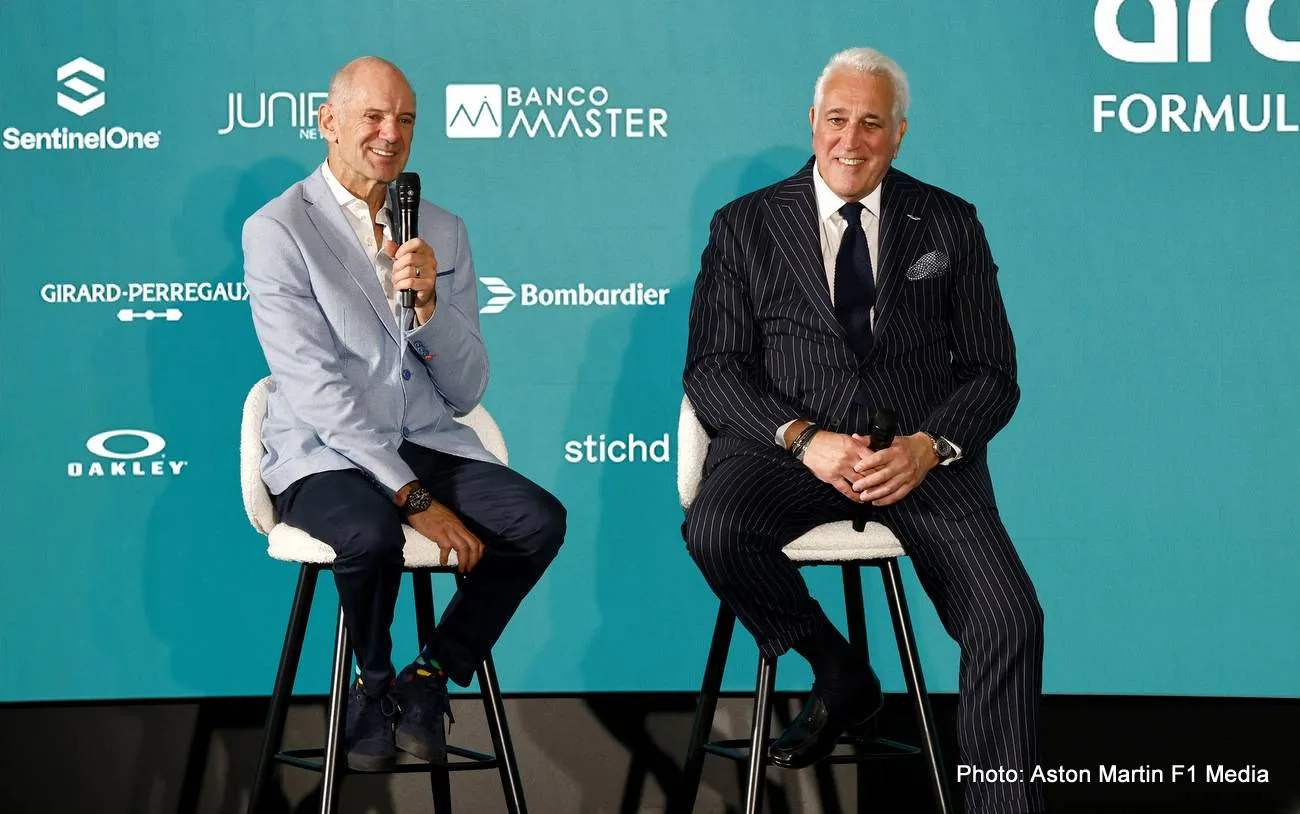
There were massive expectations when billionaire Lawrence Stroll secured the services of Adrian Newey, widely regarded as the most influential designer in modern Formula 1. But expectations collided with reality.
What was meant to be a transformative moment for Aston Martin F1 Team has, so far, delivered the most expensive underperforming project on the grid.
Alonso, who has lived through a similar scenario before, most notably during his ill-fated return to McLaren in the Honda (them again!) era, finds himself once again at the sharp end of a rebuilding effort.
Alonso: We are running without too many issues

Asked if things have improved, with fewer issues than in Melbourne and Shanghai, Alonso replied: “Yeah, obviously on the positive side, yes, that’s true. We are running without too many issues the last two weekends. But obviously, in terms of performance, we are at the back.
“So yeah, it’s not really, you know, you don’t find any satisfaction when you are not competitive. But we try to stay together, to stay strong, and give time to both factories to fix the situation. They are working flat out. There are a couple of improvements, a couple of ideas.
"But in Formula 1 it doesn’t happen from one day to another, and you need to spend a few months, I guess, with the current car. We will not change too many things on this car if we know that it will change completely in a few months’ time. So that’s the situation we have.”
There is no anger or even frustration, but rather resignation and hard truth in Alonso’s tone. No drama. No deflection. Just a clear acceptance that Aston Martin are currently operating on the back foot.
As for a timeline to competitiveness, Alonso ventured: “I think in a couple of months… we saw McLaren in 2023, they were last in the first couple of races, and they eventually were at the front at the end of the year. Maybe that’s too optimistic. That’s a dream scenario.
"We know that the season is long, and if you understand the problems and fix them, you have plenty of time to do the second part of the year, or the last third of the championship, in a much better position. And that’s what we are working on now.”
Defintely there is potential in the AMR26

Asked about the potential of the ill-fated, Newey-penned AMR26, Alonso remains bullish: “Definitely. Definitely a very, very huge potential on the car, on the engine as well. I think we made progress since Bahrain. In terms of deployment, in terms of understanding some of the drivability issues, now we are in a much better position.
“We still need to fix the vibrations. We still need to fix the power deficit. There are fundamental things that still put us on the back foot. But it’s not that they are watching TV right now. They are working flat out. So we just need time, and we need to be patient here on track.
“While the factory is bringing upgrades, we need to keep working and racing every weekend with a package that is maybe not the most competitive.”
That combination of “huge potential” and “fundamental issues” neatly sums up Aston Martin’s current predicament. The ceiling may be high, but the floor is currently too low.
The core of the problem remains the intense vibrations drivers are subjected to in the cockpit of the AMR26 at race speeds. Finishing a race is not on the cards, according to Alonso's teammate Lance Stroll.
Alonso acknowledged the problem: “Yeah, I think it’s still the biggest limiting factor. Yesterday, to be honest, the car felt completely normal, nearly no vibration. So I was very positive. This morning I jumped in the car and I had the same vibrations as ever, and we didn’t change anything. So that was a little bit difficult to understand.
“So we are going through all the changes we did overnight to make sure that there is something from yesterday that helped the vibrations. It seems a bit random, so let’s see tomorrow if we have a lucky day.” Yeah, from testing and the first two races, yesterday was definitely 80% better," revealed Alonso.
Upgrades? What upgrades?

As for upgrades to the car at Suzuka and in the near future, Alonso was blunt: “Zero, because the upgrades are just small things that we are testing on the car to understand what we think the problem is. When we test those upgrades, they tell us if we are going in the right direction or not at the factory.
"It’s not that they are bringing performance. They are just giving direction. So yeah, everything is working as expected. In the factory, there are a lot of things going on, and some look very positive.
"But there is an idea, then you need the wind tunnel, then CFD, then you need to make it into production, then bring it to the track. And then you are in July, August," explained the 44-year-old Spaniard.
It is a long road back for Aston Martin. The randomness of the problem only compounds the issues and complicates the road to recovery. It is not just a weakness. It is an unpredictable one.
While Aston Martin continues to fight their own internal battles, Alonso’s wider message cuts deeper. This is not just about one team dropping the ball. It is about the direction of Formula 1 itself, Alonso’s most damning conclusion is reserved for the sport itself.
Suzuka, once the ultimate proving ground, no longer demands the ultimate bravery we so admire and respect in Formula 1 drivers. If this grandest of Grand Prix venues no longer separates the Racing Gods from the Rest, then Formula 1 has a far bigger problem than any one team.
(Quotes from Agnes Carlier at Suzuka)
(Quotes from Agnes Carlier at Suzuka)

Latest News
Loading