Before Michael Schumacher appeared on the scene, Germany came close to producing a Formula 1 world champion on more than one occasion.
September 10, 1961. Wolfgang von Trips came to the penultimate round at Monza leading his Ferrari teammate Phil Hill in the championship. Pole position at the pre-chicane Autodromo and Hill starting fourth made the possibility of the first German world champion a near reality.
Alas, tragedy struck on the second lap when von Trips shark nose Ferrari 156, designed by the famous Carlo Chiti, crashed into the crowd after colliding with the Lotus of Jim Clark, with fatal consequences for the driver and 14 spectators.
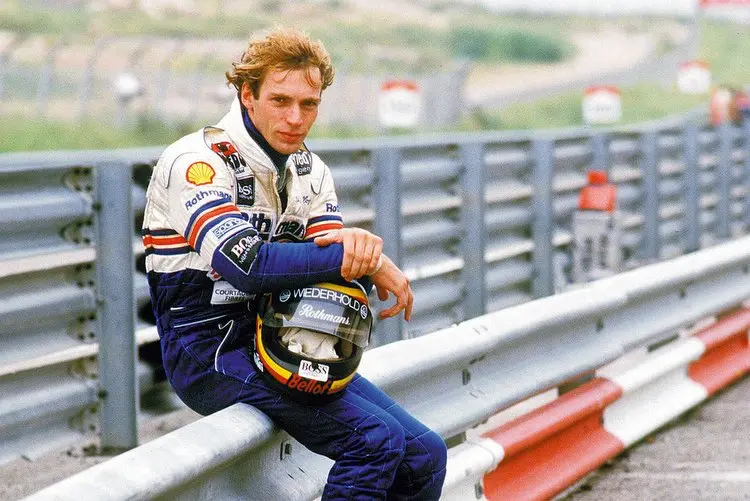
Fast forward to the same month 24 years later. September 1, 1985, Stefan Bellof, regarded as the Schumi before Schumacher, lost his life in a sports car race at Spa-Francorchamps after colliding with local legend Jacky Ickx at Eau Rouge.
Early Days
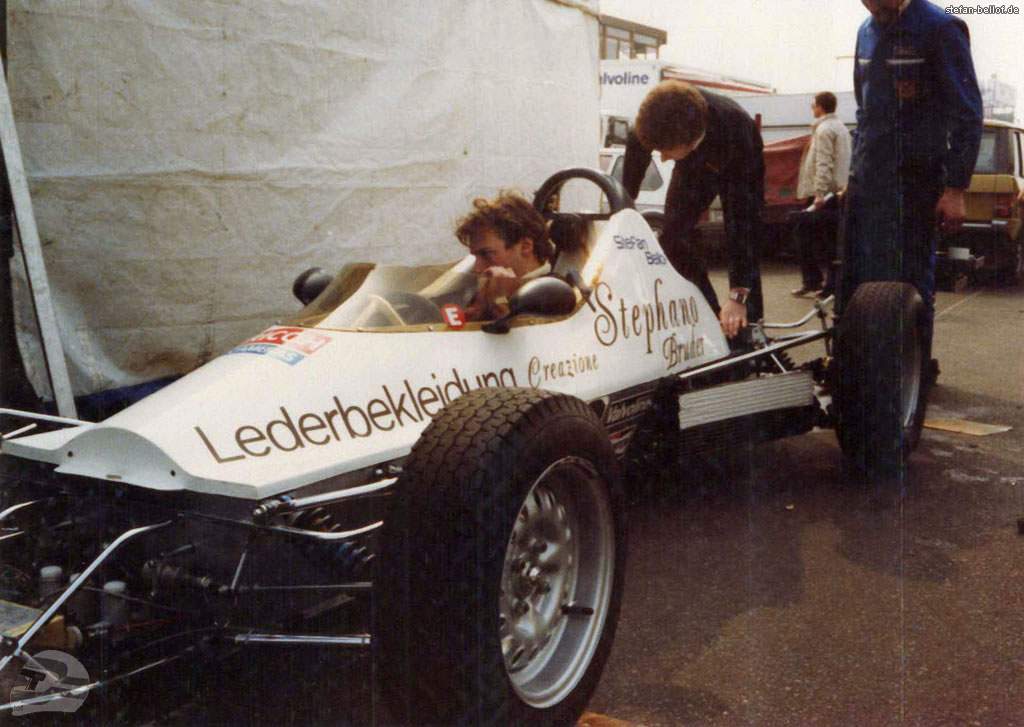
Bellof was born in Giessen, about an hour from Frankfurt, with racing in his blood. His father, Georg, competed in rallies and hill climbs. When he was 14 years old his father took him, and his older brother, also named Georg, to the local kart track at Oppenrod. It was an instant ‘one look and that’s all it took’ for the kid with loud laughter and shy manners.
His talent, bravery and press-on-regardless attitude was obvious from the beginning, as noted on his website (www.stefan-bellof.de); “I have rolled over a few times in the kart too, but that doesn't happen too often. You just get thrown out and the kart flies on, on its own.”
He won seven races in his second year of karting. In 1976, he won the international karting championship in Luxembourg and in 1980 became the German karting champion. The transition from karting to Formula Ford in the same year was seamless and he joined forces with Walter Lechner, well known for his racing school in Austria.
The Rapid Rise

Bellof took nine wins in his first year of single seater racing, and in the following year 1981 he beat Volker Weidler to the German Formula Ford championship. He also took part in three Formula Super V Cup races: second after starting from the front row at Mainz-Finthen. DNF at the Norisring street race due to gearbox issues. Victory from pole position at Wunstorf.
Formula 3 team owner Bertram Schäfer offered him a free ride at Wunstorf in June. Bellof startled the competition and team owner by grabbing pole position. In the race he spun while leading but was able to bring the car home in second place.
While fighting for the Formula Ford championship in 1981, Bellof began to battle in the German Formula 3 halfway through the season with financial support from Georg Loos.
Amazingly, going into the final race at the Nürburgring Bellof was the championship leader. He was on the podium in six of the eight races, including three wins, before the Nürburgring weekend. A hit-and-run ala Adelaide 1994 robbed him of his second title in a single season. But notice was served.
A special talent was on his way to stardom

Bellof’s career continued its upward trajectory powered by talent and determination and not Deutsche Marks or Dollars. Next stop. The cutthroat world of Formula 2.
With the help of BMW Motorsports manager Dieter Stappert in the form of three free BMW engines, deal was struck with Willy Maurer’s Formula 2 team. Bellof shocked the establishment by winning on debut at Silverstone and followed that up with victory in the second round at Hockenheimring.
Accidents and accusations from competitors for aggressive driving put a dent on his otherwise very impressive performance to finish fourth in the championship.
Team owner Maurer, who later became his manager, said at the time, “his vehicle control was simply terrific. Others would struggle for days to hit top times, and he would just pull them out of nowhere on the track.”
Championship & Nordschleife Track Record

In the 1983 season, Bellof partnered with Derek Bell in a Rothmans Porsche 956 and finished fourth in the World Endurance Championship, winning races at Silverstone, Fuji, and Kyalami. Bellof also competed in seven of the ten Formula 2 races. Second place in the Spanish round at Jarama was his only podium.
On May 28, 1983, he took his Porsche 956 around the Nürburgring Nordschleife in 6:11.13, a record that stood for over three decades.
During the season he and two other drivers, Ayrton Senna, and Martin Brundle were invited to a McLaren test session at Silverstone. The Brazilian was the fastest, but Bellof and Brundle also impressed the team.
Senna and Bellof had competed against each other in karting, and Brundle would be teammate to what he would later call “wild and crazy” German at Tyrrell team for the 1984 Formula 1 season.
Stars shine on a rainy day
Bellof, Brundle and Senna all made their F1 debut in the 1984 season opener at Jacarepagua circuit in Rio de Janeiro. Senna qualified his Toleman-Hart turbo in 16th. Brundle and Bellof were 18th and 22nd on the grid respectively in their normally aspirated Tyrrell-Cosworth machines.
Senna was the first retirement of the race on Lap 8 of 61, followed by Bellof three laps later. Brundle survived to finish fifth in his first Formula 1 race but would later be disqualified.
It was in Round 6 in the streets of Monte Carlo that both Senna and Bellof announced their arrival on the world stage in the rain. Senna qualified 13th and Bellof was last man on the grid in 20th. His teammate Brundle failed to qualify.
Jacky Ickx’s red flag decision is debated by many but when the race was stopped on Lap 31 of the scheduled 77, Senna was right on the tail of his future teammate while Bellof was rapidly closing on the Brazilian. Bellof had even put his Tyrrell on the Mirabeau pavement to pass Rene Arnoux’s Ferrari.
Senna and Bellof marked for greatness

It was this performance which earmarked both Senna and Bellof for greatness. One would achieve and, sadly, the other would perish in just over a year.
At the end of the championship the Tyrrell team was disqualified from the entire season for use of lead pellets as ballast. Bellof lost his podium finish in the principality along with rest of his points scoring positions.
He made up for this, against the wishes of Uncle Ken, by winning the 1984 World Sports Car Championship for Porsche.
The future was very bright for the young German from Giessen. In 1985, he again drove for Tyrrell in Formula 1 and Porsche in sports car racing. And he had a contract to drive for the grand old man in Maranello in 1986.
He started the 1985 F1 season by taking a single point from his sixth-place finish in heavy downpour at Estoril, Portugal where Senna splashed to his maiden victory. In the streets of Detroit, he had his best finish of the season in fourth.
In his home grand prix at Hockenheimring he was eighth and failed to take the chequered flag in the last two races of his F1 career, running out of fuel in Austria and retiring from the Dutch Grand Prix on August 25 with engine issues.
Bellof's Last Lap

A week later was the sports car race at Spa-Francorchamps on September 1, 1985. Chasing Ickx and determined to pass the local legend, Bellof tried to make the pass on the outside, the two Porsche 956s collided and both went into the barriers at high speed. The chilling scene of the aftermath of the accident was recorded on Ickx’s onboard camera which kept rolling.
It took over 20 minutes to extricate Bellof from the wreckage, massive internal injuries led to his passing at the age of 27.
His Tyrrell teammate Brundle was also in this race. He called Ken and the conversation was over with two words from his boss: “I know.”
Brundle went to Bellof’s funeral and was quoted in the October 2015 issue of Motorsport magazine: “The hardest thing was going to Stefan’s funeral and seeing the destruction it wrought on his family and friends.”
Germany had to wait another six years before the rise of the Kaiser from Kerpen for the Fatherland to have its first world championship winning son.
Latest News
Loading