Why the Next Generation of Hypercars is Built in IDEs, Not Wind Tunnels
F1 NewsThursday, 16 July 2026 at 01:15
Ten years ago, a hypercar's soul lived in a wind tunnel. Now it lives in a Git repository. Engineers still chase drag coefficients, sure, but the real battleground has shifted to latency, sensor fusion, and how fast a car can rewrite its own suspension logic mid-corner.
Carbon fiber hasn't gone anywhere — it's just no longer the thing that decides who wins. This piece looks at why code, not clay models, now sits at the center of hypercar development, and what that means for the machines fans will be drooling over at the next Goodwood Festival of Speed.
Code First, Bodywork Second
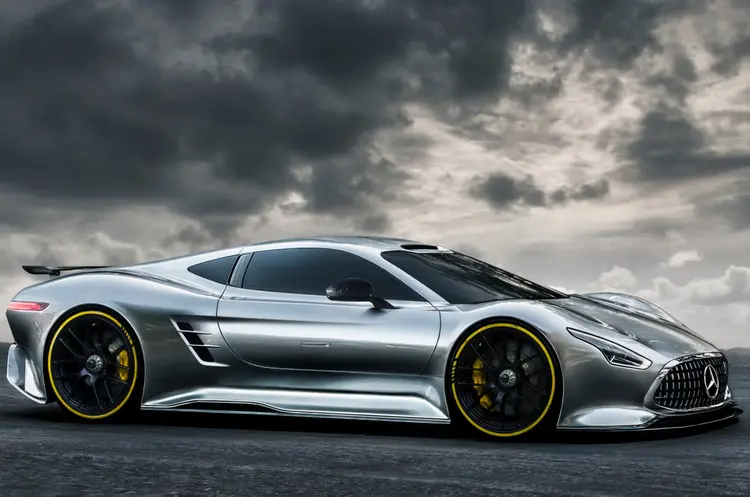
Here's the blunt version: a modern hypercar has more lines of code than a fighter jet. The Mercedes-AMG ONE reportedly ships with software architecture derived straight from its Formula 1 power unit, and that's not a marketing flourish - it's an engineering necessity.
When a brand wants to build something blisteringly fast and endlessly adaptable, the first decision isn't about bodywork. It's about picking a robust software defined vehicle platform, and only after that foundation is locked in does anyone start sketching the silhouette. Sketch first, platform later, and you end up retrofitting software onto hardware that was never built to host it. That's how you get recalls.
Manufacturers that treat the platform as an afterthought tend to pay for it two years down the line, when a chassis update requires ripping out half the electronics bay just to add a feature that should've taken a weekend to ship. Nobody wants that. Least of all the customer holding a seven-figure invoice.
The Wind Tunnel Isn't Dead, But It's Not the Boss Anymore
Nobody's saying aerodynamics stopped mattering. Adrian Newey didn't leave Red Bull to go build spreadsheets. But the wind tunnel used to dictate the entire development calendar — months of scale-model testing before a single physical part got machined. That sequence has flipped.
Computational Fluid Dynamics (CFD) simulations now run thousands of iterations overnight on cloud compute clusters, and the wind tunnel has become a validation step rather than a discovery tool. Ferrari, McLaren, and Red Bull all run hybrid pipelines where:
- CFD generates and discards hundreds of geometry variants per week, entirely in software
- Machine learning models predict which shapes are worth physically prototyping, cutting tunnel time by well over half
- Digital twins of the car — full physics simulations — get "driven" thousands of virtual laps before a chassis exists
- Real wind tunnel sessions confirm the top handful of candidates, rather than exploring blind
Sounds backwards to anyone raised on stories of engineers squinting at smoke trails, doesn't it? It isn't. It's just cheaper and faster to fail in software.
A Quick Example: The Red Bull RB17
Red Bull's RB17, the track-only hypercar unveiled in 2023, was developed with aero and software teams sitting in the same room from day one — not aero first, electronics later.
Adrian Newey has talked publicly about how active aero and the car's electronic control systems were treated as one integrated problem, not two departments handing work back and forth. That's the new normal.
What's Actually Being Tested Right Now
Walk the paddock at any major event in 2026 and you'll hear less about downforce numbers and more about update cycles. A few things worth knowing:
- Over-the-air (OTA) updates for track cars. Tesla normalized OTA updates for daily drivers years ago; now hypercar makers are borrowing the same trick. Pagani and Koenigsegg have both discussed software-adjustable powertrain mapping that can be pushed to a car between race weekends — no need to swap an ECU box, just push a build.
- Software-defined suspension. Koenigsegg's Gemera and Jesko use what the company calls a fully digital chassis control system, where ride height, damping, and torque vectoring are governed by code that engineers can rewrite between sessions rather than hardware they have to physically re-tune. McLaren's Proactive Chassis Control II works on similar logic — predictive, sensor-driven, software-first.
- Digital twins that outlive the car. Every lap a physical prototype does gets mirrored by a simulation running the same telemetry in real time. When something breaks — a sensor glitch, an unexpected vibration — engineers compare the physical data against the twin's prediction instead of guessing. Formula 1 teams have run this approach for years; it's now trickling down to road-legal hypercars like the Bugatti Tourbillon.
- AI-assisted aero shape generation. Generative design tools, similar to what Autodesk offers in its Fusion suite, now propose aero surfaces that no human stylist would sketch by hand — organic, lattice-like structures optimized purely for airflow. Some of these shapes look like they escaped a video game. Ironically, that comparison isn't far off.
From Gran Turismo to the Garage: When Games Meet Real Engineering
Here's a detail that surprises people outside the industry: racing simulators aren't just entertainment anymore, they're development tools. Sony's Gran Turismo 7 and rFactor 2 have both been used by manufacturers to let engineers - and in some cases, actual customers - test handling characteristics before a physical prototype rolls out of the shop.
Nissan famously ran its GT Academy program off Gran Turismo, turning simulator players into real racing drivers. That pipeline works in reverse too now: physics engines built for gaming are accurate enough that suspension geometry decisions get made inside them.
Codemasters' EGO engine, used in the F1 series of games, licenses real telemetry data from FIA-sanctioned teams to keep its physics honest — and some junior engineers reportedly use modified builds of these same engines to sanity-check ideas before committing simulation-cluster time to them.
Why does this matter to a fan sitting at home? Because the boundary between "playing a racing game" and "doing racing engineering" has gotten blurry enough that today's simulator obsessive might be tomorrow's vehicle dynamics engineer. That's not a stretch — it's already happening.
The Real Bottleneck: Integration, Not Horsepower
Ask any engineer working on hypercars in 2026 what keeps them up at night and horsepower rarely comes up. Integration does. A car today juggles:
- Powertrain control (often hybrid, sometimes fully electric)
- Active aero surfaces that move in real time based on speed, yaw, and steering input
- Suspension and torque vectoring systems reacting in milliseconds
- Driver-assistance and safety systems layered on top of all of it
- Telemetry streaming to teams, sponsors, and fans watching live data feeds
Getting these systems to talk to each other without introducing latency is the actual hard problem. A half-second delay in aero adjustment at 300 km/h isn't a bug report, it's a crash.
What This Means for the Cars You'll Actually See
None of this stays confined to seven-figure track toys. Everything mentioned above eventually filters down - it always does. Active aero, once exclusive to McLaren P1 territory, now shows up on cars costing a fraction of that. Digital twin diagnostics, once an F1 luxury, are creeping into fleet maintenance software for ordinary delivery vans.
Expect a few concrete shifts over the next couple of seasons:
- Shorter model cycles. When most of the "innovation" is software, manufacturers can ship meaningful updates without a full redesign — think Tesla-style version bumps rather than the traditional multi-year facelift.
- Subscription-adjacent performance. Controversial, but real: some manufacturers are experimenting with software-unlocked power tiers, similar to what BMW tried (and largely abandoned) with heated-seat subscriptions. Hypercar buyers will likely see gentler versions of this — track-mode unlocks tied to software licenses rather than hardware swaps.
- Faster recall-to-fix cycles. A software bug in a control system can be patched overnight via OTA update instead of a physical recall involving thousands of cars and a service bay backlog.
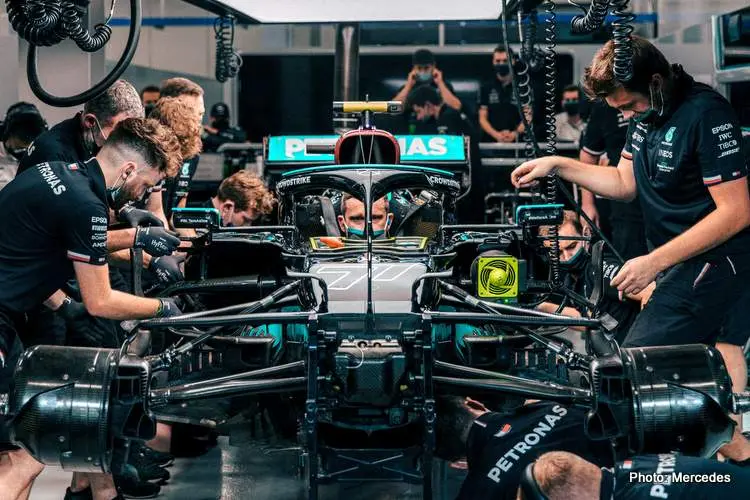
- New skill requirements on race teams. Expect more embedded software engineers on pit crews and fewer purely mechanical specialists, mirroring what's already happened in Formula 1 garages.
So Where Does That Leave the Wind Tunnel?
Still standing, still useful, just no longer running the show. Think of it as the final exam rather than the whole semester. The heavy lifting — the thousands of failed ideas, the geometry nobody will ever manufacture, the suspension tunes that would've taken a physical prototype weeks to validate — all of that happens in code first now.
Is that less romantic than engineers in white coats squinting at smoke trails under fluorescent lights? Maybe. But romance never won a championship. Milliseconds do. And right now, milliseconds are being won in an IDE, long before anyone reaches for a scale model or fires up a tunnel fan.
Fans who grew up idolizing aerodynamicists might need to make room for a new kind of hero: the platform architect who never touches a wrench but decides how fast a car can think.
Latest News



Loading