The passionate motorsport culture of South America has produced some of the greatest drivers in history, including the multiple-time world champions Ayrton Senna, Juan Manuel Fangio and Nelson Piquet, as well as some great race tracks.
This success is reflected in the Formula 1 calendar, which has made multiple stops on the continent over the years. Fans and betting sites alike such as drjuego.com have praised the South American races for their excitement and spectacle, and many consider them among the best on the calendar.
F1 racing has left countless wonderful footprints here over the years. Every race is like a grand carnival, which immerses fans.
As a racing fan, you can commemorate these wonderful moments by customizing racing peripherals, such as custom lapel pins, keychains, T-shirts, etc. You can customize racing-style pins, engrave the blood and passion of South American racing on them, and add your favorite player's name, number, etc.
Let it become a symbol of your racing faith. Every time you wear it, you feel as if you are in a fierce competition scene, galloping in the world of speed with legendary drivers.
Here are a selection of South American F1 tracks that have been on the F1 calendar during the course of the sport's history:
Brazilian Grand Prix
For many, there isn’t a better race on the Formula 1 calendar than the Brazilian Grand Prix. The race has been held annually since its inception in 1972, with the 2022 edition being the 50th race held in the country.
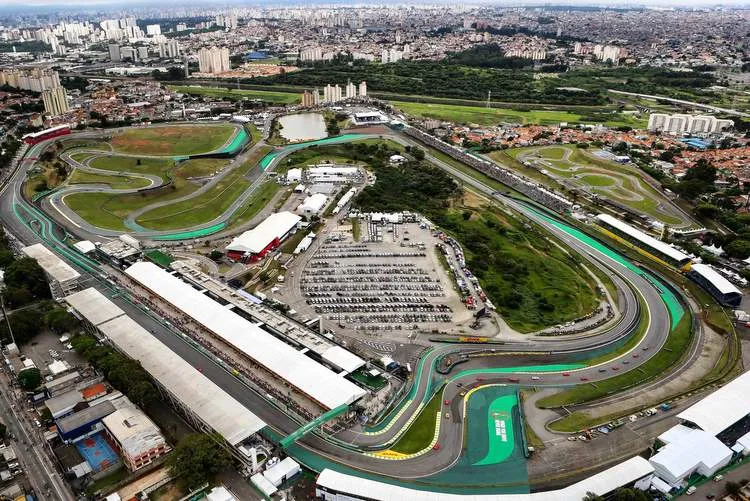
The home of the race has been the Autodromo Jose Carlos Pace at Interlagos F1 track (picture above) since 1990, which underwent a $15 million investment to see Formula 1 action return to the great track. Drivers involved will complete a total race distance of 305.879km, which is made up of a total of 71 laps.
Alain Prost remains the most successful driver in the history of the race with six victories, while McLaren leads the way in terms of constructors' victories with 12. Last year’s edition of the race was one of the most exciting in recent memory, with Kevin Magnussen starting on pole for the first time in his career for Haas.
However, it was a special moment for George Russell, as the Mercedes driver claimed a first race win, with Lewis Hamilton taking second. The Brazilian Grand Prix will remain on the calendar until at least 2025.
Argentine Grand Prix
One South American race that is no longer on the F1 calendar is the Argentine Grand Prix. This race was first held back in 1953, and it was staged on 21 occasions before it was scrapped from the calendar in 1998.
Historically, the race was held at the Autodromo Oscar Alfredo Galvez F1 track in Buenos Aires. Drivers were tasked with completing 72 laps, which made up the total race distance of 306.648km.
Throughout its history, the Argentine Grand Prix was won by some of the most talented drivers, which includes the final edition of the race, which was won by legendary Ferrari driver Michael Schumacher. The most successful driver in the history of the Argentine Grand Prix was Juan Manuel Fangio, who claimed four wins between 1954 and 1957.
Williams was the most successful constructor in the history of the event with four wins. An agreement was closed for a return to Argentina in 2012, but the deal collapsed with F1 commercial rights holder Bernie Ecclestone claiming that a return remains likely but only when he can ‘deal with serious people’.
Mexican Grand Prix
While not in South America, the only other current stop in the Americas away from the United States and Canada is the Mexican Grand Prix. This race has been held annually since its return in 2015, with Max Verstappen being the most dominant driver around Autodromo Hermanos Rodriguez F1 track .
The two-time world champion has already claimed four victories in the race, with Red Bull also leading the way alongside Lotus for the most race wins. A total distance of 305.354km is covered at the Mexican Grand Prix, which is made up of 71 laps in total.
Verstappen claimed a fourth victory in the race last year, with hometown hero Sergio Perez claiming a podium finish for the second season running. Racing in Mexico will continue for the foreseeable future, as it was announced in October 2022 that the Mexican Grand Prix would remain on the calendar until at least 2025.
However, every driver on the grid will be targeting victory in 2023, as they bid to avoid Verstappen winning the race for the third straight year.
In 2023 the sport will visit some great and some new F1 tracks
The start of another exciting Formula 1 season is upon us, with 23 races in total taking place throughout 2023. The return of the Las Vegas Grand Prix is an immediate race that captures the imagination, while the Brazilian Grand Prix also looks set to be another pivotal stop on the calendar.
Fans will need to wait until November 5 to see the Brazilian Grand Prix, but as the third-last race of the season, it could play a pivotal role in the destinations of the Drivers’ and Constructors’ Championships in 2023.
Latest News




Loading