The Best Formula 1 Grand Prix Races According to 1xBet Top 5
F1 NewsWednesday, 29 April 2026 at 01:15
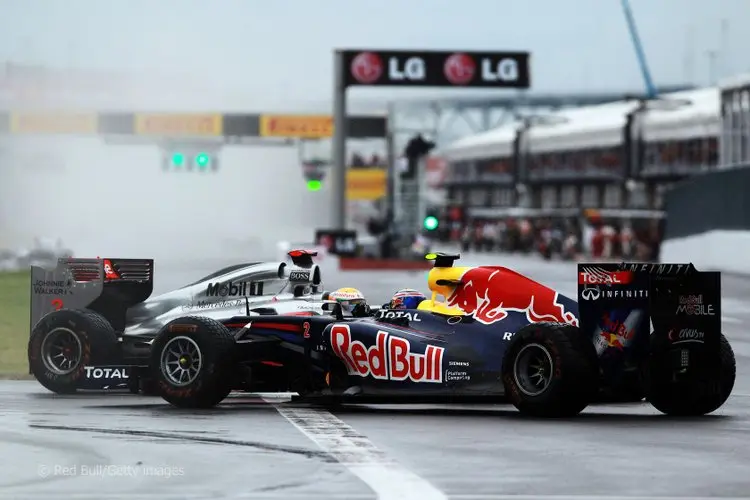
Sometimes a single race delivers more excitement than an entire season. At first, it seems as though everything is going to plan, then the weather changes, someone makes a mistake, someone takes a risk – and the picture is completely different.
In Formula 1, such moments
happen regularly, and it is precisely these that grip us the most. The five
races we have selected with 1xBet https://1xbets.ca/ are all about this:
dramatic plot twists, battles right down to the final metres, and denouements
that are hard to forget.
2008 Brazilian Grand Prix
The race at the Autodromo Jose Carlos Pace has
long been renowned for its unpredictability. In 2008, it all came down to one
of the most tense season finales in history.
Lewis Hamilton and Felipe Massa were vying for
the title. The situation before the start was simple: Massa needed a win,
whilst Hamilton needed to finish in the top five. During the race, the
Brazilian did his part flawlessly. He led the race, confidently controlled the
pace and was the first to cross the finish line. The stands were already
celebrating.
At that moment, however, events took a
different turn. The rain returned right at the end, and on the final lap
Hamilton found himself under pressure. He was running sixth and was losing the
title. In the penultimate corner, he overtook Timo Glock, who was still on dry
tyres. That decision cost Glock a position, but saved Hamilton’s championship.
The denouement was reminiscent of the end of a
football final, where the decisive goal is scored in added time. In terms of
emotion, this moment is often compared to comebacks on the scale of the 1999
UEFA Champions League Final. Everything was decided in the final attack, only
here, instead of the ball, it was control of the car on wet tarmac.
2011 Canadian Grand Prix
The race in Montreal at the Circuit Gilles
Villeneuve is often chaotic enough as it is. In 2011, the race stretched to
almost four hours due to rain, crashes and pit stops. Jenson Button emerged as
the hero. He’d had a tough day: contact with his team-mate, a penalty, a
puncture, and another incident. At one point, he’d dropped to the back of the
field.
But the rain levelled the playing field.
Safety cars brought the field back together, and strategies were adjusted on
the fly. Button gradually fought his way back into contention. On the final
lap, he caught the leader – Sebastian Vettel. The German made a mistake on the
wet track, and the Briton overtook him. A victory after six pit stops and
several incidents seems almost unreal.
2012 European Grand Prix
The race in Valencia went down in history
thanks to Fernando Alonso’s performance. He started far behind the leaders, but
by the middle of the race he was already in contention for victory.
At that time, the circuit was considered
difficult for overtaking. Any progress required precision and patience. Alonso
gradually worked his way up, taking every opportunity. His rivals’ retirements
helped, but his pace and tyre management played a key role.
By the end of the race, he had taken the lead
and held on to it. A victory at a home Grand Prix is always perceived
differently. The pressure, expectations and emotions are amplified several
times over. This race is often recalled as an example of an individual
performance, where a single driver makes the most of the situation.
2005 Japanese Grand Prix
The 2005 race at the Suzuka Circuit proved to
be one of the most intense and dynamic of the season. Kimi Raikkonen started
from 17th on the grid following problems in qualifying, which immediately put
him in a difficult position. But from the very first laps, it became clear that
his pace and control of the car would allow him to gradually close the gap.
On the long straights, Raikkonen confidently
used the engine’s power to overtake, without losing speed in the battle for
position. In the slow corners, he carefully chose his line to avoid skidding or
making contact with other drivers. Every overtaking manoeuvre required
precision and patience: a single unnecessary risky move could cost him several
positions. During the race, Raikkonen first overtook drivers with slower cars,
then those who made mistakes in the corners or were inaccurate on the brakes.
In the final laps, he caught up with the
leader, Giancarlo Fisichella. The decisive moment came at the first corner:
Raikkonen executed a precise manoeuvre, took the lead and held it until the
finish. Here we see how strategy, driving skill and composure in challenging
conditions determine the outcome. Every decision on the track mattered, and
gradually Raikkonen turned a start from the back of the field into a convincing
victory.
German Grand Prix
The 2019 race at the Hockenheimring turned
into utter chaos. The rain made the tarmac slippery, and the drivers were
constantly teetering on the edge: some went off onto the gravel, others lost
speed in the corners, and the leaders kept changing.
Max Verstappen battled these conditions, made
mistakes, but quickly got back into the fight. Amidst the general chaos, Daniil
Kvyat and Lance Stroll stood out; they used the right strategy and the weather
conditions to fight their way onto the podium. The race showed how important
precise driving and tactical decisions are when the track changes every minute.
Each of these races has left its mark on
Formula 1 history. There were unexpected overtakes, challenging conditions,
precise decisions by the drivers, and moments when the outcome was decided
literally in the final metres. The best races show us how a combination of
speed, strategy and driving skill transforms an ordinary race into a
spectacular event that is talked about long after the finish.
Latest News
Loading

