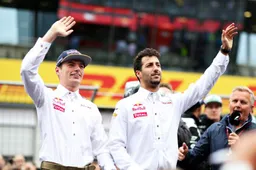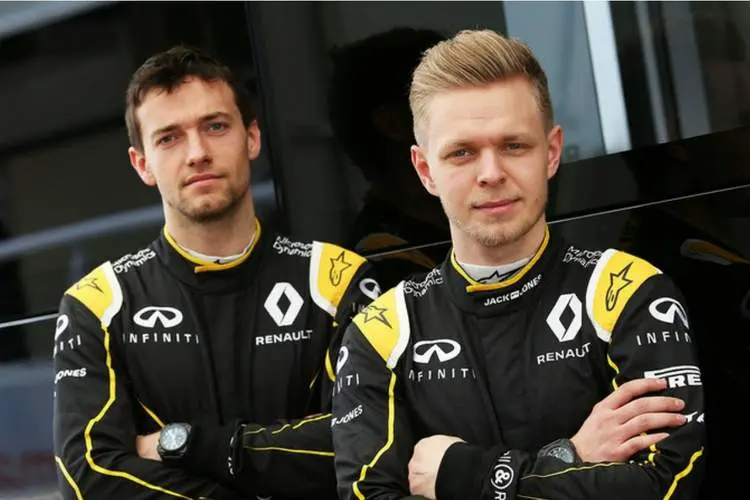
Renault team drivers and managers preview the Hungarian Grand Prix, Round 11 of the 2016 Formula 1 World Championship, at Hungaroring near Budapest.
Foreword by Cyril Abiteboul, managing director
The results we see on track at the moment don’t do justice to the amount of work and progress that is going on behind the scenes at Enstone and Viry. We are steadily building the team and recruiting more people and our rate of development is high. We saw this during the Silverstone test when we trialled some new aero and suspension parts that we hope will bring some added performance to the car.
Our focus, however, remains our mid and long-term goals and we continue to put a lot of effort into this. That’s not to say that 2016 isn’t important as a significant amount of resources are still going into racing this year. The results are not necessarily impressive, but we are learning lessons all the time that will serve us well in the future.
We look forward to Budapest, but know that the challenge will be big. Slow, twisty circuits don’t necessarily suit us well, but – as I said before – every lesson learnt, however harsh, gives us information for the future.
Fred Vasseur
Hungry for results. Renault Sport Formula One Team’s Team Principal Fred Vasseur knows what he wants heading to Budapest.
What’s the outlook looking to Hungary?
We made some good progress at the Silverstone test and we have two drivers who are highly motivated to deliver after an ultimately frustrating previous Grand Prix so there’s nothing to say we can’t do a good job.
We made some good progress at the Silverstone test and we have two drivers who are highly motivated to deliver after an ultimately frustrating previous Grand Prix so there’s nothing to say we can’t do a good job.
Where is the team’s focus?
We have updates still to come for this season but it’s true that much of our development focus is on 2017. We had plenty of parts to bring performance to this year’s car at the Silverstone test and if it wasn’t for the weather we would have been running a lot more evaluations there. This year is all about developing the team, maintaining focus and getting all the details in place to be able to deliver once we have achieved the stronger performance that we’re all working towards. We are still fighting for every position on track at every race we attend. The positive thing is that even though the results are not coming at the moment, the team is still positive. Everyone is working hard and wanting to get to where we can deliver results. It is a team of racers both at Enstone and Viry. We will get where we need to be.
We have updates still to come for this season but it’s true that much of our development focus is on 2017. We had plenty of parts to bring performance to this year’s car at the Silverstone test and if it wasn’t for the weather we would have been running a lot more evaluations there. This year is all about developing the team, maintaining focus and getting all the details in place to be able to deliver once we have achieved the stronger performance that we’re all working towards. We are still fighting for every position on track at every race we attend. The positive thing is that even though the results are not coming at the moment, the team is still positive. Everyone is working hard and wanting to get to where we can deliver results. It is a team of racers both at Enstone and Viry. We will get where we need to be.
What was learnt at the test?
The British weather certainly wasn’t beneficial that’s for sure! Sergey Sirotkin did a good job in the car for us again even though he faced the majority of the rain at Silverstone. We were able to get more laps with Jolyon and even though we didn’t complete all the programmes and assessments we wanted we still got a good knowledge base from the test.
The British weather certainly wasn’t beneficial that’s for sure! Sergey Sirotkin did a good job in the car for us again even though he faced the majority of the rain at Silverstone. We were able to get more laps with Jolyon and even though we didn’t complete all the programmes and assessments we wanted we still got a good knowledge base from the test.
What happened with the car right at the end of the test?
The car caught fire. This looks to be the result of a hydraulic leak and we’re naturally investigating what happened. The fortunate thing is that the fire happened on the final in-lap of the day so we were able to complete all we could for that day. There was no issue for Jo and the fire was soon extinguished.
The car caught fire. This looks to be the result of a hydraulic leak and we’re naturally investigating what happened. The fortunate thing is that the fire happened on the final in-lap of the day so we were able to complete all we could for that day. There was no issue for Jo and the fire was soon extinguished.
What were the lessons learnt at the British Grand Prix?
We didn’t have a good weekend in many regards. The pace was not fantastic and we had a few incidents during the race too. Our reliability was not where we wanted it to be and there was a mistake in a pit stop which proved damaging to our strategy too. We know the areas where we need to improve.
We didn’t have a good weekend in many regards. The pace was not fantastic and we had a few incidents during the race too. Our reliability was not where we wanted it to be and there was a mistake in a pit stop which proved damaging to our strategy too. We know the areas where we need to improve.
What happened in that Silverstone pit stop?
It was human error. As a team pit stops are conducted and practiced repeatedly but there is no pit crew that never makes mistakes. When you think about it, it’s is truly remarkable that it is possible to jack up a car, change four wheels and lower the car to depart in around two seconds. We are working all the time to make our stops quicker and we understand what went wrong in that isolated instance. We have changed the process to ensure the same mistake can’t happen again.
It was human error. As a team pit stops are conducted and practiced repeatedly but there is no pit crew that never makes mistakes. When you think about it, it’s is truly remarkable that it is possible to jack up a car, change four wheels and lower the car to depart in around two seconds. We are working all the time to make our stops quicker and we understand what went wrong in that isolated instance. We have changed the process to ensure the same mistake can’t happen again.
What’s the strategy for Esteban’s development?
Esteban drove for us in FP1 in Silverstone then he was kept busy by AMG Mercedes for two days of testing at Silverstone so we’ll be checking what he’s allowed to tell us about that experience! The plan is for him to drive again in FP1 in Hungary as part of his season-long programme.
Esteban drove for us in FP1 in Silverstone then he was kept busy by AMG Mercedes for two days of testing at Silverstone so we’ll be checking what he’s allowed to tell us about that experience! The plan is for him to drive again in FP1 in Hungary as part of his season-long programme.
Kevin Magnussen
Keeping cool. Kevin Magnussen reckons the Hungaroring is a cool track and his target is points.
What are your thoughts of the Hungaroring and Budapest?
It’s certainly a twisty track and it’s a little bit difficult to overtake there but it’s possible to have a good race there. I’ve had strong performances there in the past so I hope that will help this weekend. The race is very popular with fans and the support always helps. Budapest certainly is a city with a good vibe. It’s a beautiful with some lovely old buildings and some great restaurants. We don’t get enough time to explore the area during a race weekend unfortunately but I’m hoping to see a bit of it this time.
It’s certainly a twisty track and it’s a little bit difficult to overtake there but it’s possible to have a good race there. I’ve had strong performances there in the past so I hope that will help this weekend. The race is very popular with fans and the support always helps. Budapest certainly is a city with a good vibe. It’s a beautiful with some lovely old buildings and some great restaurants. We don’t get enough time to explore the area during a race weekend unfortunately but I’m hoping to see a bit of it this time.
What is it about the track you like?
The Hungaroring is a cool track, I find myself saying that for every circuit we visit but I’m a racing driver and all tracks are cool in a Formula 1 car! It’s another race to look forward to and hopefully another race where we can push as hard as possible and hope for points.
The Hungaroring is a cool track, I find myself saying that for every circuit we visit but I’m a racing driver and all tracks are cool in a Formula 1 car! It’s another race to look forward to and hopefully another race where we can push as hard as possible and hope for points.
Given the tight and twisty nature, how important is qualifying?
It’s very important. Yes you can overtake – turn one being the obvious example – but it’s not easy so qualifying position is a bit more important than at other places.
It’s very important. Yes you can overtake – turn one being the obvious example – but it’s not easy so qualifying position is a bit more important than at other places.
We should see better summery temperatures in land-locked Hungary than we had at Silverstone…
It was quite cool and very windy at Silverstone so any improvement weather-wise would be great! Whatever the weather though, we’ll approach the race weekend the same way, work hard and adapt to the circumstances. Last race’s result was certainly not what we’d hoped for so we’ll be working as hard as possible in Hungary with hopefully some learnings from the test that took place at Silverstone this week.
It was quite cool and very windy at Silverstone so any improvement weather-wise would be great! Whatever the weather though, we’ll approach the race weekend the same way, work hard and adapt to the circumstances. Last race’s result was certainly not what we’d hoped for so we’ll be working as hard as possible in Hungary with hopefully some learnings from the test that took place at Silverstone this week.
Jolyon Palmer
Hot to trot. Although delivering a char-grilled R.S.16 back to the garage at the end of the Silverstone test wasn’t quite the intended plan, Jolyon Palmer is in a positive mood heading to one of his favourite tracks of the season at the Hungarian Grand Prix.
What are your thoughts heading to Hungary?
I really like Budapest as it’s been the scene for some of my best races. I won there in the GP2 Series. I like the city and I like the entire place. The track is different in nature to many of them in terms of having a lot of slow speed corners so it feels a bit like Monaco without the walls.
I really like Budapest as it’s been the scene for some of my best races. I won there in the GP2 Series. I like the city and I like the entire place. The track is different in nature to many of them in terms of having a lot of slow speed corners so it feels a bit like Monaco without the walls.
What are the challenges heading there this season?
Obviously this will be my first Grand Prix there so there’s lots to think about. In particular, the circuit has been resurfaced so that’s an unknown – it might help us, it might not; we won’t know until we get there! New track surfaces are always a little bit of a venture into the unknown as you don’t know how much grip there will be, how the surface will evolve over the weekend and how the tyres will perform with the surface. Of course, a new surface doesn’t change the layout or make a significant difference to your approach to a particular circuit but nevertheless it does give an additional focus.
Obviously this will be my first Grand Prix there so there’s lots to think about. In particular, the circuit has been resurfaced so that’s an unknown – it might help us, it might not; we won’t know until we get there! New track surfaces are always a little bit of a venture into the unknown as you don’t know how much grip there will be, how the surface will evolve over the weekend and how the tyres will perform with the surface. Of course, a new surface doesn’t change the layout or make a significant difference to your approach to a particular circuit but nevertheless it does give an additional focus.
Are there any particular parts of the track which bring a smile to your face?
There’s not a particular section of the circuit which I’d pick out on its own, it’s more about how the entire circuit flows together and makes for an exciting lap. Once you brake for turn one you don’t get much respite until you’re back round again and on to the straight as all the corners flow together and come thick and fast. It’s fun to drive a lap, it’s good for racing, hopefully we can have some fun with the strategy and get a good result.
There’s not a particular section of the circuit which I’d pick out on its own, it’s more about how the entire circuit flows together and makes for an exciting lap. Once you brake for turn one you don’t get much respite until you’re back round again and on to the straight as all the corners flow together and come thick and fast. It’s fun to drive a lap, it’s good for racing, hopefully we can have some fun with the strategy and get a good result.
It’s tight and twisty but are there opportunities to overtake?
I’ve had some great racing there especially in the first sector. Braking into turn one is the main overtaking opportunity but there is opportunity to fight back straight after that corner so you can have some superb battles.
I’ve had some great racing there especially in the first sector. Braking into turn one is the main overtaking opportunity but there is opportunity to fight back straight after that corner so you can have some superb battles.
Your team-mate is always your best measure in motor racing; how do you think you’re measuring up against Kevin this season?
Obviously he’s got a bit more experience than me and he’s had a few of seasons working with a top team so he’s a good yardstick. It’s true he’s been just ahead of me in qualifying at many races but when you look at the actual lap times it’s so very close, we’re talking just a tenth or hundredths. Somehow it falls just so very slightly on Kev’s side. The races are often just as close and we’re often fighting for the same piece of track. This shows that we’re both generally getting the most out of the car for any given circumstance so this is beneficial for the team. I would be lying if I said I didn’t want to be the one who’s a tenth or so quicker in qualifying; maybe we can make that happen in Budapest.
Obviously he’s got a bit more experience than me and he’s had a few of seasons working with a top team so he’s a good yardstick. It’s true he’s been just ahead of me in qualifying at many races but when you look at the actual lap times it’s so very close, we’re talking just a tenth or hundredths. Somehow it falls just so very slightly on Kev’s side. The races are often just as close and we’re often fighting for the same piece of track. This shows that we’re both generally getting the most out of the car for any given circumstance so this is beneficial for the team. I would be lying if I said I didn’t want to be the one who’s a tenth or so quicker in qualifying; maybe we can make that happen in Budapest.
How was testing at Silverstone? It got pretty hot at the end…
We did get through a good programme on Wednesday even if we were continually looking at the clouds and hoping they didn’t unleash their loads. We were looking at different aero parts and configurations as well as doing suspension comparisons. It’s not the most exciting work in the world and you’re aiming for comparable data rather than trying to set the world alight with the fastest lap of the day. Although we didn’t set the world alight with our lap time we did manage to set the car itself alight which certainly wasn’t part of the plan. It looks like it was a hydraulic leak but fortunately it was all under control pretty quickly. It happened on our final in-lap of the test so it didn’t affect our day’s programme however it did give the crew at the track and back at Enstone quite a bit of unexpected work to do afterwards!
We did get through a good programme on Wednesday even if we were continually looking at the clouds and hoping they didn’t unleash their loads. We were looking at different aero parts and configurations as well as doing suspension comparisons. It’s not the most exciting work in the world and you’re aiming for comparable data rather than trying to set the world alight with the fastest lap of the day. Although we didn’t set the world alight with our lap time we did manage to set the car itself alight which certainly wasn’t part of the plan. It looks like it was a hydraulic leak but fortunately it was all under control pretty quickly. It happened on our final in-lap of the test so it didn’t affect our day’s programme however it did give the crew at the track and back at Enstone quite a bit of unexpected work to do afterwards!
Rémi Taffin
We can work as a team to maximise what we have got.
‘The work we have done so far has paid off and now based on our latest spec we are really just looking at the smaller details such as improving the PU in certain conditions.’
How did you feel the British Grand Prix went for the team?
It obviously wasn’t a classic performance but we didn’t have any particular worries. The power unit worked fine and we didn’t have any major reliability issues. It’s now the fourth race where we have used the new units and everything has worked well. We have now got to the point where we are working on the smaller issues to improve the wider picture and give extra performance through driveability or additional power. Having a reliable and generally driveable PU was one of our major targets this year and now that has been achieved we can work on the bigger picture, together with Enstone. We’re learning as a team all the time about operating car and every lesson learnt helps for the future.
It obviously wasn’t a classic performance but we didn’t have any particular worries. The power unit worked fine and we didn’t have any major reliability issues. It’s now the fourth race where we have used the new units and everything has worked well. We have now got to the point where we are working on the smaller issues to improve the wider picture and give extra performance through driveability or additional power. Having a reliable and generally driveable PU was one of our major targets this year and now that has been achieved we can work on the bigger picture, together with Enstone. We’re learning as a team all the time about operating car and every lesson learnt helps for the future.
Did you test anything specific in the Silverstone test?
The race weekend in Silverstone showed that we could still improve driveability in the wet. We experienced every type of condition over the three days, from heavy rain to a drying track, so we were able to see how the power unit performed in every circumstance. We identified that we could make minor improvements to the driveability in the slippery conditions so we have been concentrating on this in Silverstone. In actual fact we had perfect conditions to get this work done so when we go to another wet event – which will probably be the next race by the way we are going this year! – we will be fully prepared.
The race weekend in Silverstone showed that we could still improve driveability in the wet. We experienced every type of condition over the three days, from heavy rain to a drying track, so we were able to see how the power unit performed in every circumstance. We identified that we could make minor improvements to the driveability in the slippery conditions so we have been concentrating on this in Silverstone. In actual fact we had perfect conditions to get this work done so when we go to another wet event – which will probably be the next race by the way we are going this year! – we will be fully prepared.
What challenges does Hungary present for the team?
We know that slower tracks with lots of tight corners aren’t where our strengths lie. In general the car didn’t perform well over the kerbs and in the slower turns, but with the extensive work we achieved at Silverstone, Budapest should benefit from new parts and a better understanding of the car. On top of that, Budapest also has short straights between the corners so this could turn into our direction. We hence look forward to Budapest to maximise what we have got.
We know that slower tracks with lots of tight corners aren’t where our strengths lie. In general the car didn’t perform well over the kerbs and in the slower turns, but with the extensive work we achieved at Silverstone, Budapest should benefit from new parts and a better understanding of the car. On top of that, Budapest also has short straights between the corners so this could turn into our direction. We hence look forward to Budapest to maximise what we have got.
The same power unit is used in the Red Bull, does this give an indication of the performance potential of the engine now?
Circuit notes
- The Hungaroring is not considered a power sensitive track since one lap is taken at just 55% full throttle. The average speed is just over 180kph during qualifying, with each corner taken from second to fourth gear.
- The turbo is highly solicited in Hungary. The driver is constantly on and off the power and having a turbo that can kick in instantly with accurate power will greatly reduce lap time by improving driveability. Sector two is critical for turbo response since the corners are mid to low speed, with rapid braking events. Delivering power when needed is important to overall lap time reduction.
- The heavy braking zones will provide the K with the opportunity to recover energy. The main energy recovery points for the MGU-K will be the first corner, where the cars will brake from almost 300kph to under 100kph, and almost the entirety of sector two. Turns six and seven in particular (the chicane) feature another heavy braking zone that gives further opportunity.
- The MGU-H is really put through its paces in Budapest, possibly more than at any other circuit so far this year since the small bursts of power between the corners are intense.
- Ambient temperatures are expected to be hot, with the mercury well over the 30°C mark. Advanced cooling and heat dissipation strategies are to prevent overheating.
Tyre choice
- White – medium: Bikaver – an older blend of wine, very robust.
- Yellow – soft: Balatonboglár: a dry, light, fruity blend that lasts well on the palate.
- Red – supersoft: The Tokaj of the bunch. Sweet and full of flavour.
Memory Lane
The 1992 Hungarian GP holds a special place in Renault’s motorsport history as the race saw Nigel Mansell secure the company’s first ever World Championship. Williams, Renault and Mansell’s dominance was absolute as he won the first five races and finished second in Monaco. Further wins in France, Britain and Germany made the title a formality. Mansell came to Hungary needing to finish second. On lap 39 Mansell was in position, but close to the end of the race Mansell felt a handling problem. Suspecting a puncture, on the following lap he came into the pits for tyres, and dropped to sixth place. It took retirements ahead of him, collisions and a dose of good luck but the Briton eventually crossed the line some 40s behind winner Senna, taking his – and Renault’s – first world title.
Quirky facts
- The Rubik’s cube was invented by a Hungarian engineer, Ernő Rubik. Mr. Rubik originally named the toy as Magic Cube. Milán Baticz holds the record at Guinness, as he solved 4786 Rubik's cube within 24 hours. Other notable Hungarian inventions include the ballpoint pen, designed by László Bíró.
- Budapest has more thermal springs than any other capital city in the world. 70 million litres of thermal water rises to the surface daily.
- The funicular that takes you up to the Buda Castle from Clasrk Adam Square is more than 140 years old, and it was the second in Europe. The funicular has two cabins, called Margit and Gellért.
- After London, Budapest has the oldest underground train system in Europe. The line opened in 1896 in the year when Hungary celebrated its 1000th anniversary, hence the name Millenium Underground. It’s still in use as subway M1 and it connects the city center with City Park.
- Hungary is one of the oldest countries in Europe. It was founded in 896, before France and Germany became separate entities, and before the unification of Anglo-Saxon kingdoms.
Latest News

Loading