When people use the term "db", it is typically under the pretense of a standard of reference. For instance, in the case of a speaker, you could use the specification of "98 db with 1 watt, measured at 1 kilohertz, at one meter".
Or in the recording world, it might be used (loosely) as a reference to a given maximum level. "3 db down" (from maximum).
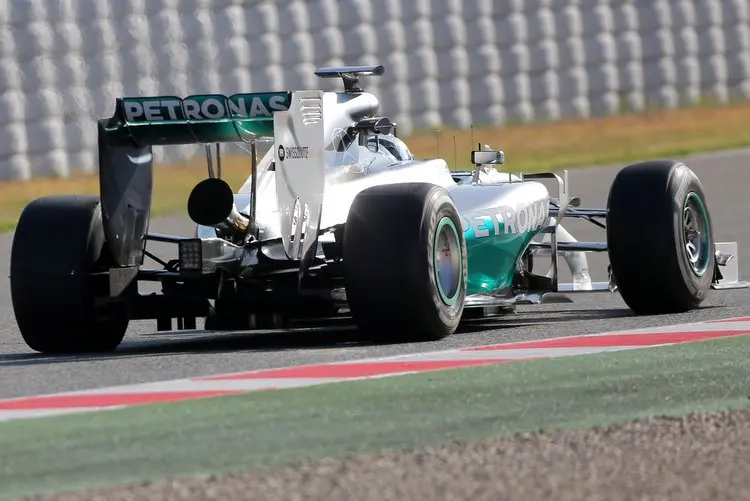
The problem in Formula One is that engineers are blithely saying the engines this year are "3 db louder". We're missing context in that statement! How far away was the measurement taken? Was the new measurement taken from the exact same point on the new engine from the old? Unless it's point blank on axis behind the exhaust outlet, I can't really fathom how it could be consistent.
As a measurement of energy at that point, it is relative to what you had before as the reference. It's usefulness is relevant only to the observational point. For a loudspeaker, a meter makes sense in the respect that a recording engineer might find themselves at a meter from the speaker when it is being used. What is the "operational distance" for the discussion of the sound of a Formula 1 car?

Once at the USGP at Indy I brought along my trusty Radio Shack db meter. Not perfectly accurate, but accurate enough in general. It maxes out at 126 db.
On this meter I have seen it read 120 db or more at rock concerts, in the seats opposite the stage in a big arena. I have also seen it read higher than that sitting point blank in front of a guitar amplifier, or around a snare drum.
That must mean the guitar amp or drum is "as loud as a Formula 1 car!". Of course not. Just like saying something is "as loud as a jet taking off!". For the most part, when people say "as loud as" they mean at a specific distance.
A snare drum that can make a db meter read 120 db is not going to be heard over the PA system at a rock concert on the other side of the building, if not amplified. Your phone's ear buds are probably capable to making 98 db - at the immediate distance of your ear.
It does not express the total energy in sound being released, and without a given distance and frequency it doesn't actually convey much information at all. I find it strange engineers are throwing these figures around because of this.

At the USGP, standing halfway up in the bottom tier of the stands on the exit of Turn 13 (approximately where the balcony started), some of the V10 cars pegged my meter: over 126 db. I don't know how far away that was - 50 meters? The only reason my measurement means anything is because it was taken where fans would be sitting! "126 db at 50 meters".
Stating they're 3 db louder by itself doesn't mean anything, and the closer the measurement the less relevant to the Average Fan. In reality, the only thing that really matters is the subjective impression. Can you hear the cars going through the gears on the other side of the track?
From a mile away, when you're approaching by shuttle bus, or walking to the track? Is the pitch of the cars such that it resembles a scream, does the translation through a gear illicit the sensation of aggression?
I would guess for the new exhaust system the answer to the above is "probably not". 3 db as a relative expression is considered to be the minimum amount that a person may perceive a change. While the engineers on paper may have achieved that as a goal, the fans will probably not find 3 db to be significantly anything akin to supplanting Formula 1's former auditory calling card.
Reader Rights is an opinion piece by GrandPrix247 reader Chip McDonald
Latest News











Loading