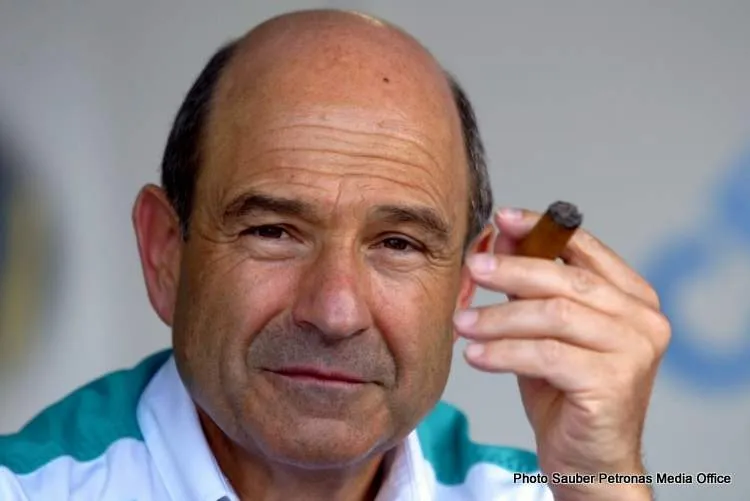
Peter Sauber is a living legend of motor racing and now an elder statesman who is no longer involved with his Formula 1 team as new owners plot a course for a new future at Hinwill, but at the age of 74 racing still pumps through his blood and his heart still beats for motorsport.
Sauber evolved into a team boss from his passion as an amateur racer. His team lured Mercedes back into racing in the late eighties, winning endurance championships and also initiating the German manufacturer's first foray into Formula 1 as an engine supplier.
In 2005 BMW bought Sauber to launch their own works campaign, but by November 2009 Sauber bought the team back.
This triggered an era which saw the Hinwill based Swiss team fight for survival. Although he withdrew from the daily running of the team in 2012 he was on hand to proffer advice to team boss Monisha Kaltenborn. But times were tough.
In July 2016, investment company Longbow Finance took over the company, Kaltenborn was sent packing and under the new management ditched a Honda engine deal.
Thereafter the team engineered a stronger deal with Ferrari which means they will have 2018 engines at their disposal this forthcoming season and have also secured Alfa-Romeo title sponsorship.
In the wake of this latest development Peter Sauber, the last of the old school team owners, gave a lengthy interview with Neue Zürcher Zeitung, and here are the highlights.
Sauber Alfa-Romeo... how does that feel?
PS: It's a very good feeling. The team does not change ownership, Alfa Romeo is simply the title sponsor and thus part of the team name, that is traditionally a top priority for a F1 team.
PS: It's a very good feeling. The team does not change ownership, Alfa Romeo is simply the title sponsor and thus part of the team name, that is traditionally a top priority for a F1 team.
Will Alfa-Romeo brand not drown Sauber brand?
PS: I do not believe so. Maybe that happens in Italy, and that would be fine, because Alfa Romeo is a name that arouses passion. For the team, it is a stroke of luck that the whole thing is orchestrated by CEO Sergio Marchionne, because he has a very good reputation in the automotive industry due to his success.
PS: I do not believe so. Maybe that happens in Italy, and that would be fine, because Alfa Romeo is a name that arouses passion. For the team, it is a stroke of luck that the whole thing is orchestrated by CEO Sergio Marchionne, because he has a very good reputation in the automotive industry due to his success.
How much did it hurt you to see the two Sauber drivers as backmarkers last year?
PS: It hurt. We should be at least in midfield, and I think that's possible. But if you know what a difficult phase the team has been through in the last three or four years, it was not a surprise.
PS: It hurt. We should be at least in midfield, and I think that's possible. But if you know what a difficult phase the team has been through in the last three or four years, it was not a surprise.
What are your F1 viewing habits?
PS: I sometimes watch a race in the evening with a time delay - if it's worth it. But when I watch live, then I have a laptop with the section times next to me. I'm used to watching a race like this.
PS: I sometimes watch a race in the evening with a time delay - if it's worth it. But when I watch live, then I have a laptop with the section times next to me. I'm used to watching a race like this.
Do you have any special feeling when you see an F1 car bearing your name?
PS: The emotional attachment to the team is still very strong. Forty-eight years ago I founded the company and spent more time with the team than with my family. You cannot just shake it off.
PS: The emotional attachment to the team is still very strong. Forty-eight years ago I founded the company and spent more time with the team than with my family. You cannot just shake it off.
How hard is it for you not to be part of the team anymore?
PS: I left the company in the summer of 2016 and said goodbye to the team. In the public, I have hardly expressed myself. It was important for me to get away. That was not so hard for me because the two years before that were very demanding.
PS: I left the company in the summer of 2016 and said goodbye to the team. In the public, I have hardly expressed myself. It was important for me to get away. That was not so hard for me because the two years before that were very demanding.
When was the last time you visited the Sauber headquarters in Hinwil?
PS: Not so long ago, I met Pascal Picci (CEO of new team owner Longbow Finance) and new team boss Frédéric Vasseur. My wife and I were also invited to the Christmas party of the team, which made me very happy.
PS: Not so long ago, I met Pascal Picci (CEO of new team owner Longbow Finance) and new team boss Frédéric Vasseur. My wife and I were also invited to the Christmas party of the team, which made me very happy.
Can you say that you have started a new life?
PS: This is a bit exaggerated, rather say: another life. It is the first time I live without pressure. Over the years, I had become so accustomed to this pressure that I had a problem with suddenly being out of tense situations. My body reacted to the change. I was helped by the positive outcome of the contract negotiations with Longbow Finance, which ensured the existence of the team.
PS: This is a bit exaggerated, rather say: another life. It is the first time I live without pressure. Over the years, I had become so accustomed to this pressure that I had a problem with suddenly being out of tense situations. My body reacted to the change. I was helped by the positive outcome of the contract negotiations with Longbow Finance, which ensured the existence of the team.
Do you miss the Formula 1?
PS: Yes, I miss it. I miss the people as well as the circus and travelling around the world.
PS: Yes, I miss it. I miss the people as well as the circus and travelling around the world.
You have always had a very ambivalent relationship with Formula One...
PS: Yes and no. When I started building sports cars for racing in 1970, I could not imagine ever competing in Formula 1. After the successful years in the sports car world championship it was only a small step into the Formula 1 and finally, I felt comfortable there.
PS: Yes and no. When I started building sports cars for racing in 1970, I could not imagine ever competing in Formula 1. After the successful years in the sports car world championship it was only a small step into the Formula 1 and finally, I felt comfortable there.
What is left of Formula 1?
PS: The team and I, we have achieved very, very much: as a small private team, the fourth place in the 2001 World Championship with [Nick] Heidfeld and [Kimi] Raikkonen. Later, as a BMW factory team, we had many podium finishes, a double success in Montreal and second place in the 2007 world championship. I also cherish very much a gesture from the then Daimler CEO Jürgen Hubbert. He presented me with a diamond pin in recognition of my role in bringing Mercedes back to F1.
PS: The team and I, we have achieved very, very much: as a small private team, the fourth place in the 2001 World Championship with [Nick] Heidfeld and [Kimi] Raikkonen. Later, as a BMW factory team, we had many podium finishes, a double success in Montreal and second place in the 2007 world championship. I also cherish very much a gesture from the then Daimler CEO Jürgen Hubbert. He presented me with a diamond pin in recognition of my role in bringing Mercedes back to F1.
In the 25 years in which Sauber is already in Formula 1, almost thirty teams have disappeared...
PS: To survive as a Swiss team for 25 years in Formula 1 is actually a mission impossible. When I was preparing for Formula 1 in 1992, English racing team owner Ken Tyrrell said to me: It's great that you want to get involved. But you can forget that, it's never possible from Switzerland.
We did it, and that's a fantastic achievement. Today, Sauber is the fourth oldest team in Formula 1 after Ferrari, Williams and McLaren. Over 300 employees building highly complex racing cars and bringing technical know-how to Hinwil.
PS: To survive as a Swiss team for 25 years in Formula 1 is actually a mission impossible. When I was preparing for Formula 1 in 1992, English racing team owner Ken Tyrrell said to me: It's great that you want to get involved. But you can forget that, it's never possible from Switzerland.
We did it, and that's a fantastic achievement. Today, Sauber is the fourth oldest team in Formula 1 after Ferrari, Williams and McLaren. Over 300 employees building highly complex racing cars and bringing technical know-how to Hinwil.
Was there ever a carefree time at Sauber?
PS: Yes, these were the four years as a BMW factory team. There was enough money available, the Hinwil factory was expanded, staff increased. Those were the positive things at this time. A negative aspect was that the company adopted a corporate way of thinking. We lost the racer mentality, which is hugely important. The team has to find this old strength once again.
PS: Yes, these were the four years as a BMW factory team. There was enough money available, the Hinwil factory was expanded, staff increased. Those were the positive things at this time. A negative aspect was that the company adopted a corporate way of thinking. We lost the racer mentality, which is hugely important. The team has to find this old strength once again.
Was there a moment in the aftermath of the BMW exit when you said: It would be better to close down the whole store?
PS: When I bought back the 2009 team from BMW, I knew it was going to be very difficult. But that had been the entry into Formula 1, too. In economic terms, the buyback was certainly unreasonable. But we wanted to get the team.
PS: When I bought back the 2009 team from BMW, I knew it was going to be very difficult. But that had been the entry into Formula 1, too. In economic terms, the buyback was certainly unreasonable. But we wanted to get the team.
Who did you feel committed to?
PS: The team, especially the core team of perhaps 50 employees, some of whom were with us during the sports car era. They helped to build the team and invested a large part of their working lives. There was a lot of passion. To step in front of the team and to say: "We have to conclude, the risk of a repurchase is too big for me" - I would not have brought that to heart.
PS: The team, especially the core team of perhaps 50 employees, some of whom were with us during the sports car era. They helped to build the team and invested a large part of their working lives. There was a lot of passion. To step in front of the team and to say: "We have to conclude, the risk of a repurchase is too big for me" - I would not have brought that to heart.
After the BMW-Sauber years?
PS: In the years after BMW, there were more than ten interested parties who wanted to buy us.
PS: In the years after BMW, there were more than ten interested parties who wanted to buy us.
Serious investors?
PS: No, I would not call the majority of those seriously interested. There were two exceptions that were serious, but I cannot name them.
PS: No, I would not call the majority of those seriously interested. There were two exceptions that were serious, but I cannot name them.
What happened with the Russians who had big plans for Sauber in 2013?
PS: The contract with Sergei Sirotkin as a test driver was serious, the financial obligations were met. But we had also hoped for investors on a large scale...
PS: The contract with Sergei Sirotkin as a test driver was serious, the financial obligations were met. But we had also hoped for investors on a large scale...
In the spring of 2016, Sauber faced a situation in which there was almost no progress. There were debt enforcement and delayed payroll payments...
PS: The situation was very tense for a long time. We fought on all fronts, and again and again, we managed to avert the worst. In the spring of 2016, Longbow Finance showed interest in the Sauber Group, shortly thereafter the takeover happened. Perfect!
PS: The situation was very tense for a long time. We fought on all fronts, and again and again, we managed to avert the worst. In the spring of 2016, Longbow Finance showed interest in the Sauber Group, shortly thereafter the takeover happened. Perfect!
Longbow Finance and the Swedish family Rausing have saved Sauber. Do you know about the motivation of the new owners?
PS: During the sales negotiations, I came to know and appreciate Pascal Picci, CEO of Longbow Finance. He is not only interested in the Formula 1 team, but also in the entire Sauber Group with the companies Sauber Aerodynamik and Sauber Engineering.
PS: During the sales negotiations, I came to know and appreciate Pascal Picci, CEO of Longbow Finance. He is not only interested in the Formula 1 team, but also in the entire Sauber Group with the companies Sauber Aerodynamik and Sauber Engineering.
How much were you involved as the majority owner?
Latest News
Loading