Unplugged with Racing Pride CEO Matthew-Harriet Randall: Is Lewis gay and other stories...
F1 NewsFriday, 19 June 2026 at 07:30
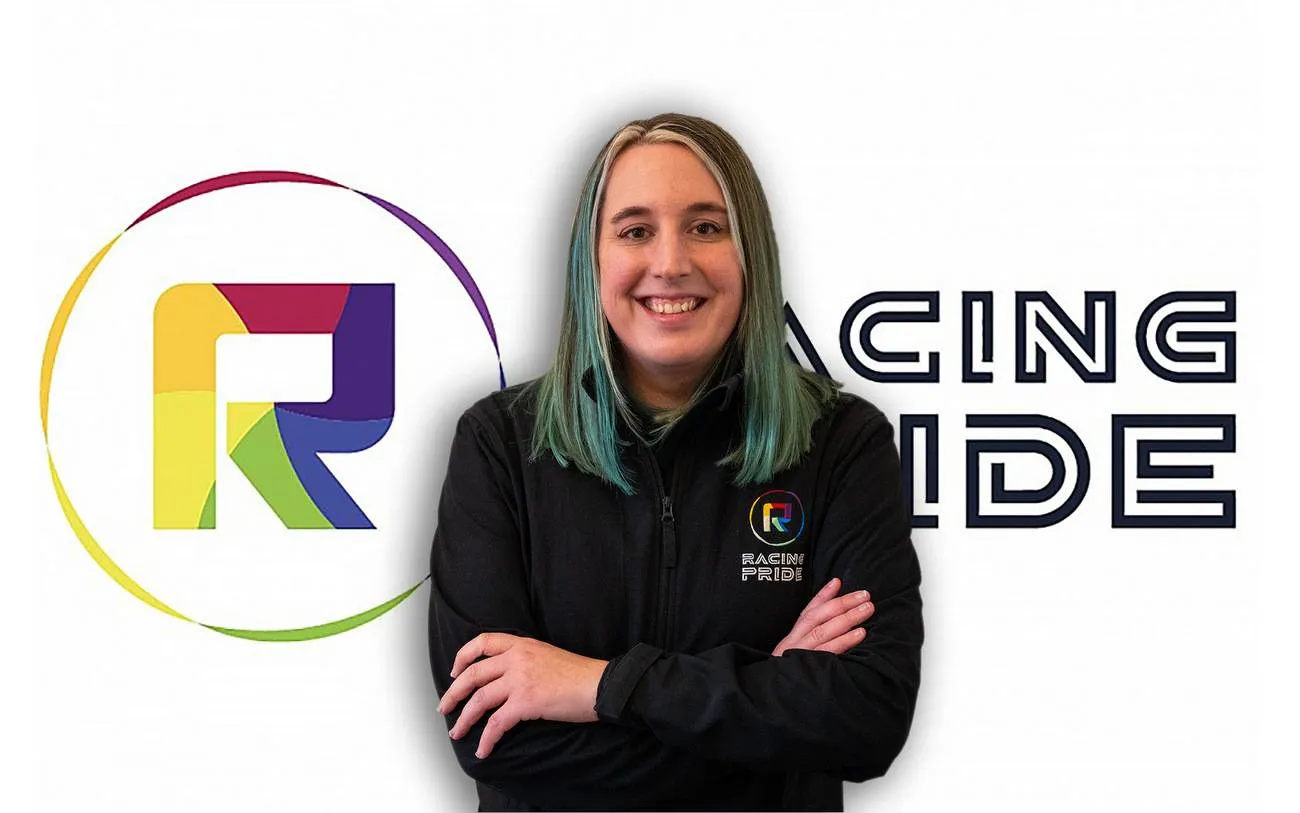
Tapped up to interview Racing Pride CEO Matthew-Harriet Randall, I felt it appropriate to accept to delve into an area of our sport that was little known to me. First of all what is Racing Pride?
Racing Pride is a motorsport organisation dedicated to promoting LGBTQ+ inclusivity across all areas of the sport. Its mission is to increase visibility, encourage participation, and foster a culture of acceptance and equality by highlighting the experiences and achievements of LGBTQ+ individuals in motorsport.
The organisation operates through several key initiatives. Its Ambassador Programme brings together drivers, industry professionals, officials, engineers, mechanics, media figures, and other motorsport participants who act as role models and advocates for inclusivity.
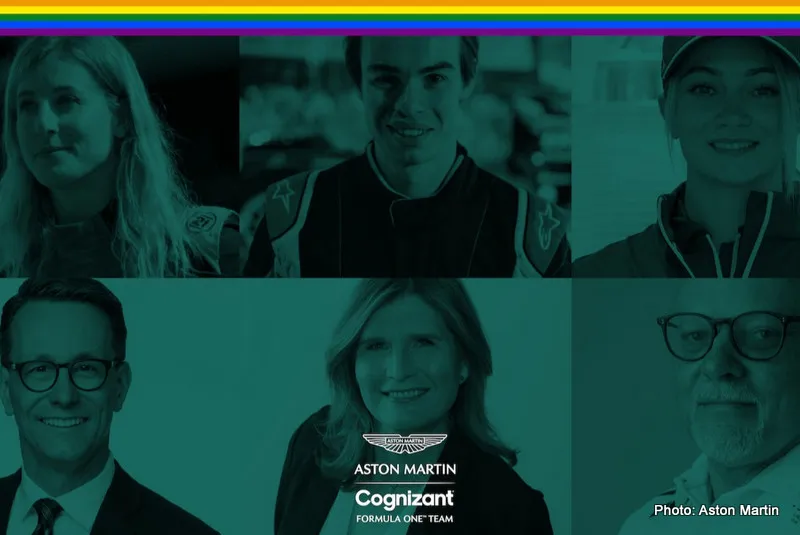
Racing Pride also works closely with teams, manufacturers, governing bodies, championships, and companies to deliver training, resources, and awareness campaigns. Partners have included Aston Martin, Red Bull Racing, Mercedes, Alpine, and Arnold Clark.
Racing Pride supports a growing international membership community through networking opportunities, events, newsletters, and online platforms. It also raises awareness at major motorsport events through Pride Hubs, panel discussions, and media engagement.
Additional initiatives include its Spotlight Series, which shares personal stories from LGBTQ+ people and allies in motorsport, and the development of educational resources designed to help create more inclusive environments throughout the sport.
Not wanting this Zoom interview to be a "what's you favourite colour, ot your favourite food" session we opted for an open ended discussion, unplugged style more appropriate to tackle an area of our sport that has, admittedly, been off my radar which is already overworked!
Interview with Matthew-Harriet Randall

Paul Velasco: How long you've been in it and what you're doing and your plans. Let's start.
Matthew-Harriet Randall: I've been CEO for about a year now. Previously, before that, I was a non-executive director within Racing Pride for about a year before then. So, I've been around for about two years on a level of executive member, which has always been really, really fun and interesting. Over the past couple of years, since I've been active, we've done a lot of different activations. I think that's one of the things that's really important for the community: that we don't just focus on a single area, we try and focus across the entire industry so that the...
PV: Industry in Europe?
MHR: No, worldwide. We've held events in Australia, within Europe, as well as in the US as well. So, we've had several activations at the Grand Prix in Austin. In the last couple of years, we've held events in Miami as well. This last one this year was a really great event that we held in concert with the Harvey Milk Foundation, which was absolutely fantastic. Where we were able to honour driver Jess Hawkins for all the great work that she does, not just in the LGBTQ+ community but wider inclusion as a whole. As I say, we try and make sure that we're looking across the board, both across the LGBTQ+ space but also intersectionality across gender, racial spaces, and things like that. Because it's really important to work with not just the people you're trying to help but across the board, because if you help one, you help another space. In itself, we look at trying to help fans get involved in the sport, as well as staff — people that work within the industry. So we have what we classify as industry partners, like Mercedes, Aston Martin, Formula One, where we have a year-long engagement where we help with their training of directors and visibility days, say...

PV: Training — is that awareness kind of training, or...
MHR: Awareness training, as well as how to be a good ally and how to approach specific conversations.
PV: Okay. Tell me, how do I be a good ally? Or what would you tell Toto Wolff?
MHR: One of the big things that we all often say is visibility, so wearing a bracelet, a pin badge, or something like a lanyard is really important. It's symbolism, but it's also an active item that you can do. That means that if somebody isn't out, you're telling them that they can be themselves. And I think that's really important, especially so in the workplace, where, especially in Formula One and in motorsport, the amount of effort and energy that's put into day-to-day activities means that if you are having to hide a part of yourself, even if that's the simple case of language. So one of the things we do as part of training is to explain that when you're asking somebody if they have a partner, say, "Do you have a partner?" Don't specifically say, "Do you have a wife or a husband?" Because that is a leading question — you don't know which way around that might be. And then you might suddenly put that person straight on guard. We've had loads of conversations where, as a man, that's been said: "Oh, you must have a wife because you're such a good-looking guy," and then they suddenly go, "No, I don't." But then they don't feel comfortable enough to go, "Actually, no, I do have a husband," because you've automatically put them off. So it's really important...
PV: Still an issue now?
MHR: I unfortunately think it is, and I think some of this is happening more and more, especially like this year and last year. A lot more of this sort of stuff is now being politicised again, which means that people are starting to question things again, which is unnecessary and unnatural. One of the big reasons why Racing Pride was initially born was one of our co-founders going to paddocks and things like that, not being able to bring their other half to the paddock without them being their 'friends.'

PV: Okay, I get it, but it's changed a lot...
MHR: It's definitely moved forward.
PV: Ralf Schumacher and Etienne... Ralf is the Martin Brundle of Germany, that's how visible he is in terms of Formula 1 post his career in the cockpit. He was a Grand Prix winner. He came out of the closet, he was married, he had a kid. And in between the commentary on current race weekends, there's ads promoting his show, Ralf & Etienne, where they'll have visuals of them, very romantic and everything. I have never seen a reality show on a Formula 1 star and his partner, for instance, Charles Leclerc and his girlfriend. But we do have a reality show with Ralf and Etienne. So, don't you think those barriers are now just not a barrier anymore?
MHR: Yeah, and it's a fair question, and I think, depending on where you are in the world, that very much gives a different viewpoint on different items. Some places are significantly better. So one of the things that we've done this year is that we've produced a travel guide for our partner teams that gives you an understanding of what you should do if you're a team member that has a trans individual on the race team or a gay or lesbian individual and what you should be doing. So, if we look through, we have various states where there's neutrality, some places that are really positive, and some places that are really negative. I think we'll probably find that Germany is a particularly positive location...

PV: In the history of Formula 1 [or the world for that matter], let's be honest, the amount of men that are bisexual or homosexual is far vaster than we have numbers for, because many're in closet. Many gay folk are forced underground despite a large gay community, for instance in Middle East and certain Asian countries. They are severely villified. Are these not places we should focus on?
MHR: I completely agree, and that's where, like I say, there's a reason why we try and do things as multinational as possible with the resources that we have available. One of the big things that we try and do... having those spaces available in those locations where people from those countries aren't comfortable but have their thought processes validated that they're not unusual, even though their country itself is making them feel like they are. It's a double standards thing.
PV: It's a double standards thing...
MHR: Exactly. And there's a huge gay community in the Middle East... There is around the world, right? It's a large proportion.
PV: There's the open gay and there's the closeted guy, and I think the more intense the guy is in the closet, the more radical he is against the cause. You see that a lot in America. I want to give you an example. In my youth, there was a guy called Rock Hudson. He was an actor, macho, like Brad Pitt of today. Then he dies, and years later it emerges he was gay. You never really know. [Nelson Piquet] said Ayrton Senna was gay. Personally, I'm not sure that Lewis isn't gay or bi. Ralf [Schumacher] has come out. I met Lella Lombardi at Kyalami, I got her signature in 1975. She was a Formula 1 driver who was gay. Would it matter to me that Senna was gay? Not at all. Would it matter to me that Lewis is gay? No way. What's the problem?

MHR: Throw something back at you. Obviously we can never question who's potentially bi, gay or in the closet, but the fact is that there aren't that many visible people when there is likely to be, same as with Ralf, right? It was much later down the line where he felt comfortable enough to do so. And that is still, unfortunately, the case. The number of times that I've been at an event and a parent of a child has come up to me, or somebody within the community has come up to our stand going, 'Thank you for being here. I don't feel comfortable being out to my colleagues or in a car; however, having that representation starts giving me the courage...'
PV: Yes, I understand.
MHR: Which means that if we're even getting that in Western society in places that we think are more positive, that is a problem. We have the same thing with F1 Academy with women as well. We now have our first GB3 winner in Abby from the other weekend, which is fantastic to see that momentum, but without those sorts of programmes in place, that probably wouldn't have happened.
PV: Okay, I disagree with you. I get it for every other level of motorsport. It's very important, but Formula 1 should be meritocracy-based: the best of the best. Be you a woman, a man, white, black, gay or whatever — the best of the best, be it designing cars or the guys on the wheel guns.
MHR: It should be, and it is on paper. But there's so many people that don't feel that they can try and do it, because they haven't got those role models. which is why one of the things we look at is STEM activities early on because you'll never get to that diverse thought process at that top level to get even better sport if you haven't already picked out people...

PV: The penny dropped there. I'm understanding where it's coming from, but in terms of the meritocracy side of it, I'm going to ask you this question. Hypothetically, if I were gay, and I go to Williams to say, "Listen, mate, I'm the new Adrian Newey, but I'm gay. Is it going to impact me getting that job?
MHR: I don't believe it's going to impact you getting the job, but it might, depending on how everybody else acts within the team, impact how good you are at your job...
PV: You think still to this day it's something.
MHR: Definitely is. I talk to people all the time who feel that they can't do something... if there is 20% of your brain power trying to make sure you don't accidentally slip up, that's 20% that can't be used on your work. And for mental health, especially in something at the top of the sport... people are doing crazy hours all the time. That drains your mental power... I will tell you a story. This was five or six years ago... a transgender individual came for an interview, and the hiring manager ran back in, going, "Oh, there's a man in a dress, and I don't know what to do..." So it's those systematic items that need to be broken down.
PV: I didn't think of that... Hypothetically again, if Kimi Antonelli were gay how would that impact straight fans?
MHR: If Antonelli came out as gay, how many news articles would be written about him being gay, not specifically about what he's been doing?... That's one of the things that I often say about Racing Pride. At the point where things aren't newsworthy is the point that we don't need to exist.

PV: Do you ever think that'll ever happen in our lifetime?
MHR: I doubt it... but to the point, I expect in some places that eventually it will just be a normal situation. However, I can tell you, in the UK, that's not necessarily the case. Spain is also another great place... Another really personal item at the moment is the US, because it's being massively politicised. When we did our activation in Miami, there were a lot of questions on what we could call this event...
PV: Hollywood is gay. The guy who controls the world, Peter Thiel is gay. To me it's so normal. When asked to do this interview by your team, I really didn't know what I was going to talk about because, for me, it's normal. Nothing to see here...
MHR: And that's it... people like yourself who would be genuinely confused, because they don't see why it matters. It's great that there are people like you that think that we are in a good, positive space. However, the number of people from the LGBTQ+ space that come up to us and say 'Thank you for existing. It's allowed me to do something more.'
PV: That must be an amazing feeling.
MHR: A great feeling, but it also shows that we're still needed. Anybody who is able to feel comfortable to come out is absolutely amazing and that will change the world. One of the people that we often talk about is Seb Vettel... But the fact is that we don't have more at the top of the game.
PV: Ralf? Why don't you engage with Ralf and Etienne? Are you involved with Ralph at all?
MHR: We haven't been massively involved. We've reposted some of Ralf's stuff.
PV: In closing, is there anything you would like to say? Any message you want to get out there to people?
MHR: The biggest thing for me is showing visible allyship. Come and say hello to us; it means a lot when you see us out and about, but don't just make it just Pride month; make it a year-long commitment... If there is somebody that has had a bad experience within your workspace, back them up. They may not feel comfortable backing themselves up. That in itself shows so much more assistance than anybody can ever know.
Latest News

Loading