Netflix Drive to Survive 8: Not long to go! What's in store for Formula 1 fans?
F1 NewsMonday, 23 February 2026 at 11:32
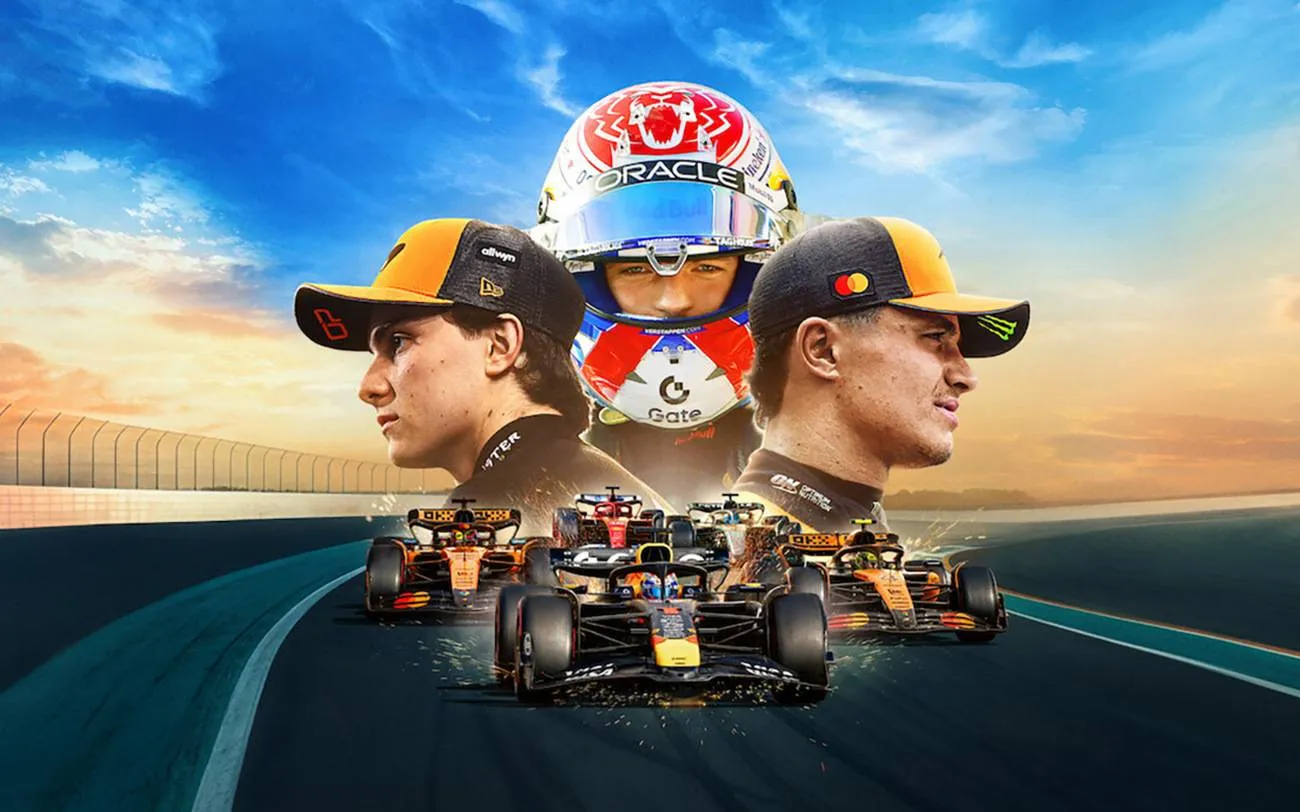
Season 8 of Formula 1: Drive to Survive premieres this Friday on Netflix, once again promising unprecedented access behind the scenes of the sport.
The latest instalment will follow the drivers and teams as they prepared for battle in the 2025 FIA Formula 1 World Championship, offering never-before-seen footage from across the paddock.
Produced by Box to Box Films, the series is executive produced by James Gay Rees and Paul Martin, and has become a fixture on the Formula 1 calendar since its debut in 2019.
While Netflix has not yet confirmed the episode count for season 8, each of the previous 7 seasons has consisted of 10 episodes.
Episode titles are usually revealed closer to release, but the 2025 season provides no shortage of material to make this F1 documentary.
Title fight and McLaren tension in the limelight
At the centre of the story is McLaren’s intra-team battle. Norris and Piastri went wheel to wheel for their first World Championship, with the so-called papaya rules under intense scrutiny as both drivers chased race wins throughout the campaign.
The fight went down to the wire in Abu Dhabi. Norris secured his maiden Drivers’ Championship with a third-place finish, enough to beat Verstappen by 2 points. Verstappen won the race but had to settle for second in the standings.
For much of the year, it was the McLaren duo setting the pace, before Verstappen mounted a late-season comeback. After struggling with car balance and performance early on, the Red Bull driver surged after the summer break, closing the gap dramatically and overtaking Piastri in the standings before the finale.
Red Bull upheaval and Ferrari spotlight

Off track, Red Bull’s leadership drama is expected to feature heavily. Horner was replaced on 9 July 2025 by Laurent Mekies, who stepped up from Racing Bulls to take charge. After 20 years at the helm, the change marked one of the most significant management shifts in modern Formula 1.
Driver changes also created headlines. Lawson replaced Perez at Red Bull but lasted only 2 race weekends before being dropped. Tsunoda took over from the Japanese Grand Prix onward, remaining in the seat for the rest of the season, before moving to a reserve role for 2026 as Hadjar was signed.
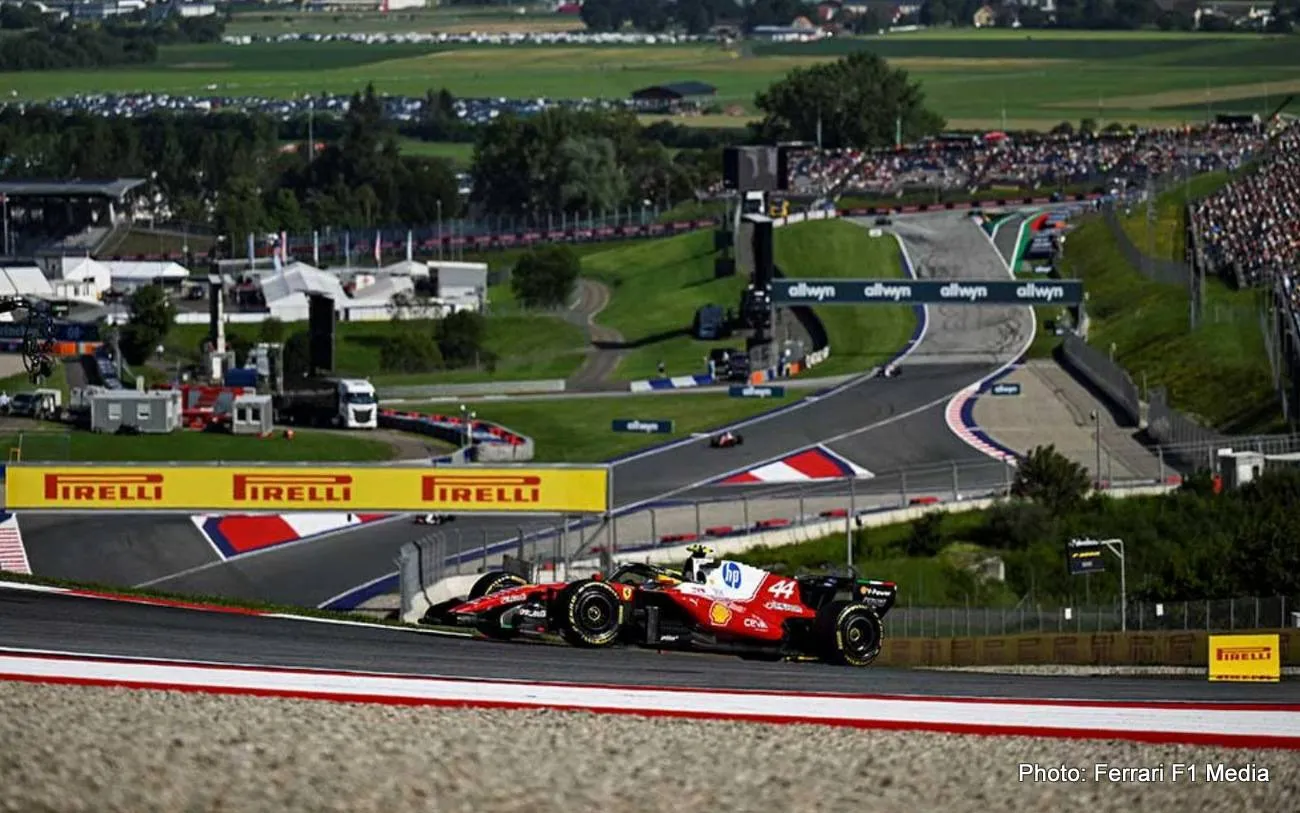
Ferrari’s season will also be under the spotlight. Hamilton’s first year in red proved tougher than expected. Although he claimed a sprint victory in China, he failed to reach the podium in a grand prix and endured his most challenging campaign to date.
Another likely storyline is Hulkenberg’s long-awaited breakthrough. At the British Grand Prix, the German secured his first Formula 1 podium after 239 race starts, climbing from 19th on the grid in wet conditions to finally end his record drought.
With a championship decided by 2 points, management shake-ups, driver swaps and long overdue milestones, season 8 has no shortage of narrative threads. Netflix will once again look to frame the human drama behind the numbers when the new series drops on 27 February.
Drive To Survive Origin and Beginnings

Formula 1: Drive to Survive is a documentary series co-produced by Netflix and Formula One Management (via Liberty Media, which acquired F1 commercial rights in 2017).
The concept originated in 2017 when Liberty sought to expand F1’s global – especially the United States – audience by offering immersive behind-the-scenes access beyond race weekends. Initially pitched around Red Bull Racing, it evolved into a broader fly-on-the-wall look at all ten teams, drivers, and principals.
Box to Box Films executive producers James Gay-Rees and Paul Martin (pictured above) led production, with Sophie Todd as showrunner. Netflix commissioned a 10-episode first season in March 2018, covering the 2018 championship. Filming involved extensive paddock access, though on-track footage came from F1’s own cameras with added commentary.
Season 1 premiered on 8 March 2019, instantly drawing new viewers with its character-driven narrative of rivalries, team politics, and personal struggles. All subsequent seasons follow the prior year’s championship, releasing annually in late February or early March.
Early seasons focused heavily on midfield battles and smaller teams (Haas, Williams, McLaren, Renault) to humanize the sport, while still covering top teams. This format proved highly effective at condensing a season’s drama into bingeable arcs.
Repercussions and Impact on Formula 1

Drive to Survive is widely credited with transforming F1 from a niche European motorsport into a mainstream global entertainment phenomenon, particularly in the United States. Pre-2019 U.S. race viewership averaged under 600,000; post-Series 1 it rose sharply, exceeding 1 million per race by the early 2020s (Nielsen data), with surges in younger demographics and female fans (up ~30% at events). It spurred new U.S. races (Miami 2022, Las Vegas 2023), sponsorship booms, and sold-out grandstands.
The series popularised drivers like Daniel Ricciardo, Guenther Steiner (Haas), and Lando Norris as relatable characters, boosting merchandise and social media engagement. F1’s global audience grew, with Liberty citing sustained interest even in non-title-fight years.
However, criticisms emerged: some drivers (notably Max Verstappen, who skipped interviews for Seasons 3–4) accused it of over-dramatising rivalries, staging scenes, misusing team radio, and fabricating tension for narrative effect. Verstappen later returned after assurances to “keep it real.”
Despite this, the show remains F1’s most powerful marketing tool, with Netflix renewing it through at least Season 8 (2026).
Season 1 (2018 championship, released 8 March 2019)

The inaugural season introduces F1’s high-stakes world through Daniel Ricciardo’s pivotal year at Red Bull, marked by tension with Max Verstappen and his subsequent move to Renault. McLaren’s internal battle between Fernando Alonso and Carlos Sainz Jr. highlights turnaround efforts, while Williams fights for relevance amid decline. Haas enjoys early success before fading, and Red Bull-Renault supplier tensions boil over. Mercedes dominates, but the focus stays on midfield drama, personal pressures (e.g., Romain Grosjean’s confidence issues), and the Monaco glamour. It establishes the series’ signature mix of on-track action, paddock politics, and human stories, drawing in non-fans with accessible storytelling. (98 words)
Season 2 (2019 championship, released 28 February 2020)

Building on debut success, Season 2 explores Red Bull’s driver carousel with Pierre Gasly’s struggles and demotion, promoting Alex Albon. Haas faces internal turmoil and poor performance under Guenther Steiner’s fiery leadership. Ferrari’s intra-team dynamics and Mercedes’ continued supremacy feature, alongside McLaren’s resurgence. Key episodes capture boiling point frustrations, supplier fallouts (“Raging Bulls”), and emotional farewells. The season humanizes the grind of a full campaign, including “Musical Chairs” team swaps, while COVID-19 halted later filming. It deepened fan investment in personalities, solidifying the series’ role in F1’s growing popularity. (92 words)
Season 3 (2020 championship, released 19 March 2021)

Amid the COVID-disrupted season, the series spotlights Lewis Hamilton’s record-equaling seventh title push against a resurgent Mercedes. Standout moments include Romain Grosjean’s fiery Bahrain crash (“Man on Fire” – highest-rated episode at 9.4/10 IMDb), George Russell’s one-off Mercedes substitute role, and Ferrari’s woes. Alex Albon’s “Comeback Kid” resilience and team pressures feature heavily. It balances racing drama with pandemic challenges, driver mental health, and rivalries, earning praise for emotional depth while facing early criticism for dramatization. The season accelerated U.S. viewership growth post-release. (89 words)
Season 4 (2021 championship, released 11 March 2022)

Often cited as a peak, this season chronicles the epic, controversial Hamilton-Verstappen title duel – the closest in decades – with “Clash of the Titans” and Abu Dhabi finale drama. McLaren’s rise, Aston Martin’s rebrand, and team principal tensions (e.g., “Dances With Wolff”) dominate. It captures on-track battles, crashes, penalties, and off-track mind games, drawing record audiences. Verstappen’s dominance narrative begins, but the human cost of rivalry shines. Widely credited with cementing F1’s U.S. boom, including Miami GP hype. (85 words)
Season 5 (2022 championship, released 24 February 2023)

Verstappen’s near-unstoppable Red Bull dominance contrasts with Ferrari’s early promise and collapse (“Pardon My French”). New ground-effect regulations reshape the grid; McLaren and Alpine fight back. Focus includes team principal changes, driver futures, and “Alpha Male” power plays. Emotional arcs cover comebacks and retirements. It recorded strong viewership (90+ million hours globally in early months per Netflix), though some noted less edge-of-seat racing than 2021. The season reinforced F1’s entertainment value beyond pure sport. (82 words)
Season 6 (2023 championship, released 23 February 2024)

Red Bull’s internal “Civil War” and Verstappen’s third title feature alongside McLaren’s rapid ascent and Ferrari’s resurgence (“Forza Ferrari”). Driver market musical chairs, cost-cap dramas, and midfield battles (Haas, Williams) provide narrative fuel. Episodes explore pressure on Pérez, team strategy wars, and emotional exits. It maintained strong global appeal as the top sports documentary of its period, highlighting F1’s evolving competitiveness despite one-team dominance. (78 words)
Season 7 (2024 championship, released 7 March 2025)

Covering Hamilton’s shock Ferrari move announcement (overshadowed by Christian Horner allegations), Norris’s spirited title challenge against Verstappen (“Frenemies”), and Mercedes’ leadership transition with Russell stepping up. Sainz navigates seatlessness post-Hamilton, Leclerc chases Monaco glory (“Le Curse of Leclerc”), and McLaren battles strategy woes en route to Constructors’ contention. Pérez faces Red Bull scrutiny, while Haas/Alpine leadership changes and Singapore’s heat add flavor. The finale pits McLaren against Red Bull/Ferrari in a tight Constructors’ fight, plus Ricciardo’s exit. It sustains drama through off-track scandals and on-track rivalries. (94 words)
Viewership Numbers

Netflix does not publicly release comprehensive per-season “viewer” totals (using its proprietary “views” metric: generally an account watching at least 2 minutes of content, with aggregate reporting for titles/seasons). Data comes from Netflix’s semi-annual engagement reports, Nielsen (U.S.), and media analyses:
- Season 1: Strong debut; U.S. first-week ~280,000 viewers (Nielsen). Helped spark initial F1 growth.
- Season 4: Peak early hype; U.S. first-week ~475,000 viewers.
- Season 5 (2023): Highest documented – >90 million hours viewed globally in first months (Netflix); U.S. first-week ~570,000 viewers (40% increase over S4, including catch-up >643,000). Top sports title that period.
- Season 6 (2024): First-week global ~2.9 million views; strong half-year performance (outpacing other sports docs).
- Season 7 (2025): First-week global 2.6 million views (11.93% hours drop vs. S6 to 19.2M); half-year 10.4 million views (down ~10.3% from S6) and hours down 16%. Still the most-watched sports documentary in H1 2025, topping competitors like Full Swing.
Overall trend: Explosive growth through Season 5, then slight stabilization/decline as F1 mainstreamed, but remains Netflix’s flagship sports docuseries. Cumulative impact: Tens of millions of unique viewers across seasons; YouGov (2023) estimated 6.8+ million for the series broadly, with 31% aged 18–29 and high binge rates (63% watched 3+ episodes in a row).
Most-watched/most popular episodes (no official per-episode viewership; based on IMDb ratings, cultural impact, and mentions):
- “Man on Fire” (S3E9, Grosjean’s crash/fire) – 9.4/10 (highest-rated).
- “Raging Bulls” (S2E6, Red Bull/Gasly drama) – 8.7/10.
- “The Comeback Kid” (S3E6) – 8.5/10. Other notables: Season 4 title-fight episodes, Season 1 opener, and S7 scandals. Early seasons and title-decider arcs consistently rank highest in engagement.
Drive to Survive revolutionized F1’s accessibility and commercial success, turning technical racing into compelling human drama. Seasons 1–7 chronicle the sport’s evolution from Mercedes hegemony to Red Bull/McLaren/Ferrari contention, while driving measurable audience and revenue growth.
Challenges around authenticity persist, but its legacy as F1’s “greatest marketing tool” is undisputed. Data up to early 2026 confirms sustained relevance despite minor viewership softening.
This positions Drive To Survive as the 'final word' on Formula 1 seasons, which sites like GRANDPRIX247 cover with intensity, but will never have the access that the Netflix crews are afforded.
Latest News
Loading