Are they for real? That is the question many have asked about Haas F1 Team.
The question first came in January 2014 when team founder and chairman Gene Haas responded to the FIA’s expression of interest. When the FIA granted Haas a Formula One license in April 2014, the question persisted.
The frequency of the query ebbed in September 2014 when Haas F1 Team formed a technical partnership with Scuderia Ferrari. And when Formula One veteran Romain Grosjean was signed by Haas F1 Team in September 2015, it injected another strong affirmation that, yes, Haas F1 Team was for real.
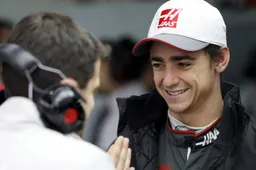
A month later, the reality that Haas F1 Team was indeed coming was palpable inside the Soumaya Museum in Mexico City when Esteban Gutiérrez was named to a race seat alongside Grosjean during the weekend of the Mexican Grand Prix.
Yet for those outside of Haas F1 Team, there was no car to see. No transporters. No tangible evidence that the first American-led Formula One team in 30 years would be on the grid in 2016.
But then, preseason testing at Barcelona happened. Way down at the far end of the paddock, an immaculate trio of transporters sat with a large, red circle “H” emblazoned across shiny, gray paint. Behind the transporters was a sharp-looking entrance to a garage area, further emulating the colors of Haas Automation, the largest CNC machine tool builder in North America.

Inside that garage, attended to by a phalanx of crew members in uniforms matching the team’s branding, was the VF-16, Haas F1 Team’s very first racecar.
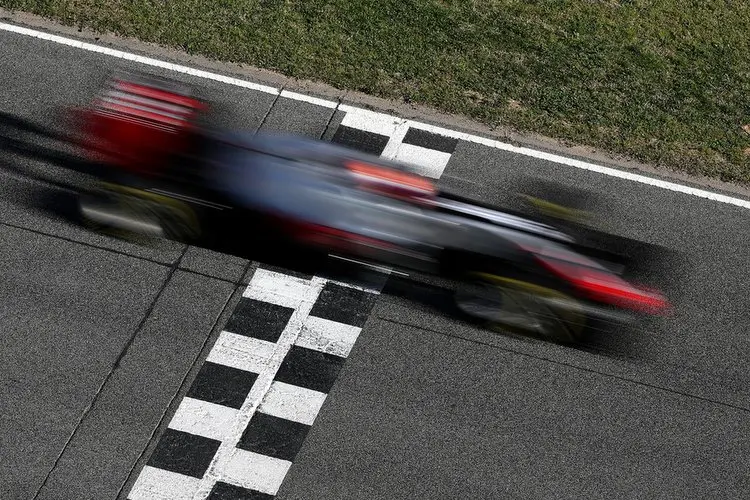
At 10 a.m. CET on Monday, 22 February, the VF-16 roared to life. With Grosjean at the wheel, it pulled out of the garage and onto the pit lane at the Circuit de Barcelona – Catalunya. The Ferrari 061 turbo V-6 ran flawlessly around the 4.655-kilometer (2.89-mile), 16-turn track, providing a valuable reconnaissance lap for the team to check all the car’s systems.
Haas F1 Team had arrived. Proving it was the final testing tally of 474 laps (2,206.47 kilometers, 1,369.86 miles) during the eight days of track time (February 22-25, March 1-4).
Now, the season-opening race of the 2016 FIA Formula One World Championship beckons. The 32nd annual Australian Grand Prix in Melbourne begins with practice March 18, qualifying March 19 and culminates with the race March 20.
It’s about to get real.

Guenther Steiner, Team Principal, Haas F1 Team
Haas F1 Team tested at Barcelona for eight days over a 12-day span. How did it go and how did it prepare you for Australia?
Guenther Steiner: “The first four days were very good. We made good progress and we were on a roll. Then came the second week of testing. On the first and second day, we only made a few laps, partly because we had a fuel issue with the electronics and turbocharger. Then on the third day, we had a problem with our brake-by-wire system. Our guys sorted everything out overnight. On the last day, we had a very good day of testing and were back where we left off the first week. It was a roller-coaster ride. At the moment, we are as ready as we can be for Australia, but you’re never ready enough. No matter what, we will do our best.”
Guenther Steiner: “The first four days were very good. We made good progress and we were on a roll. Then came the second week of testing. On the first and second day, we only made a few laps, partly because we had a fuel issue with the electronics and turbocharger. Then on the third day, we had a problem with our brake-by-wire system. Our guys sorted everything out overnight. On the last day, we had a very good day of testing and were back where we left off the first week. It was a roller-coaster ride. At the moment, we are as ready as we can be for Australia, but you’re never ready enough. No matter what, we will do our best.”
Was there a silver lining in the troubles you faced during testing in that it made the team understand the car better?
GS: “Absolutely. That’s what testing is for. The good thing is, we had a front wing failure on the very first day and we fixed it within hours and were out on the track again. We had a problem with the brake-by-wire system, but our guys fixed it overnight. We had an electronics issue and had to work through the night to fix it. You’re never happy when you don’t go on the track, but we always found fixes to our problems, and Barcelona was the place to do it. We don’t want that in Australia.”
GS: “Absolutely. That’s what testing is for. The good thing is, we had a front wing failure on the very first day and we fixed it within hours and were out on the track again. We had a problem with the brake-by-wire system, but our guys fixed it overnight. We had an electronics issue and had to work through the night to fix it. You’re never happy when you don’t go on the track, but we always found fixes to our problems, and Barcelona was the place to do it. We don’t want that in Australia.”

You said all along you wanted experienced drivers. How has the collective experience of Grosjean and Gutiérrez helped develop the VF-16?
GS: “They both had the same feedback of the car and how it was behaving. When we sent Romain out on the day we experienced the brake system problem, he said, ‘Something is wrong with the brakes, guys.’ It was very difficult to locate the issue because it was electronic, but we believed him because for him to make two mistakes, we knew something was wrong. On the last day, we left Romain in the car an hour longer than planned after lunch so we could finish some setup work. Then we put Esteban in and he confirmed the work we did before. So, we’ve got a basic setup for both drivers which will be very similar in Australia. They both gave us their input and drove us forward.”
GS: “They both had the same feedback of the car and how it was behaving. When we sent Romain out on the day we experienced the brake system problem, he said, ‘Something is wrong with the brakes, guys.’ It was very difficult to locate the issue because it was electronic, but we believed him because for him to make two mistakes, we knew something was wrong. On the last day, we left Romain in the car an hour longer than planned after lunch so we could finish some setup work. Then we put Esteban in and he confirmed the work we did before. So, we’ve got a basic setup for both drivers which will be very similar in Australia. They both gave us their input and drove us forward.”
In addition to getting a gauge on the car you built, you needed to get a gauge on the personnel you’ve assembled. How are they doing?
GS: “They put in so much effort. It was more than just the two weeks of testing. These guys put in two weeks working day and night before testing to finish the car. We’ve had day and night shifts the last four weeks, and they’ve worked well together. They didn’t get stressed out and they never panicked. I can’t thank them enough for the work that they did over the past few months.”
GS: “They put in so much effort. It was more than just the two weeks of testing. These guys put in two weeks working day and night before testing to finish the car. We’ve had day and night shifts the last four weeks, and they’ve worked well together. They didn’t get stressed out and they never panicked. I can’t thank them enough for the work that they did over the past few months.”

Obviously, a lot was learned at Barcelona, but there wasn’t much time between when the cars arrived back at the factory before they had to leave again for Australia. What did you do to make the most of that time?
GS: “During the five days that the guys got back from Barcelona and before they leave for Australia, they not only have to rebuild one car, but finish a second car. They are working very hard, and it’s why we’re on schedule.”
GS: “During the five days that the guys got back from Barcelona and before they leave for Australia, they not only have to rebuild one car, but finish a second car. They are working very hard, and it’s why we’re on schedule.”
With the season-opener now upon us, what has been the biggest challenge to get ready for this moment?
GS: “It’s just the amount of work that goes into getting everything ready. It’s taken so much effort from so many people. I think everybody saw how prepared we were in Barcelona with our equipment ready on the first morning of testing. We want to be just as prepared for Australia, and that is achieved by the hard-working people at Haas F1 Team.”
GS: “It’s just the amount of work that goes into getting everything ready. It’s taken so much effort from so many people. I think everybody saw how prepared we were in Barcelona with our equipment ready on the first morning of testing. We want to be just as prepared for Australia, and that is achieved by the hard-working people at Haas F1 Team.”
What are your goals for Australia?
GS: “Our goal is to have both cars finish, to show that we can compete and be proud of what we are doing.”
GS: “Our goal is to have both cars finish, to show that we can compete and be proud of what we are doing.”
How did you determine your tire selection and strategy for Australia?
Latest News


Loading