From Pit Wall To Poker Table: What Formula 1 Can Teach Us About Risk, Timing And Strategy
F1 NewsMonday, 22 June 2026 at 07:01
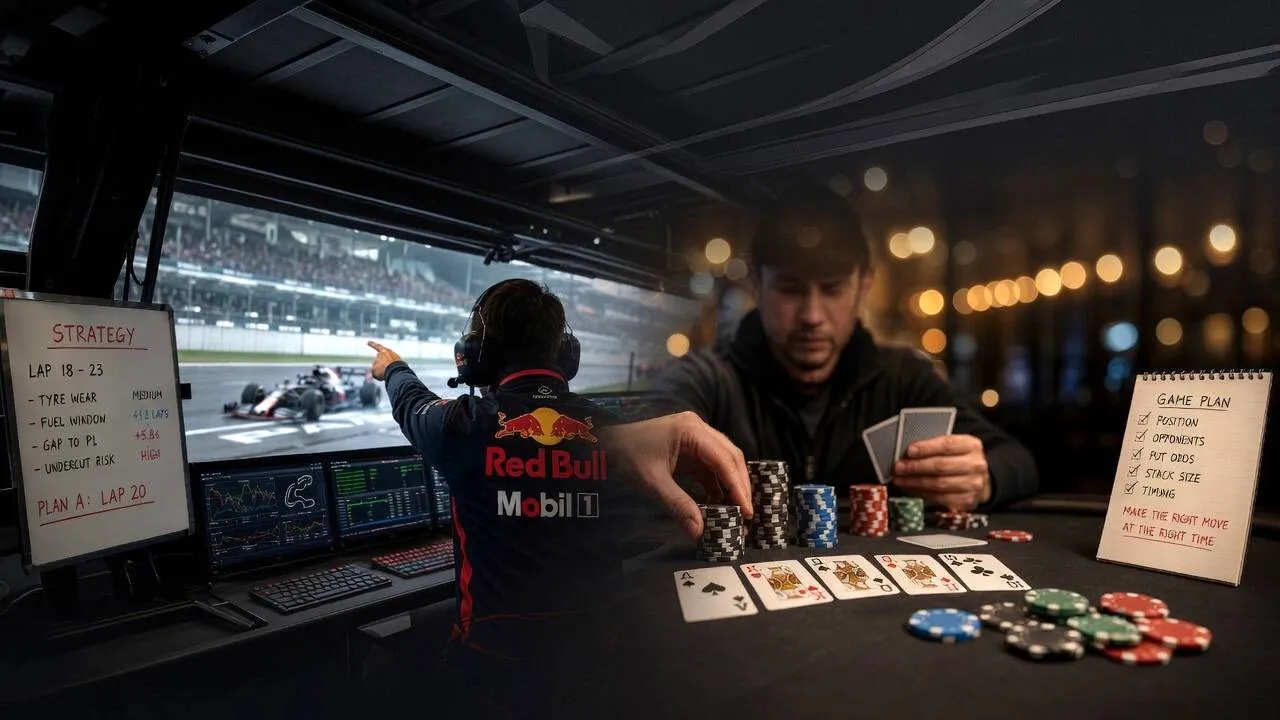
Formula 1 looks like pure speed. It is not. A race often turns on one call from the pit wall, one lift of the throttle, or one lap spent waiting instead of attacking.
Poker works the same way. The loud move rarely wins on its own. The strong player studies the field, guards their stack, and strikes when the odds turn.
Both worlds reward risk with structure. They punish panic. They expose weak timing. They show that pressure does not create skill; it reveals it.
This article looks at what F1 can teach us about risk, timing, and strategy, from tyre calls to table reads.
The Pit Wall Teaches Controlled Risk
The pit wall does not gamble in the dark. Engineers track tyre wear, fuel use, gaps, weather, safety car risk, and rival pace. Then they choose.
The key word is controlled. F1 teams do not chase drama. They build a case before they act. They ask a simple question: what can we gain, and what can we lose?
That same pattern appears at the poker table. A strong player does not push chips forward because the moment feels big. They read position, stack size, table mood, and the cost of being wrong.
Platforms such as poker-bc.com sit in that same world of fast choices and measured risk, where the best move often depends on patience, position, and clear judgment.
F1 teaches a hard lesson: risk is not the enemy. Loose risk is. Controlled risk gives skill a way to show itself.
Timing Turns Speed Into Advantage
Raw speed helps, but timing decides how much it counts. A fast car stuck behind traffic loses its edge. A slower car in clean air can hold the race together.
F1 teams watch for the right window. They may pit before a rival to gain track position. They may stay out longer to use open road. They may wait for rain, a safety car, or a tyre drop-off. The move matters, but the moment matters more.
Good timing in F1 often means:
- Stopping before traffic forms
- Attacking when tyres reach peak grip
- Defending before the rival gets DRS
- Waiting while others burn their tyres
- Reacting fast when weather shifts
Poker follows the same rule. A strong hand can lose value if played too late. A weaker hand can work if the table shows fear. The best move needs the right moment, not just the right idea.
That is the lesson from the pit wall: speed opens the door, but timing walks through it.
Strategy Starts Before The Move
A good F1 call starts before the driver reaches the braking zone. The team has already studied the tyres, the fuel load, the air gap, and the rival’s pace. The move looks sudden. The work behind it does not.
That is why strategy beats impulse. A driver may want to attack at once. The pit wall may say, “Hold position.” That order can feel slow, but it can save the tyres for a cleaner pass three laps later.
Poker uses the same frame. A good player does not judge one card in isolation. They watch the table, count the risk, and choose the spot. Sites such as BCPoker fit this link well because poker, like racing, rewards calm choices made under pressure.
Strong strategy often depends on four simple habits:
- Read the field before acting
- Protect your position
- Wait for the right opening
- Avoid moves driven by frustration
- Turn small edges into real gains
In F1 and poker, the best move often looks quiet at first. Then the result makes it clear.
Pressure Tests The Plan
Pressure changes the track. It turns a normal braking point into a question. It makes a radio message sound sharper. It makes a small lock-up feel large.
F1 teams know this. They plan before stress arrives. They set tyre windows, pit options, and fallback calls. When the race turns messy, the plan gives the team a grip point.
A strong plan helps the driver:
- Brake with confidence
- Save tyres when needed
- Trust the pit wall
- Stay calm after a setback
- Attack without rushing
- Defend without panic
Poker works the same way. Pressure can make a player force a weak hand or chase a lost pot. A clear plan slows the pulse. It turns noise into order.
The lesson is simple: pressure does not ruin good strategy. It only exposes whether the strategy was real.
Money Management Mirrors Tyre Management
An F1 team cannot spend its tires at once. A driver may push hard for one lap, but the rubber will pay the price. Heat builds. Grip fades. The car starts to slide.
Smart teams treat tires like a limited fund. They decide when to spend time and when to save it. They do not chase every gap. They protect what they need for the end of the stint.
Poker demands the same care with a stack. A player who risks too much too soon can lose control of the table. Good play starts with clear limits, calm choices, and a plan for each stage. That is why guides such as BC Poker deposit can fit naturally into this topic, since deposits and withdrawals form part of the wider discipline around bankroll control.
The lesson is clear: resources decide options. In F1, worn tyres close the door. In poker, poor stack control does the same.
The Smartest Move Wins
Formula 1 rewards speed, but speed alone never tells the full story. A race bends around tyre wear, traffic, weather, pit timing, and pressure. The driver holds the wheel, yet the win often starts with a calm call from the pit wall.
Poker follows the same line. A good player does not win by chasing every pot. They wait, read the room, protect their stack, and act when the moment fits.
Both worlds teach one clear lesson: strategy gives risk a shape. Without it, speed becomes waste. A bold move becomes a guess. Pressure turns into noise.
With it, risk becomes useful. Timing becomes a weapon. Patience becomes active, not passive.
From the pit wall to the poker table, the best players do not simply move fast. They move with purpose.
Latest News
Loading