Dakar 2026: Quintero wins Stage 2 as Al Attiyah takes narrow lead
F1 NewsWednesday, 07 January 2026 at 07:09
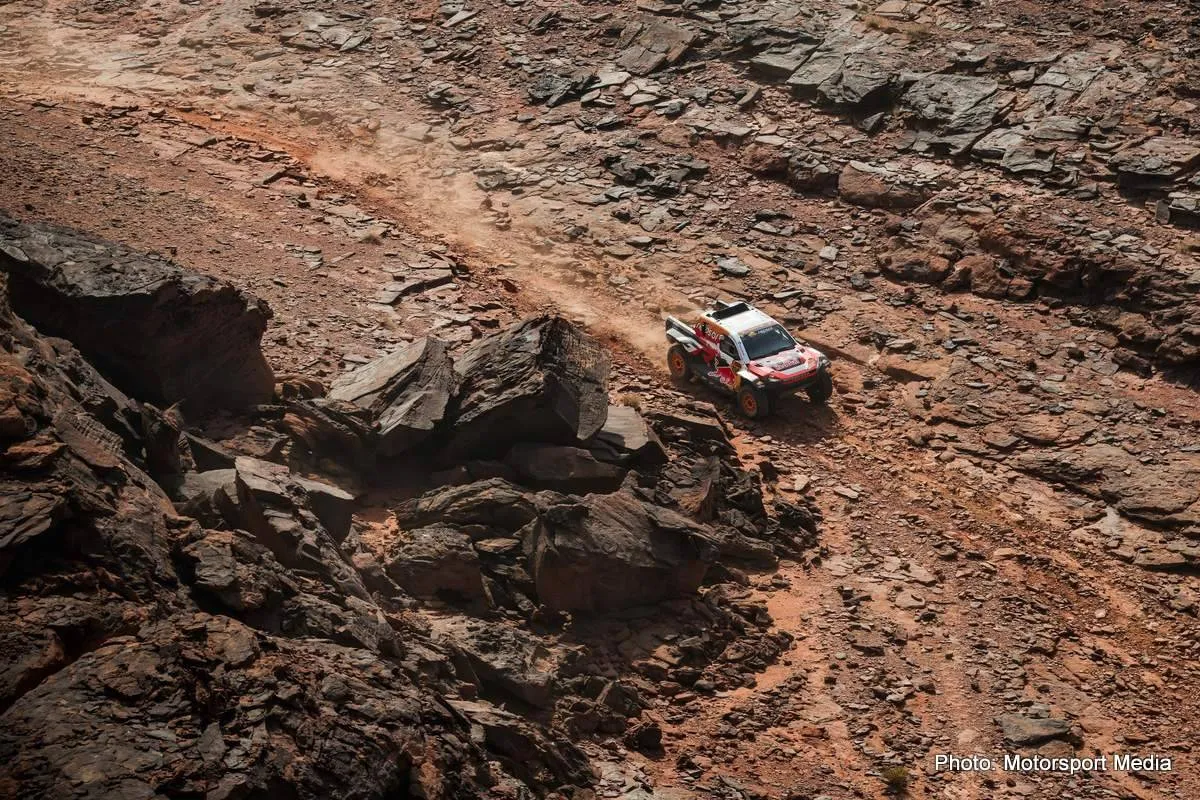
Seth Quintero claimed victory on Stage 2 of the Dakar Rally but missed out on taking the overall lead by seconds, as Nasser Al Attiyah moved to the top of the classification following a tightly contested day in Saudi Arabia.
Quintero rebounded from an 18th-place finish on Stage 1 to dominate the 400-kilometre special from Yanbu across the Hedjaz Mountains to AlUla. The American took control of the stage by the 143-kilometre waypoint and went on to secure the win by 1 minute 42 seconds from Toyota Gazoo Racing teammate Henk Lategan, last year’s Dakar runner up. Defending champion Yazeed Al Rajhi finished third, with Toby Price fourth.
“If you’re battling your teammates for a win then you’re having a good day,” Quintero said. “We’re in a good way. We’ve done a lot of strategising so if I can have an okay day tomorrow and be in mid pack at the start of the marathon on Wednesday then I’ll be a happy camper.”
Al Rajhi continued his recovery after a difficult opening stage in which he finished nearly 29 minutes off the pace. His deficit was reduced to 24 minutes after Stage 2.
Despite finishing eighth on the day, Al Attiyah’s measured approach was enough to move him into the overall lead for the first time since his fifth and most recent Dakar victory in 2023. He held a 7-second advantage over Quintero, with Guillaume de Mevius third overall. After two stages, the top 7 drivers were covered by less than 3 minutes.
“The key of the Dakar will be tomorrow because I think it will be hard navigation,” Al Attiyah said. “This area is not easy.”
Tuesday’s Stage 3 is a 422-kilometre loop near AlUla, with few landmarks expected to make navigation particularly challenging.
Sanders takes control of bike category

In the motorbike category, defending champion Daniel Sanders won the stage and took over the overall lead from KTM teammate Edgar Canet.
Canet opened the route for the first 100 kilometres before being caught by Sanders. The two riders then completed the stage together, collecting bonus time and finishing one two on both the stage and overall classification. Sanders won the stage by 1 minute 35 seconds and now leads Canet by 30 seconds overall. Ricky Brabec finished third on the stage and remains third overall.
“We didn’t push or do anything crazy,” Sanders said. “Edgar just sat behind and watched, followed and learned. I’m sure he had some fun back there in the dust. He was there to fix a couple of mistakes and it was good fun riding with him.”
Adrien Van Beveren, third overall in both 2024 and 2025, hit a tree after the pitstop but completed the stage, finishing 14 minutes down.
Stage 1 recap sets early Dakar narrative

Sunday’s opening stage had already highlighted the volatility of the early Dakar. Guillaume de Mevius claimed a surprise win on the 305-kilometre loop around Yanbu after his tracking beacon went silent for a large portion of the stage, beating Al Attiyah by 40 seconds.
The stage win was also a significant milestone for navigator Mathieu Baumel, who is competing with a prosthetic leg after losing his right leg almost a year ago when he was struck by a car while offering roadside assistance in France. Baumel previously guided Al Attiyah to 4 Dakar victories and paired with de Mevius for the first time last year.
In the motorbike category, Canet won Stage 1 after Ross Branch was penalised 6 minutes for speeding and dropped from first to seventh. Canet’s prologue win had already made the Spaniard the youngest ever Dakar stage winner at 20, and his Stage 1 victory made him the first rider in 11 years to win the opening 2 stages of the event.
In the car category, prologue winner Mattias Ekstrom led much of Stage 1 before dropping to fourth near the finish, ending the day 1 minute 38 seconds behind de Mevius and behind Al Attiyah and Martin Prokop, who secured his first Dakar stage podium since 2022.
With margins tight across both cars and bikes, the navigation-heavy Stage 3 near AlUla is expected to have a significant impact on the early shape of the 2026 Dakar Rally.

Latest News
Loading

