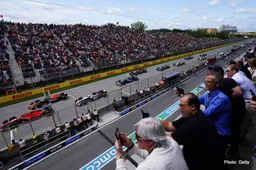
What does Mercedes victory in Australia mean moving forward?
F1 Teams NewsThursday, 12 March 2026 at 01:25

The 2026 Formula 1 season begins at Albert Park under the most dramatic regulatory shift the sport has introduced in decades.
New power unit architecture, radical
aerodynamic concepts, and a reshaped grid featuring fresh manufacturers have
created a rare moment where historical performance carries little predictive
value. Early indicators from testing, bookmaker markets, and technical paddock
whispers suggest that Mercedes may have interpreted the 2026 rulebook better
than their rivals.
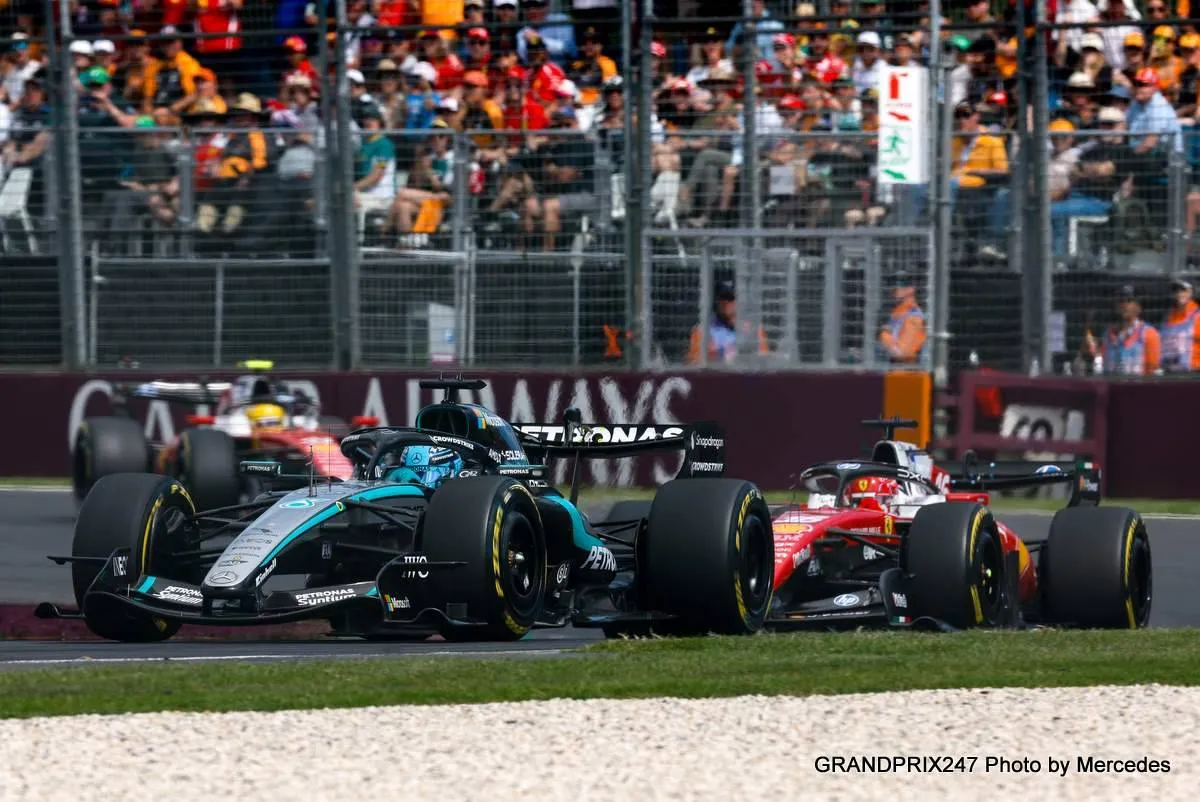
George Russell’s emergence as the 2/1 (+200) favorite for the
Australian Grand Prix has become one of the defining talking points ahead
of the Melbourne opener, signaling a potential reordering of Formula 1’s
competitive hierarchy.
The 2026 Technical Reset: Why Mercedes Holds the Edge
The sweeping
2026 technical regulations have fundamentally rewritten the engineering
blueprint for modern Formula 1 cars. The power unit architecture now requires a
50/50 split between the internal combustion engine (ICE) and electrical energy,
forcing manufacturers to rethink energy deployment strategies, cooling
architecture, and combustion efficiency.
Teams that adapted quickly to these
changes during development phases now hold a measurable competitive advantage.
Mercedes’ powertrain division in Brixworth appears to have anticipated the
shift earlier than its rivals, designing a new system built specifically around
the increased electrical load.
Combined with the new lightweight chassis
philosophy and reduced dimensions, Mercedes enters Melbourne with the
perception of technical readiness that bookmakers have translated directly into
market confidence.
Mercedes’ latest
engine package, the M17 E Performance unit, is widely believed within the
paddock to contain a 15hp “heat expansion” loophole tied to thermal energy
recovery. Under the new 2026 rules, teams must balance combustion power with a
larger electrical output, but Mercedes engineers reportedly discovered a method
of optimizing exhaust heat conversion without breaching the FIA’s strict energy
limits.
The rumored 15hp gain may appear modest on paper, yet across a race
distance it becomes decisive when paired with more efficient electrical
deployment. That subtle advantage helps explain why George Russell entered the
Australian Grand Prix weekend as the 2/1 favorite, a status rarely granted to
any driver before the first competitive lap of a new regulation era.
The Nimble Car Concept and Melbourne’s Unique Demands
The 2026 cars
are physically different machines compared with their predecessors. The FIA
mandated shorter wheelbases reduced by 200mm and narrower tracks reduced by
100mm, a design direction intended to improve manoeuvrability and raceability
on tighter circuits.
Albert Park’s hybrid layout — part street circuit, part
high-speed parkland — places enormous emphasis on mechanical agility during
rapid direction changes. Teams that adapted their chassis philosophy toward
this new “Nimble Car” concept during development have shown stronger
performance indicators during preseason testing sessions.
Mercedes’ W17 appears
particularly suited to this design direction, combining compact geometry with
stable weight distribution, attributes that directly translate into better
traction zones and corner rotation through Melbourne’s technical middle sector.
The -200mm
wheelbase reduction has transformed how cars respond during corner entry.
Mercedes engineers reportedly focused heavily on front-end responsiveness
during W17 development, allowing George Russell to attack braking zones more
aggressively without destabilizing the rear axle. Meanwhile the -100mm track
width reduction has increased the importance of suspension compliance and tire
management.
Teams that struggled to recalibrate their mechanical grip models
during testing experienced unpredictable tire temperature spikes. Mercedes’
early runs in Bahrain testing suggested that the W17 maintained consistent
balance through long runs, giving Russell the confidence to maintain pace while
preserving energy deployment cycles.
Active Aero and the Death of DRS
One of the most
visible transformations introduced for 2026 is the elimination of the
long-standing Drag Reduction System (DRS).
The FIA replaced it with a
sophisticated active aerodynamics framework designed to reduce aerodynamic wake
while increasing strategic overtaking options. Cars now alternate between two
aerodynamic configurations: X-Mode for low-drag straight-line efficiency and
Z-Mode for maximum cornering downforce.
The system demands precise
synchronization between front and rear aerodynamic flaps, creating a new layer
of mechanical complexity that teams had to master during preseason testing.
Testing footage
from Bahrain revealed that the Mercedes W17 chassis demonstrated the most
consistent flap-synchronization during active aero transitions. Drivers could
seamlessly switch between X-Mode and Z-Mode without destabilizing airflow
across the floor.
Rival teams experienced momentary balance shifts when their
aero elements transitioned between configurations. Over a lap of Albert Park,
where acceleration zones alternate rapidly with medium-speed corners, this
stability allows Russell to carry higher minimum corner speeds while maximizing
straight-line efficiency.
Manual Override Mode and the 350kW Electrical Boost
Alongside active
aerodynamics, Formula 1 introduced a strategic energy deployment mechanism
called Manual Override Mode. This system grants chasing drivers a temporary
350kW electrical boost, replacing the overtaking advantage previously created
by DRS.
Unlike DRS, which depended on aerodynamic drag reduction, the new
system directly increases electrical power delivery, creating a dramatic
acceleration differential when activated. Because the 2026 power units rely on
a 50/50 ICE and electric energy split, managing this additional 350kW surge
becomes a critical race strategy element.
Drivers must now
balance battery reserves with overtaking opportunities throughout the race
distance. Teams capable of accurately predicting energy windows gain a
competitive edge during wheel-to-wheel combat.
Mercedes’ energy management
software reportedly demonstrated superior predictive modeling during simulation
runs, allowing the W17 to maintain electrical reserves deep into race stints.
That reliability reinforces the perception that Russell may control races
strategically rather than simply reacting to rivals.
The Bookie’s Choice: Auditing the 2/1 Favorite
Betting markets
frequently reflect collective technical confidence across the paddock, and the
current numbers surrounding the Australian Grand Prix illustrate a clear
narrative. George Russell opened as the 2/1 (+200) favorite, ahead of reigning
champion Lando Norris and perennial contender Max Verstappen.
Such positioning
is rare for the first race under entirely new regulations. Oddsmakers typically
hedge uncertainty, yet the Russell pricing indicates strong belief in Mercedes’
interpretation of the rulebook.
The early market
comparison tells a detailed story. George Russell stands at 2/1, Max Verstappen
sits at 7/2, and Charles Leclerc holds 4/1 odds entering the Melbourne weekend.
The gap reflects confidence in Mercedes’ engineering package rather than merely
driver reputation. Russell’s smooth driving style historically pairs well with
stable aerodynamic platforms, making him an ideal pilot for the balanced
characteristics the W17 appears to exhibit.
Betting Markets and Strategic Insights
Formula 1
betting markets often react quickly to preseason testing indicators,
particularly when radical regulation changes alter competitive balance. Fans
tracking these developments frequently analyze bookmaker pricing as a real-time
measure of technical momentum.
Those examining the current market surrounding
the Australian Grand Prix may notice how Mercedes’ early advantage has
translated directly into wagering interest. For fans exploring these evolving
odds, platforms offering tools such as a
bet365 bonus code allow bettors to analyze market movement while protecting
their stake during the unpredictable opening race of a new regulation cycle.
The sharp shift
toward Russell as the 2/1 favorite occurred shortly after Bahrain testing runs
where Mercedes completed longer simulation stints than most rivals. Analysts
noted stable tire degradation patterns and efficient energy deployment cycles,
factors that strongly influence bookmakers adjusting race odds.
Red Bull’s Engine Transition With Ford
Red Bull enters
2026 navigating one of the most challenging transitions in its
championship-winning history. After years of collaboration with Honda-derived
technology, the team now operates its own Red Bull Powertrains division in
partnership with Ford.
Building a competitive Formula 1 power unit from scratch
is notoriously difficult, especially under new regulatory conditions
emphasising electrical efficiency. The uncertainty surrounding Red Bull’s first
fully independent engine has introduced scepticism among analysts and
bookmakers alike.
While Red Bull’s
aerodynamic expertise remains formidable, their new power unit has yet to
complete a full competitive race distance. In contrast, Mercedes engines built
at Brixworth carry a long-standing reputation for reliability across multiple
regulatory eras, reinforcing confidence in the W17 platform entering Melbourne.
Cadillac Joins as the 11th Team
The 2026 grid
expands with the arrival of Cadillac, fielding the new MAC-26 chassis as
Formula 1’s 11th team. Backed by General Motors engineering resources, the
program represents a major American entry into the championship’s modern era.
Their debut season focuses primarily on establishing operational consistency
rather than immediate podium contention.
Early testing
for the Cadillac MAC-26 emphasized cooling efficiency and electrical deployment
reliability under the new 50/50 energy regulations. While outright pace remains
uncertain, the project represents a significant long-term investment in Formula
1’s evolving manufacturer landscape.
Audi’s Full Takeover of Sauber
Another major
storyline shaping the 2026 season involves Audi’s transformation of Sauber into
a full factory operation. The German manufacturer enters Formula 1 with
extensive hybrid engineering expertise drawn from endurance racing programs.
Unlike Cadillac’s gradual entry approach, Audi has invested heavily in
infrastructure and personnel ahead of its first race.
Despite massive
resources, the challenge facing Audi remains enormous. Integrating a new power
unit, aerodynamic philosophy, and race operations simultaneously creates a
steep learning curve during the opening races, particularly at a circuit as
demanding as Albert Park.
Melbourne as the Information Gathering Grand Prix
The first race
of any new regulatory era functions as a massive data collection exercise for
teams and analysts. Albert Park’s combination of straights, technical corners,
and heavy braking zones exposes strengths and weaknesses across every component
of the car. Teams will leave Melbourne with more telemetry insight than months
of preseason simulation could provide.
If George
Russell converts his 2/1 favourite status into a race victory, the implications
extend far beyond the Australian Grand Prix trophy. Such a result would confirm
that Mercedes’ interpretation of the 50/50 ICE-electric power split, their
rumored 15hp heat expansion advantage, and the W17’s mastery of X-Mode and
Z-Mode active aero systems form a genuine competitive benchmark for the entire
2026 season.
The Melbourne result could therefore shape development strategies
across the grid as teams scramble to close the gap to Formula 1’s newly re-emerging powerhouse.
Latest News

Loading