Green Mist: What’s gone wrong with Aston Martin and Honda?
F1 OpinionSaturday, 28 February 2026 at 09:00
Formula 1’s new Dream Team, Aston Martin with its works Honda power unit deal, got off to an awful start. What gives?
Aston Martin Formula 1, Honda, brilliant designer Adrian Newey and double World Champion Fernando Alonso. What could possibly go wrong? Well, everything, actually.
Perhaps Formula 1’s biggest smash hit since the movie, Aston Martin hit the ground standing through its 2026 shakedown at Barcelona. And it never went much further through two bouts of testing at Bahrain since. And to be blunt, it’s not looking good for its highly vaunted debut in Melbourne on March 8.
The world was stunned when billionaire Canadian team boss Lawrence Stroll snatched Newey and Honda from Red Bull to join him, Alonso, son Lance and the team.
But it’s been anything but a happy start. Rather a baptism of fire and brimstone. Aston Martin Honda only completed 334 laps across the six days of testing its troubled AMR26 in Bahrain. That's 252 less then second worst, newcomer Cadillac, which one would expect to start slow. And a third of what frontrunners Mercedes and Ferrari achieved.
Second Aston Martin test week went from bad to worse

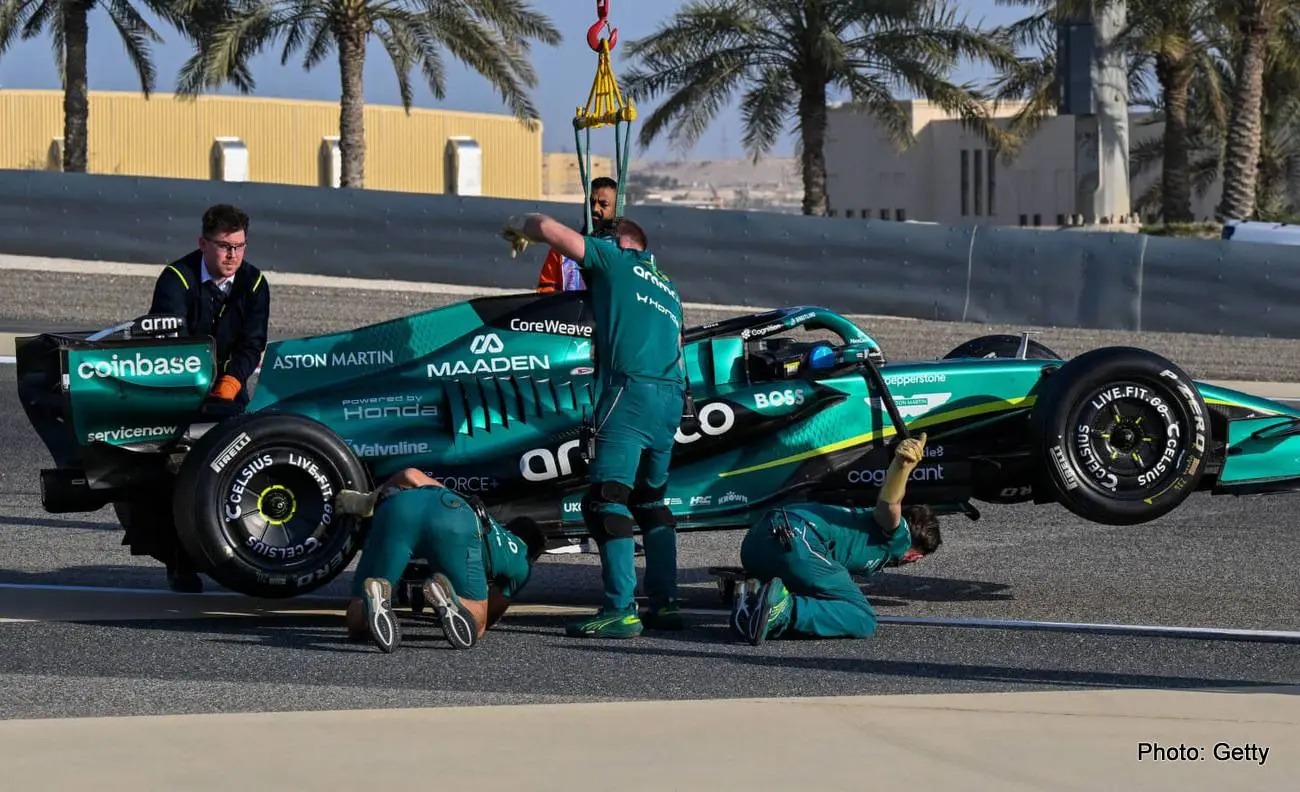
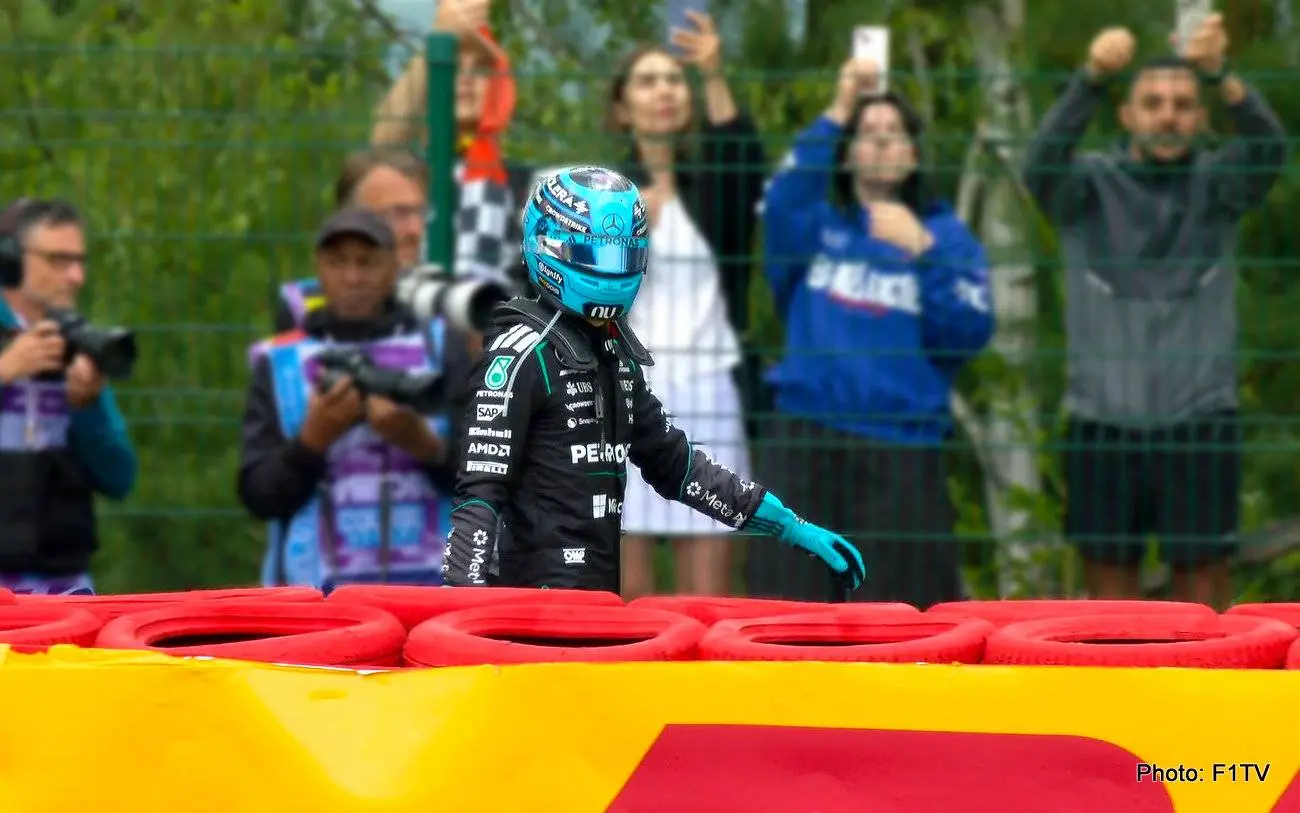
Trouble is that things went from bad to worse through the second week. The new power unit sprang an issue to keep the car its pit box for most of the first day. Then a technical fault turfed Lance Stroll into the gravel before a hybrid battery failure ended Thursday’s test. The team appeared to run out of spare parts to make the Friday a non-event, too. All of which leaves the team well behind in understanding the car and rules while Honda and Aston Martin scramble to try get a grip on the season ahead.
“We are definitely not where we wanted to be,” team spokesman and former Formula 1 Pedro de la Rosa offered. “We did least laps of all teams in testing, but we also have by a new set of regulations and of course everything else is new too.
"Our new power unit partner Honda, a new gearbox, new rear suspension. Still, while we’d have preferred more laps, what we did has at least shown us a direction for the future.But there’s so much work to do behind the scenes.”
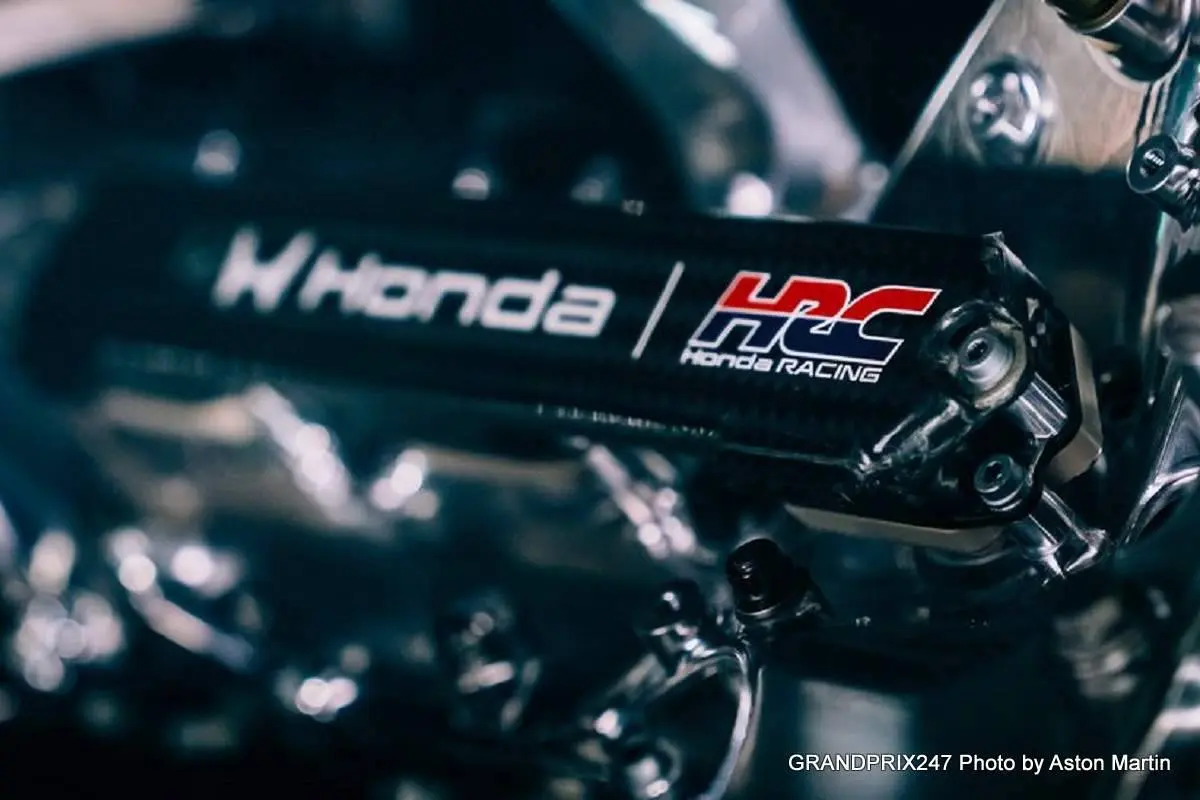
“It has been an enduring week, but we must thank to the team for their support trackside and everyone working remotely in Japan and the UK,” Honda trackside general chief engineer Shintaro Orihara adds. “Overall, we are not happy with our performance and our reliability at the moment. However, we will urgently seek solutions together in Sakura, Milton Keynes and Silverstone.”
Severe vibrations appear to be the cause

Honda has indeed worked around the clock in the fortnight since testing and now appears to better understand its problems.
HRC car racing department boss Ikuo Takeishi pointed out: "We observed that abnormal vibrations during testing caused damage to the battery system. It was dangerous to continue so we decided to stop testing.
"Our power unit team is working on multiple countermeasures along with other changes on the chassis, as part of a major vibration analysis. We suspect we have a rather challenging situation with multiple components interacting to generate a vibration, so we can't rule out the possibility of this problem dragging on. That said, we are absolutely determined to fix this quickly."
HRC boss Koji Watanabe reiterated: “Frankly speaking, the testing was extremely challenging for us, and we failed to achieve the performance levels we’d anticipated. I believe we are united in our desire to resolve matters as one team and we have had very positive discussions on the phone with chairman Stroll and designer Newey. It goes without saying that we will do our utmost to ensure we are ready to race in Australia."
Aston Martin and Honda will however likely remain compromised early in the 2026 season. Honda is determined to be competitive in time for its home Japanese Grand Prix, round 3 at the end of March. But there may well be a curve ball that plays into the team’s hands. …
Will a Formula 1 kneejerk save Aston’s day?

Far more controversial than Aston Martin and Honda’s issues, Formula 1’s power unit regulations continue to dominate the headlines on their seeming inability to deliver enough electrical energy to properly power the cars over a single lap. This may well require Formula 1 and the controlling body FIA into a kneejerk reaction to lower the maximum battery power from half the cars’ output to a third or less.
Even with its vibration problems, the Honda unit may still be able to cope at such lower levels. But then every possible break would be most welcome to the team.
While Honda struggled, Charles Leclerc emerged on top of the timesheets at the end of testing, also suggesting a Ferrari Formula 1 revival in 2026. The Monegasque’s 1 minute 31.992 second lap of the Bahrain circuit compares to second best Kimi Antonelli’s Mercedes at 1:32.803. McLaren duo Oscar Piastri and Lando Norris followed with Max Verstappen fifth for Red Bull Ford at 1 minute 33.109. Lance Stroll’s Aston Martin ended 21st at 1:35.974 with teammate Fernando Alonso 22nd and last at 1:36.536.
The Australian Grand Prix starts 6 am CET time Sunday 8 March.
Latest News
Loading