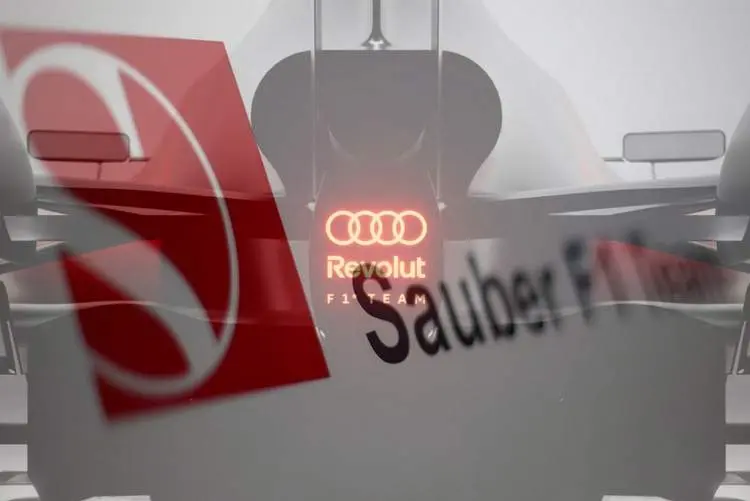
So, the time has come. Three years on from Audi’s announcement, Sauber is finally being replaced by the German juggernaut in Formula 1. But will the Swiss outfit low-key be missed in the coming years?
Let’s face it, Sauber has struggled recently. Over the last decade, the team hasn’t managed to compete with F1’s frontrunners, achieving a best constructors’ finish of sixth. Off the track, Sauber did manage to secure cash injections via title sponsorships with Alfa Romeo, Stake, and KICK.
These deals kept the team afloat but did little to fire it back up the grid. In this sense, with the sport taking off commercially and Sauber uncompetitive, a takeover was only a matter of time. However, that’s not to say this stalwart hasn’t contributed during its 33 years in F1.
Sauber actually made a strong start, partnering with the likes of Mercedes and Red Bull, establishing itself a reputation as a solid, podium-capable midfield team. Who can forget the BMW Sauber years? And more recently, strapping a Ferrari into the C31 allowed Sergio Perez to achieve multiple podiums in an exciting 2012 season.
Some fans may shrug their shoulders at Sauber’s F1 exit. However, a brief trip down memory lane reminds us that the team have brought their share of thrills and spills over the years—despite being resource limited, against the sport’s manufacturing giants.
1993: Sauber’s strong arrival in F1

Peter Sauber arrived in F1 with a strong motorsport pedigree and backing from Mercedes. At Le Mans, Mercedes-powered Sauber C9s had already picked up wins in 1989 & 1990. While the team’s first F1 car was powered by “Ilmar” engines, these were widely understood to be Mercedes, and they were rebranded as such the following season.
Sauber’s debut went exceedingly well, with driver JJ Lehto qualifying sixth in South Africa and taking home fifth ahead of Gerhard Berger’s Ferrari. Although the team struggled a little with reliability throughout the year, they did well at Montreal and picked up points in San Marino, prompting the addition of “concept by Mercedes-Benz” stickers to its cars.
Overall, Sauber came seventh on its debut. Not bad, considering that it beat other independent teams, Jordan and Minardi—and this laid a solid foundation for the seasons to come.
2001: 4th place overall, Sauber’s peak

By its ninth season, Sauber had become proficient at fully utilizing its resources to take on F1’s big boys. Switching to Ferrari engines and hiring young guns Nick Heidfeld and Kimi Raikkonen had a profound effect, as the team had its best-ever season in the sport.
Believe it or not, Raikkonen’s inclusion was criticized by senior figures and prompted complaints. At the time, the Finn had little single-seater experience, raising questions over the safety of competitors. However, Sauber’s selection was soon vindicated with a points finish on his debut. Raikkonen and Heidfeld would go on to rack up ten top-six finishes between them.
Not only did the 2001 season put a young Raikkonen on the map, but it also marked a culmination of Sauber’s efforts. At this point, the team was also Red Bull-branded, reflecting its ability to outmaneuver rivals with limited resources and get the most out of title partnerships.
2003: Frentzen sparks podium gold rush

With Raikkonen having departed for McLaren Mercedes, the experienced Heinz-Harald Frentzen arrived for the 2003 season.
Pace-wise, Sauber had slipped back into the midfield. Frentzen had also been dropped mid-season by Jordan, so expectations weren’t especially high.
However, they did manage to maximize reliability—and this proved pivotal as the team finished sixth in the constructors’ standings. Better yet, Frentzen managed to get himself on the podium at the United States, Monaco, and Japanese Grand Prix.
Often overshadowed by 2001 & 2012 as the team’s best years, this season saw its first cluster of podiums. Arguably Sauber’s finest hour.
2008: Kubica’s surprise title tilt

This one’s a bit of a controversial inclusion. BMW owned a controlling stake in the team from 2006 to 2009, so strictly speaking, we’re not talking about an independent Sauber here.
But the team’s sheer pace in 2008 warrants a mention, as does the emergence of promising youngster Robert Kubica, F1’s biggest “what if” of the late 2000s and early 2010s.
At pre-season testing in 2007, BMW Sauber emerged as a frontrunning team. They earned just one podium that season; Heidfeld came third in Hungary.
However, everything came together a year later, as Kubica took three podiums in the opening six races before leading home an incredible 1-2 in Canada and announcing himself as a true title contender.
Unfortunately, things didn’t work out for Sauber’s BMW partnership or their young Polish driver. But it’ll forever be a high point in the team’s F1 journey.
2012: Sauber’s final modern success

Long-term fans will remember that 2012 was brilliantly chaotic. With seven different winners in the opening seven races, it felt like anyone could win at any given moment.
Sauber embodied this spirit perfectly, as Perez picked up another three podiums—and very nearly won at the Malaysian Grand Prix, piling pressure onto Ferrari’s Fernando Alonso.
Alongside teammate Kamui Kobayashi, the Mexican always seemed to have a late overtake in his pocket. That season, this formidable duo racked up 15 point-scoring finishes, enough for sixth in the constructors’ standings. Notably, this also marked the last period of significant hope for the team. Almost certainly an emotional high point.
What next for F1’s giant killers?

It’ll be fascinating to see how Sauber does as an Audi works outfit. Finally, the team will have the resources to compete, but will it manage to carry its underdog spirit into this new era?
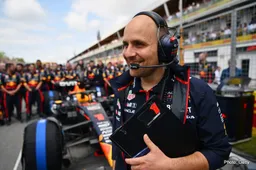
The arrival of Jonathan Wheatley, a proven title-winner at Red Bull, will be a major boost, as will its driver lineup. Nico Hulkenberg is also hugely experienced, while the retention of Gabriel Bortoleto brings a degree of continuity to a team that will likely take time to find its feet in 2026.
Will Audi be able to replicate the success of compatriot Mercedes? Or will it become another high-profile flop like Jaguar and Toyota in the 2000s? The good news is that Audi has had time to experiment with Sauber before joining the sport. And there’s plenty of F1 know-how still in its ranks. If Sauber’s history is anything to go by, it stands a fighting chance.
RIP to Sauber, the underdog that silently took on F1’s giants and (very occasionally) succeeded!
loading
Latest News

Loading