Pit Stop Innovations: Technology Behind Formula 1’s Fastest Top Guns
F1 NewsMonday, 15 September 2025 at 04:25
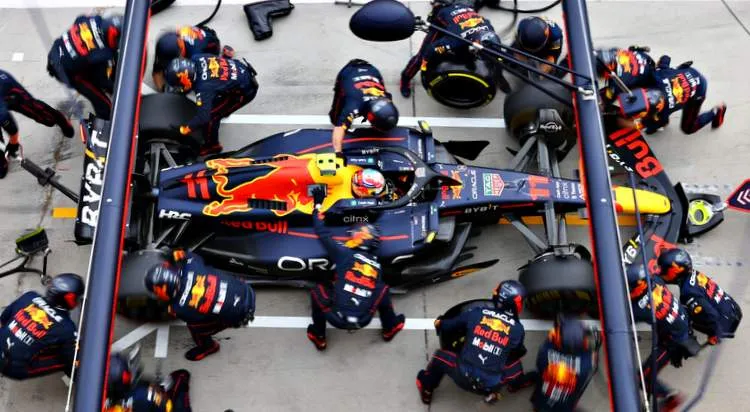
Formula 1 is a sport decided by fractions of a second, and nowhere is this more evident than in the pit lane. The pit stop - a brief, orchestrated pause for tire changes and minor adjustments - can determine the outcome of a Grand Prix.
Today, Formula 1 teams execute pit stops in under three seconds, an astonishing improvement from the early decades of the sport when stops could take a minute or more.
Historical records reveal a clear evolution: the 1950s and 1960s prioritised endurance over speed, resulting in slow, laborious stops. By the 1980s, innovations in tools and crew coordination had reduced times dramatically. The modern pit stop is a marvel of engineering, teamwork, and precision, reflecting the sport’s obsession with shaving off every possible millisecond.
Efficiency here matters more than spectacle alone. Strategic timing of pit stops can dramatically affect track position: a flawless stop can propel a driver from mid-pack to podium contention, while a minor delay can negate an on-track overtake.
Fans often liken this precision to fast-decision environments like online casinos with $5 deposits, where every move carries significant consequences. Pit stops, much like these high-stakes games, combine skill, timing, and preparation in a high-pressure environment.
Technical breakdown of innovations in jacks, wheels, and crew choreography

A modern F1 pit stop is a ballet of human skill and technological innovation. Every millisecond is accounted for, and even small improvements in equipment or technique can shave tenths of a second off the total time.
Jacks and lifting systems are central to this efficiency. Pneumatic or hydraulic jacks raise the car almost instantaneously, often using lightweight carbon-fibre materials to reduce handling time. Meanwhile, wheel guns powered by compressed air allow wheel nuts to be removed and replaced with split-second precision. These tools are enhanced with torque sensors and ergonomic designs to reduce human error and fatigue.
The choreography of the crew is equally critical. Each member has a dedicated role—front left, rear right, jack operation—and movements are synchronised to prevent overlap. Motion sensors and high-speed video analysis allow teams to optimise positioning, angles, and timing, translating practice into consistent results under extreme pressure.
Some innovations stand out:
- Pneumatic jacks with carbon-fibre frames reduce lifting time and minimise the physical burden on crew members.
- High-torque, vibration-optimised wheel guns allow faster, safer tire changes.
- Sensor-assisted positioning helps prevent collisions or misalignments during rapid maneuvers.
| Component | Innovation | Result |
| Jack | Pneumatic lift, carbon fibre | Faster lifts and reduced fatigue |
| Wheel Gun | High-torque, vibration control | Rapid, reliable tire changes |
| Crew | Motion sensors & video feedback | Optimised coordination under pressure |
By integrating these technologies and training methods, modern F1 teams turn pit stops into precision performances that are as technically complex as they are visually impressive.
Influence on race outcomes and strategy planning

Pit stops have become pivotal elements in race strategy, influencing not just lap times but championship outcomes. Teams decide the optimal timing for stops based on tire degradation, traffic, and competitor actions. Even half a second gained or lost during a stop can translate to multiple positions over the course of a Grand Prix.
Pit stop planning involves several interconnected factors:
- Track position optimisation: Timing stops to minimise overtakes by competitors.
- Tire strategy: Balancing performance and longevity to maintain speed over race stints.
- Response to safety cars or incidents: Adjusting stops dynamically to take advantage of unexpected conditions.
Historically, races have been decided in the pit lane. For instance, a precise “undercut” strategy—stopping earlier than a rival—can leapfrog drivers ahead, while a delayed stop, or “overcut,” can allow a competitor to gain time on fresher tires. These split-second decisions, informed by telemetry and predictive modelling, highlight how pit stop performance and strategy planning are inseparable in modern Formula 1.
How teams train and optimise pit stop performance

Behind every successful pit stop is a rigorous regimen of preparation. Crew members combine physical conditioning, motion drills, and scenario-based simulations to ensure speed, precision, and safety. Fitness is crucial, as the physical demands of lifting jacks, changing wheels, and maintaining posture under pressure require explosive strength and endurance.
Training is highly data-driven. Motion-capture sensors and high-speed cameras analyse every gesture, while virtual simulations allow teams to rehearse unusual or high-pressure scenarios such as double-stacked pit stops or sudden equipment malfunctions. This attention to detail ensures that the crew operates as a single, synchronised unit.
Key training approaches include:
- Motion-capture drills to identify and eliminate wasted movements.
- Scenario-based simulations to prepare for rare or unpredictable events.
- Fitness programs to maintain strength and prevent fatigue.
- Video analysis for continuous refinement of team choreography.
| Training Focus | Purpose | Benefit |
| Motion-capture drills | Analyse movements | Increase speed and precision |
| Scenario simulations | Practice rare events | Reduce errors under pressure |
| Fitness programs | Maintain explosive strength | Minimise fatigue in long races |
| Video analysis | Refine team choreography | Optimise coordination and timing |
This combination of physical, technical, and analytical preparation ensures that pit stops are executed reliably, with every second accounted for, reflecting the synergy of human skill and engineering ingenuity.
Could robotics or AI play a role in pit stop evolution?

As Formula 1 continues to push technological boundaries, robotics and artificial intelligence (AI) present intriguing possibilities for the future of pit stops. While current regulations maintain the centrality of human crews, there is potential for AI to assist in strategy and predictive modelling, while robotic tools could handle certain mechanical tasks.
Hybrid approaches may become more common: AI could analyse thousands of scenarios in real-time, advising the crew on optimal actions, while robotics could assist in auxiliary operations like lifting or monitoring torque. Safety remains a key constraint, as any integration must meet strict FIA regulations while preserving the spectacle that fans love.
Possible innovations include:
- AI-driven predictive analysis to anticipate tire degradation or competitor behaviour.
- Robotic assistance for lifting or wheel changes, reducing human strain.
- Augmented reality tools to guide crew members during high-pressure maneuvers.
- Real-time error detection via AI monitoring to prevent costly mistakes.
While full automation may be years away, incremental integration of AI and robotics could shave milliseconds off pit stop times while preserving the precision and drama that define Formula 1.
As Formula 1 evolves the future promises even more advanced tools

The pit stop embodies the intersection of human skill, strategy, and technology. From sub-three-second records to intricate crew choreography and cutting-edge tools, these fleeting moments can decide championships.
Modern pit stops are more than a functional necessity; they are a demonstration of innovation, preparation, and human ingenuity under extreme pressure.
As Formula 1 evolves, the future promises even more advanced tools, AI-assisted strategies, and perhaps robotic support. Yet the essence of the pit stop—the teamwork, split-second decision-making, and the thrill of the perfectly executed manoeuvre will remain at the heart of the sport.
In this high-stakes arena, milliseconds matter, and every innovation, whether mechanical or digital, reflects the relentless pursuit of perfection that defines Formula 1.
Latest News
Loading