History of the Austrian Grand Prix began at Zelweg airfield in 1964
F1 NewsMonday, 23 June 2025 at 07:30
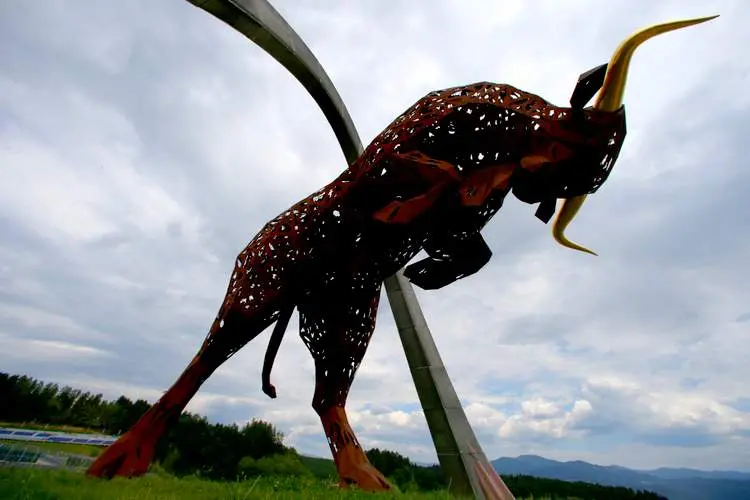
Formula 1 returns to the Styrian hills this weekend for the 38th running of the Austrian Grand Prix, marking over six decades since the sport first visited the country.
From its humble origins on a military airfield in 1964 to the purpose-built Red Bull Ring that hosts today’s generation of Formula 1 and a myriad of motorsport series that visit the venue every season, Austria’s place in Grand Prix history is as dramatic as the racing it so often produces.
The inaugural Austrian Grand Prix counted for the 1964 Formula 1 World Championship, held at the Zeltweg Airfield. The primitive concrete circuit was bumpy and narrow, but it set the stage for what would become one of the most picturesque venues on the calendar.
Ferrari’s Lorenzo Bandini took his only F1 win that day, while a young Jochen Rindt made his debut in front of a home crowd. The event, however, was not retained due to safety concerns and poor infrastructure.
After a six-year absence, Formula 1 returned to Austria in 1970 at the newly built Österreichring. The 5.9-kilometre circuit was fast, flowing, and carved into the Alpine landscape, immediately earning praise from drivers and fans alike. It would go on to host 18 Austrian Grands Prix between 1970 and 1987.
The A1 Ring and another hiatus

The Österreichring era produced some iconic moments and home victories, none more so than Niki Lauda’s emotional triumph in 1984. However, the track’s increasing speeds and outdated safety features led to its removal from the calendar after the 1987 event, which saw a start-line crash and repeated restarts.
Austria’s return to the Formula 1 calendar came in 1997 after the Österreichring was shortened and modernised into the A1 Ring. While the redesign divided opinion — critics lamented the loss of the old circuit’s character — it delivered close racing in the early 2000s.
The most notorious moment came in 2002, when Ferrari instructed Rubens Barrichello to hand victory to Michael Schumacher in a team orders scandal that triggered widespread condemnation.
The A1 Ring hosted races until 2003, after which it fell into disrepair and F1 departed once again. But in 2011, Red Bull invested heavily in the site and rebuilt the venue to modern standards, rebranding it the Red Bull Ring.
Formula 1 returned to Austria in 2014, with the Red Bull Ring’s compact 4.3-kilometre layout providing a sharp contrast to its sweeping predecessor. With just 10 corners, rapid elevation changes, and three DRS zones, the track has consistently delivered exciting races.
The Red Bull Ring: Thank you, Dietrich Mateschitz!

Since its reintroduction by the late billionaire and petrolhead Dietrich Mateschitz, the Red Bull Ring has hosted the Austrian Grand Prix every year except in 2020, when it held both the Austrian and Styrian Grands Prix as part of the COVID-19-adjusted calendar. That year, Valtteri Bottas won the opening round for Mercedes, while Lewis Hamilton triumphed a week later.
Max Verstappen has become the undisputed master of Spielberg in recent years, winning in 2018, 2019, 2021, and 2023. The Dutchman’s aggressive style and Red Bull’s pace have made them the team to beat at their home venue.
Charles Leclerc broke that streak with a win for Ferrari in 2022, while last year’s race in 2024 saw a dramatic clash between Verstappen and Lando Norris, handing a surprise win to George Russell for Mercedes.
That result continued Austria’s tradition of unpredictable outcomes and controversy. The collision between Verstappen and Norris sparked debate over racing conduct, while the FIA’s response to track limits — a recurring issue at the venue — remains under scrutiny. Gravel traps at Turns 9 and 10 have since been installed to improve enforcement.
A circuit that demands everything

The Red Bull Ring is now firmly entrenched in the modern F1 calendar. It combines low-speed corners with long straights, high-speed entries, and severe braking zones. With lap times typically under 1:05 in qualifying, margins are minimal and precision is paramount.
Track limits and tyre management often dictate race results here, while the ever-changing Styrian weather has played its part in shaping dramatic Grands Prix over the years. Drivers must manage traffic, track evolution, and aggressive kerbs, with even the smallest error potentially ending a weekend.
As Austria prepares for its 38th Grand Prix, its place in Formula 1 history is secure. From the raw, dusty spectacle of Zeltweg to the tightly run show at Spielberg, the Austrian Grand Prix has consistently delivered on drama, speed, and passion. The country has produced one world champion, the late Niki Lauda, and has long been a favourite stop for fans travelling from Germany, Hungary, Italy and the Netherlands.
This weekend, the Red Bull Ring welcomes a new grid, but the weight of its history looms over the paddock. The names have changed, but the script remains the same: high-speed risks, razor-thin margins, and the roar of racing in the heart of the Alps.
Last Year: Russell wins after Verstappen and Norris collide in lead battle

George Russell claimed victory at the Austrian Grand Prix after a dramatic late-race collision between Max Verstappen and Lando Norris ended a fierce battle for the lead. The Mercedes driver inherited the win when Verstappen and Norris made contact at Turn 3 with seven laps to go, both sustaining punctures and limping back to the pits.
Verstappen, who had led 62 of the 71 laps and dominated the weekend with pole and sprint race victory, rejoined in fifth and was handed a 10-second penalty for causing the collision. Norris was forced to retire. Despite the sanction, Verstappen finished ahead of Nico Hülkenberg to extend his championship lead over Norris by 10 points.
Norris had closed the gap after a slow pit stop by Red Bull, setting up an 11-lap wheel-to-wheel duel before the decisive clash. Sergio Pérez finished seventh, scoring seven points after serving a five-second penalty for pit lane speeding. The Mexican's race pace showed promise, but he fell just 0.4 seconds short of Hülkenberg at the flag. Russell’s win marked Mercedes' first of the 2025 season.
Latest News
Loading
![Schumacher: There's an amazing [Cadillac] project on the line](https://r.testifier.nl/Acbs8526SDKI/resizing_type:fill/width:256/height:170/plain/https://s3-newsifier.ams3.digitaloceanspaces.com/grandprix247.com/images/2025-11/schumacher-le-mans.jpg@webp)