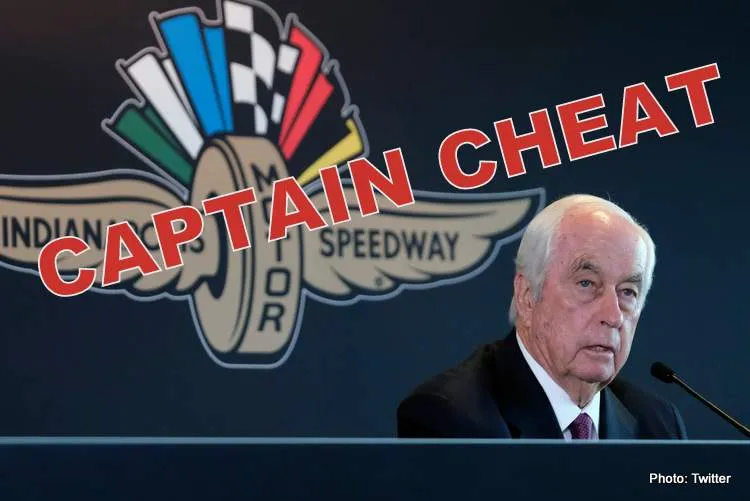
Roger Penske’s motorsport empire, spanning Trans-Am, NASCAR, IndyCar, and IMSA, is built on success, but also on a history of rule-bending, grey areas, and outright cheating, which will forever tarnish The Captain's legacy.
Confirmed violations date back to 1967, when Penske’s acid-dipped Camaro ran underweight in Trans-Am. In 1981, Bobby Unser was penalised for an illegal pass under caution at the Indy 500, later controversially reinstated.
NASCAR hits include illegal fuel additives (2000), non-compliant suspension setups (2013), and even a webbed glove used by Joey Logano in 2024 to gain an aerodynamic edge.
In IndyCar, Team Penske’s 2024 push-to-pass software hack saw Josef Newgarden disqualified from a win, while the latest 2025 Indy 500 qualifying debacle involved illegal modifications to spec parts, dropping both Newgarden and Will Power to the back of the grid.
Beyond these incidents, Penske has long exploited loopholes, most notably the dominant but controversial 1994 “pushrod” engine. The team’s ethos, coined by Donohue as the “Unfair Advantage,” has bred admiration and suspicion in equal measure.
Whether by innovation or manipulation, Penske’s teams have repeatedly crossed the line. Despite apologies and internal penalties, the legacy is clear: if there was an edge to gain, Penske would find it—legal or not. The buck stops with the team owner, 'The Captain' aka billionaire, motorsport mogul Roger Penske.
Confirmed Cheating Incidents

1967 Trans-Am: Acid-Dipped Camaro Weight Violation
Penske’s team, with Mark Donohue driving, entered a 1967 Chevrolet Camaro in Trans-Am that had been acid-dipped to reduce weight beyond legal limits. After dominating the race and lapping the field, post-race inspection revealed the car was 250 pounds under the minimum weight. Though not disqualified, the rules were swiftly revised for 1968. The episode introduced what Donohue would call “The Unfair Advantage.”
Penske’s team, with Mark Donohue driving, entered a 1967 Chevrolet Camaro in Trans-Am that had been acid-dipped to reduce weight beyond legal limits. After dominating the race and lapping the field, post-race inspection revealed the car was 250 pounds under the minimum weight. Though not disqualified, the rules were swiftly revised for 1968. The episode introduced what Donohue would call “The Unfair Advantage.”
1981 Indianapolis 500: Bobby Unser’s Illegal Pass Under Caution
In the 1981 Indianapolis 500, Penske driver Bobby Unser passed eight cars under caution on Lap 149, breaching USAC rules. Initially penalised one lap and stripped of victory, Penske launched a successful appeal. After 137 days, Unser was reinstated as the winner but fined $40,000. Penske's legal push secured the result, despite the confirmed infraction, marking one of the most controversial and politically charged wins in Indy 500 history.
In the 1981 Indianapolis 500, Penske driver Bobby Unser passed eight cars under caution on Lap 149, breaching USAC rules. Initially penalised one lap and stripped of victory, Penske launched a successful appeal. After 137 days, Unser was reinstated as the winner but fined $40,000. Penske's legal push secured the result, despite the confirmed infraction, marking one of the most controversial and politically charged wins in Indy 500 history.
1996 NASCAR Cup (Sears Point): Illegal Low Chassis
Rusty Wallace’s car failed minimum ride height rules at Sonoma. Crew chief Robin Pemberton was fined $25,000, and NASCAR imposed points penalties. The violation was considered deliberate and classified among the era’s top infractions.
Rusty Wallace’s car failed minimum ride height rules at Sonoma. Crew chief Robin Pemberton was fined $25,000, and NASCAR imposed points penalties. The violation was considered deliberate and classified among the era’s top infractions.

2000 NASCAR Cup (Talladega): Illegal Fuel Additive
Jeremy Mayfield’s car was caught using non-approved fuel additives to gain horsepower. Penske was fined $50,000, Mayfield lost 151 points, and the crew chief was suspended. Penske acknowledged the error and apologised publicly.
Jeremy Mayfield’s car was caught using non-approved fuel additives to gain horsepower. Penske was fined $50,000, Mayfield lost 151 points, and the crew chief was suspended. Penske acknowledged the error and apologised publicly.
2003 NASCAR Cup (Daytona 500 Qualifying): Illegal Carburetor
Rusty Wallace’s Daytona 500 qualifying result was invalidated due to a non-compliant carburetor. He was demoted to the back of the grid, and crew chief Bill Wilburn was fined. Wallace claimed it was an accidental parts swap.
Rusty Wallace’s Daytona 500 qualifying result was invalidated due to a non-compliant carburetor. He was demoted to the back of the grid, and crew chief Bill Wilburn was fined. Wallace claimed it was an accidental parts swap.
2013 NASCAR Cup (Texas): Rear Suspension “Truck Arms” Violation
Penske modified rear suspension components for an aerodynamic advantage. NASCAR confiscated parts, fined each crew chief $100,000, suspended seven team members, and docked 25 driver points. Appeals failed to overturn the majority of the penalties.
Penske modified rear suspension components for an aerodynamic advantage. NASCAR confiscated parts, fined each crew chief $100,000, suspended seven team members, and docked 25 driver points. Appeals failed to overturn the majority of the penalties.
2017 NASCAR Cup (Phoenix): Keselowski’s Encumbered Finish
Brad Keselowski’s car failed post-race laser inspection. NASCAR deducted 35 points and suspended crew chief Paul Wolfe. The fifth-place finish was declared “encumbered” and did not count for playoff eligibility.
Brad Keselowski’s car failed post-race laser inspection. NASCAR deducted 35 points and suspended crew chief Paul Wolfe. The fifth-place finish was declared “encumbered” and did not count for playoff eligibility.

2017 NASCAR Cup (Richmond): Logano’s Encumbered Win
Joey Logano won at Richmond but was later penalised for a rear suspension violation. NASCAR stripped the win’s playoff eligibility, fined the team $50,000, and suspended crew chief Todd Gordon. Penske did not appeal.
Joey Logano won at Richmond but was later penalised for a rear suspension violation. NASCAR stripped the win’s playoff eligibility, fined the team $50,000, and suspended crew chief Todd Gordon. Penske did not appeal.
2023 IMSA SportsCar (Watkins Glen): Skid Block Infraction
Porsche Penske Motorsport’s GTP car was disqualified for excessive floor plank wear. Penske claimed the wear was accidental, but IMSA upheld the disqualification, costing them a major endurance race win.
Porsche Penske Motorsport’s GTP car was disqualified for excessive floor plank wear. Penske claimed the wear was accidental, but IMSA upheld the disqualification, costing them a major endurance race win.
2024 NASCAR Cup (Atlanta): Joey Logano’s Illegal Aerodynamic Glove
Logano used a modified glove with webbing between fingers to improve airflow. NASCAR penalised him with a pass-through at race start and rear grid placement. The glove was confiscated and deemed a competitive violation.
Logano used a modified glove with webbing between fingers to improve airflow. NASCAR penalised him with a pass-through at race start and rear grid placement. The glove was confiscated and deemed a competitive violation.
2024 IndyCar (St. Petersburg GP): Push-to-Pass Software Cheat
Team Penske bypassed push-to-pass restrictions via custom ECU code, gaining an advantage during starts and restarts. Newgarden’s win was revoked, McLaughlin was disqualified, and the team was fined $200,000. Penske suspended senior staff and apologised.
Team Penske bypassed push-to-pass restrictions via custom ECU code, gaining an advantage during starts and restarts. Newgarden’s win was revoked, McLaughlin was disqualified, and the team was fined $200,000. Penske suspended senior staff and apologised.
2025 IndyCar (Indianapolis 500 Qualifying): Modified Spec Part
Penske smoothed seams on a rear crash structure for aerodynamic benefit. The alteration violated spec part rules. Will Power and Josef Newgarden were demoted to the last row, team strategists suspended, and $100,000 in fines issued. Critics called it a severe breach of sportsmanship.
Penske smoothed seams on a rear crash structure for aerodynamic benefit. The alteration violated spec part rules. Will Power and Josef Newgarden were demoted to the last row, team strategists suspended, and $100,000 in fines issued. Critics called it a severe breach of sportsmanship.
Notable Controversies and Accusations (No Official Penalty)

1994 Indianapolis 500 “Pushrod Engine” Loophole
Penske introduced a Mercedes-Benz pushrod V8 exploiting a rules loophole for extra boost and displacement. It dominated the race and was promptly outlawed the next year. Though legal, it was viewed as rule exploitation and prompted immediate regulation changes.
Penske introduced a Mercedes-Benz pushrod V8 exploiting a rules loophole for extra boost and displacement. It dominated the race and was promptly outlawed the next year. Though legal, it was viewed as rule exploitation and prompted immediate regulation changes.
“The Unfair Advantage” Ethos
Penske’s long-standing philosophy involved pushing legal boundaries to gain performance – acid-dipping cars, oversized brakes, or using grey-area components. These innovations, while often technically legal, led to rival suspicions and tightened regulations.
Penske’s long-standing philosophy involved pushing legal boundaries to gain performance – acid-dipping cars, oversized brakes, or using grey-area components. These innovations, while often technically legal, led to rival suspicions and tightened regulations.
Recent Scrutiny and Rival Complaints
Following the 2024 and 2025 IndyCar infractions, rival teams criticised Penske openly. Chip Ganassi, among others, called for higher standards, citing how rule-bending undermines the sport. Despite maintaining professionalism and issuing internal punishments, Penske’s pattern of exploiting regulations, whether through software, hardware, or interpretation, continues to draw scrutiny from competitors.
Following the 2024 and 2025 IndyCar infractions, rival teams criticised Penske openly. Chip Ganassi, among others, called for higher standards, citing how rule-bending undermines the sport. Despite maintaining professionalism and issuing internal punishments, Penske’s pattern of exploiting regulations, whether through software, hardware, or interpretation, continues to draw scrutiny from competitors.
Should Roger Penske be banned from motorsport?
Latest News
Loading