Peter Windsor slams George Russell's "unsafe" pole lap in Austria: "He was lucky to get away with it"
F1 Drivers NewsWednesday, 01 July 2026 at 15:06
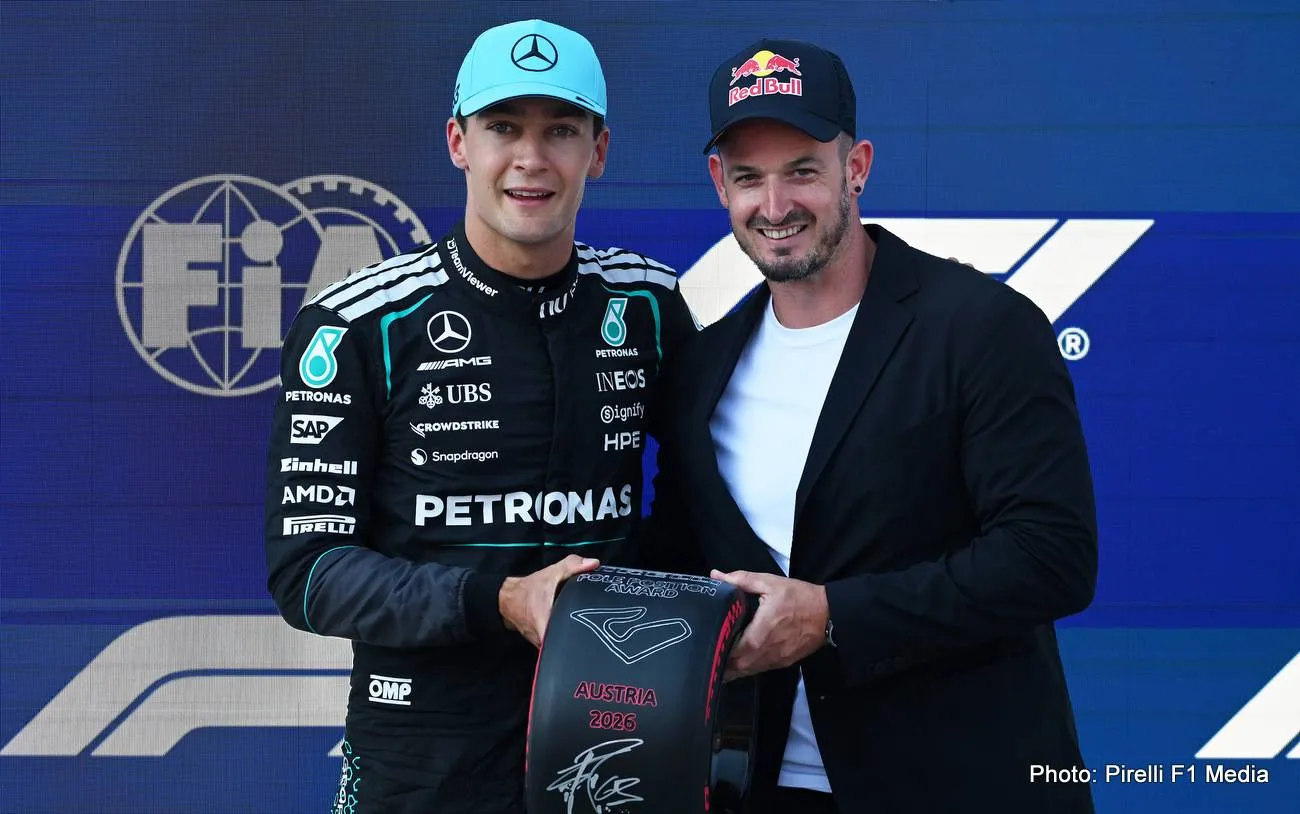
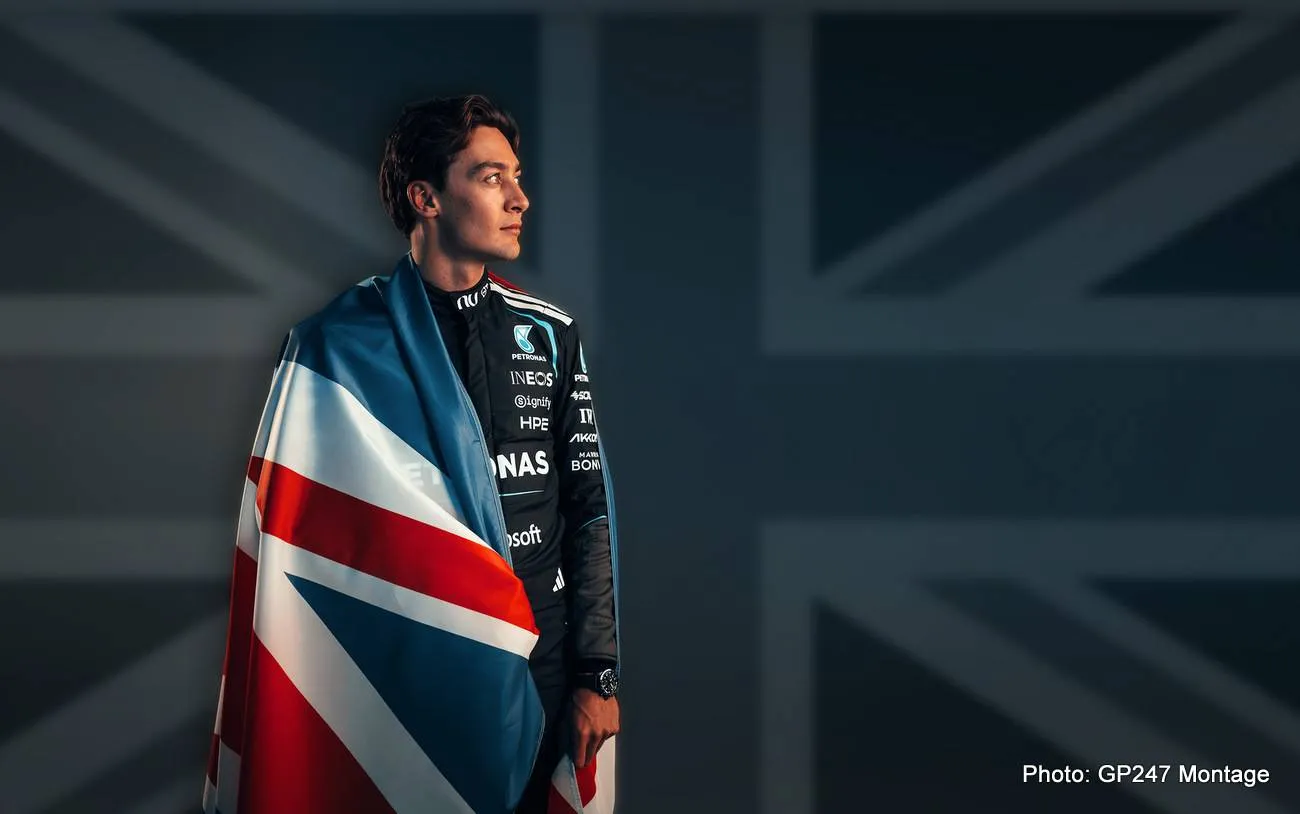
George Russell kept the Austrian Grand Prix pole because he complied with the letter of the FIA regulations, but Peter Windsor believes the Mercedes driver exposed a dangerous precedent that Formula 1 cannot afford to ignore.
Russell lifted for a single yellow flag after Max Verstappen crashed ahead of him at Turn 9. The FIA accepted his speed reduction, so the lap stood and he avoided investigation. Yet Windsor argued the bigger issue was not legality but whether a driver should be pushing over a blind brow towards an accident scene.
Speaking on the must-watch CameronCC YouTube channel, dissecting Sunday past's Austrian Grand Prix at Red Bull Ring, Windsor said of Russell's pole winning lap, "I don't think that's very clever. I just put it under the heading of 'He got away with it.'
Russell went on to win from pole, completing a superb Mercedes weekend in Austria. But Windsor believes the incident should trigger a serious review of how single yellow flags are applied at high-speed corners.
The controversy centred on the difference between Russell and teammate Kimi Antonelli. While Russell lifted and continued, Antonelli backed off after believing he had seen double yellow flags.
Yellow. Lift. Go get the pole!
George Russell explains how his final lap of Qualifying unfolded with the single yellow flag at Turn 9 🗣️#F1 #AustrianGP pic.twitter.com/HwsLbpblSF
— Formula 1 (@F1) June 27, 2026
Veteran Formula 1 figure and pundit Windsor reflected: "I think the reaction Kimi Antonelli had was, 'Whoa, this is a big shunt.' Oh, it's yellow there. I brake.' That was Kimi's reaction, which is totally correct and totally natural. George didn't do that. George thought, 'Yellow. Lift. Go get the pole.'
"That's what George thought. I give him credit for that. "That is unbelievably quick thinking," acknowledged Windsor, but rejected the notion that Russell's reaction should be celebrated as pure racing intelligence. For him, the Mercedes driver had no way of knowing what was waiting over the crest.
'I'd still like to look George in the eye and say, "So you're telling me that when you went over that brow, if there had been a deer right in front of you, you would have been going slowly enough to avoid it? He didn't know. Nobody knew. Nobody in the garage knew what had happened at that point," reckoned Windsor.
Windsor's concern was rooted in the location of Verstappen's crash. The Jochen Rindt Curve is fast, downhill and approached over a blind brow, making it different from incidents at more open circuits.
He said, "It's one thing to be going down a long straight at Qatar, and you can see exactly what's happened. It's quite another over a blind brow at 300 km/h into a plunging downhill right-hander."
That, Windsor argued, should change how single yellow flags are interpreted. A basic lift may be enough on one circuit, but not necessarily at a blind, high-speed section: "If the regs, as they're written, don't cover all those variables I've just talked about, rewrite the rules right now because it can happen again."
When it's safety you've got to go to the other extreme

He also pointed to Spa as another example where speed, visibility and weather can turn a single yellow into something far more serious within seconds. Windsor insisted the key issue was not whether Russell technically broke the rules.
Instead, he argued, "When it's safety, you've got to go to the other extreme. You need lots of margin for error because you just don't know, especially if it's a blind brow and you're doing 300 km/h."
Russell's defenders may argue that he did exactly what the regulations required. Windsor accepts that point but believes the regulations themselves are too blunt.
The FIA distinguished between single and double yellow flags. Under doubles, a driver cannot complete a meaningful lap time. Under singles, the requirement is less severe, and Russell's lap survived because he showed a lift.
But Windsor believes Austria proved that the yellow-flag rule cannot be applied without considering circuit geography and speed. He also challenged Russell to use his influence as a leading GPDA figure. Rather than accepting praise for quick thinking, he believes Russell should push for reform.
Windsor said, 'I'd have a lot more respect for George if he said, "Look, I do care about safety. I was clever; I got away with it, and I got the pole. But Austria showed we've got to rewrite these rules and make them much clearer.'"
No one should be able to get away with that again
This is not the way Max Verstappen envisaged his Q3 coming to an end 💨#F1 #AustrianGP pic.twitter.com/itsiEbmhVU
— Formula 1 (@F1) June 27, 2026
For Windsor, that would turn a controversial moment into a safety stand. He believes Russell could admit the regulation allowed too much risk without denying he acted within it.
Windsor added: "Everybody knows it could have been much worse than it was. I could have hurt myself. I could have hurt somebody else or an animal."
The veteran journalist compared the mindset to Jackie Stewart's safety campaigns, when drivers had to force change before tragedy struck again.
Russell's Austria pole and victory were important for Mercedes, especially after recent signs that Antonelli had genuine pace in the sister car. But Windsor believes the sport should separate performance from safety.
He is not arguing that Russell should be stripped of power retrospectively. His criticism is aimed at the precedent created when a driver is rewarded for staying committed near an accident scene.
Windsor concluded that Russell should say, "I was lucky to get away with it in Austria. I shouldn't be able to get away with that again."
That is the uncomfortable point for Formula 1. Russell may have obeyed the rule, but Windsor believes the rule failed the moment.
Latest News
Loading