As we approach yet another Formula 1 season without a female competitor, now feels like the right time to ask: why are there still no female drivers racing in the sport?
It has been over 30 years since Giovanna Amati became the last female driver to race in F1, yet it doesn’t feel like we’re any closer to seeing her successor.
Despite equality campaigns by the likes of Lewis Hamilton and Susie Wolff heading an all-women feeder series, there’s no outstanding candidate for promotion into the field.
As it's also International Women’s Day, we thought it pertinent to ask where things are going wrong and how long it might be before another woman gets behind the wheel.
Amati, Galica, Lombardi: The original trailblazers

Perhaps the most confusing part of this debate is the fact that women have competed in F1 before — at times when they arguably had far fewer rights than they do today.
Amati, Desiré Wilson, Divina Galica, Maria Teresa de Filippis, and Lella Lombardi, have all raced in FIA-sanctioned F1 events. But it was the latter that really flourished, entering 17 races between 1974 and 1976, and earning her first points at the 1975 Spanish Grand Prix.
However, this was an awful long time ago. Nowadays, it seems that getting into F1 is tougher than ever. In an effort to generate more opportunities for women to compete in the junior categories, the W Series was launched in 2019.
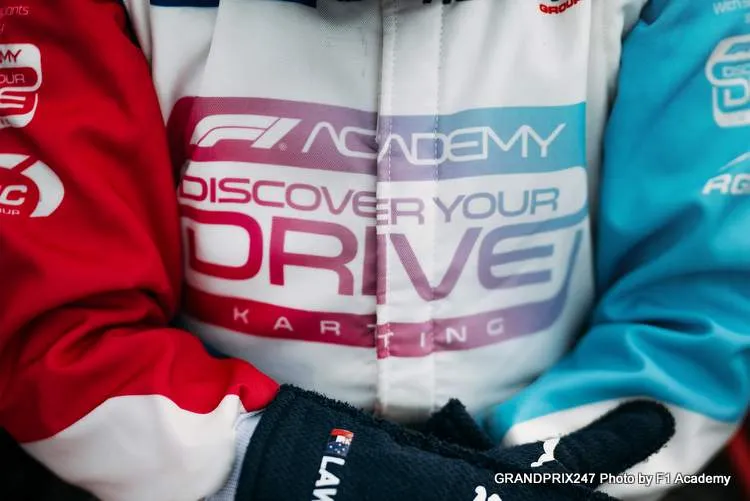
But the series failed to provide competitors with either the cash prizes or license points required to step up to F1. The F1 Academy series has now been launched in its place, and though teams are at least connected to those competing at the top table, whoever wins only gets 10 super license points (30 less than the winner of Formula 2).
Obviously, it remains to be seen whether F1 Academy will work in the long run, but two big barriers remain for a female driver to truly make it: funding and racing license points. And that’s before we go anywhere near the challenges of getting an opportunity in a male-dominated sport.
Thriving in motorsport outside of F1

Another slightly perplexing aspect of the issue is how women seem to find more opportunities outside of F1. Take Danica Patrick — she achieved multiple firsts in NASCAR and IndyCar, at one point even taking the lead in the fabled Indy 500.
More recently, Cristina Gutierrez won the T3 Dakar Rally, while the Iron Dames enter all-women teams into the World Endurance Championship, IMSA, WRC2, and more.
So why is it that women can’t take the step up? Jamie Chadwick, the driver often-touted as one of the most likely to break into F1, says it’s all about improving participation.
Chadwick said: "Ultimately, the rate of success in motorsport is very small. The percentage that make it to the top is very small.
“But at the same time, if we can just increase the levels of participation, particularly for women, then it's only going to make the odds greater for anyone to progress to the higher levels,” she added.
Are F1 cars built for male drivers?

Often, physicality is also used as an excuse. To be fair, we are talking about racing at 200 mph+ and men have a natural physical advantage.
But there are several examples out there to discredit this idea. Three-time W Series winner Chadwick competed very well in IndyCar, and she’s now preparing to race in the European Le Mans Series (ELMS). When you consider that Patrick has already won in Indy, and the likes of Michèle Mouton have dominated in WRC, it’s fair to say that women have been there, done it, and got the tee shirt.
13-time F1 race winner David Coulthard, who now runs the More Than Equal project to find the next top-level female driver, recently called “bullsh!t” on the idea that strength is an issue.
He said: “Anyone who doesn’t train doesn’t have what it takes to perform in motor racing — whether you’re a man or a woman. An untrained person doesn’t have the strength to do anything.
“One of the things I saw with the W Series was that we took the best women available to try and qualify to become part of the championship—and some of them just weren’t fit enough.
“I looked at them, going, ‘What’s your excuse for not training? You have to present yourself as being serious as a pro, and that means training like an athlete.’ Therein lies the issue. There’s no physical reason they can’t do it," he added.
There you have it. DC seems to think women are capable of fighting it out in F1. This coming year, there won’t be a woman racing in the top tier. But if you tune in to WRC2, ELMS, the WEC, and more, you’ll find evidence that they’re more than up to the challenge.
[Quotes by the Daily Mail & Newsweek]
Latest News
Loading

