In the 1971 Grand Prix at Mosport Park, a Penske-entered McLaren M19 took the chequered flag in third place. The team owner had made his F1 debut a decade earlier in the inaugural Grand Prix at Watkins Glen in 1961.
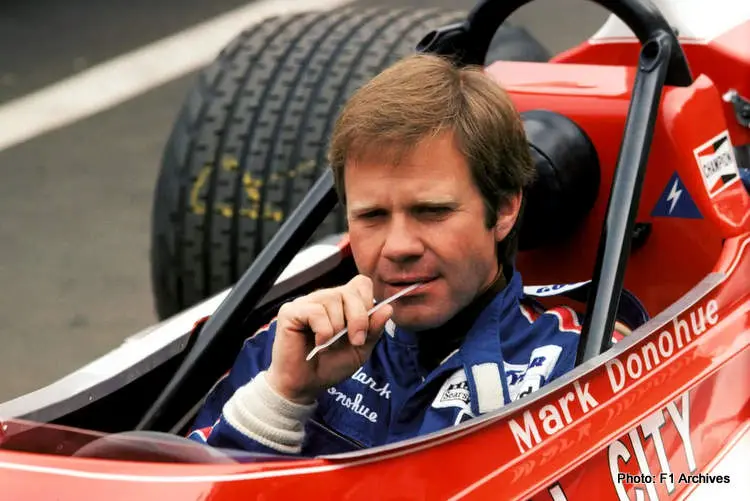
The driver in Canada was making his first appearance in Formula 1 racing, driving for Penske! His name? Mark Donohue. This is his story.
The Early Days. Donohue was born in Haddon Township, New Jersey. He graduated with a degree in mechanical engineering in 1959 from Brown University in Rhode Island. His passion was motor racing.
His rapid rise to success in SCCA (Sports Car Club of America) competition led to Walt Hansgen taking Donohue under his wing. The duo finished 11th in their Ferrari 250LM in the 1965 Sebring 12 Hour race. Hansgen, also from New Jersey, lost his life in a testing crash for the 1966 Le Mans while at the wheel of a Ford GT40.
Donohue then received an offer for a drive that would change the landscape of American motor racing forever. His name became synonymous with Penske Racing, and their name became synonymous with excellence, both in presentation and performance.
Success on Home Soil
Penske was, and remains, the Captain of Penske Racing and his various business ventures, which now include ownership of the Indianapolis Motor Speedway and the IndyCar series.
Donohue was "Captain Nice." Friendly and affable off the track, he was fully focused and totally committed when it came to action on the track—from setting up and driving the race car to sweeping the floor at the Penske Racing shop.
In the inaugural 1966 Can-Am championship, Donohue was second in the standings in a Penske-entered Lola T70-Chevrolet, behind John Surtees.
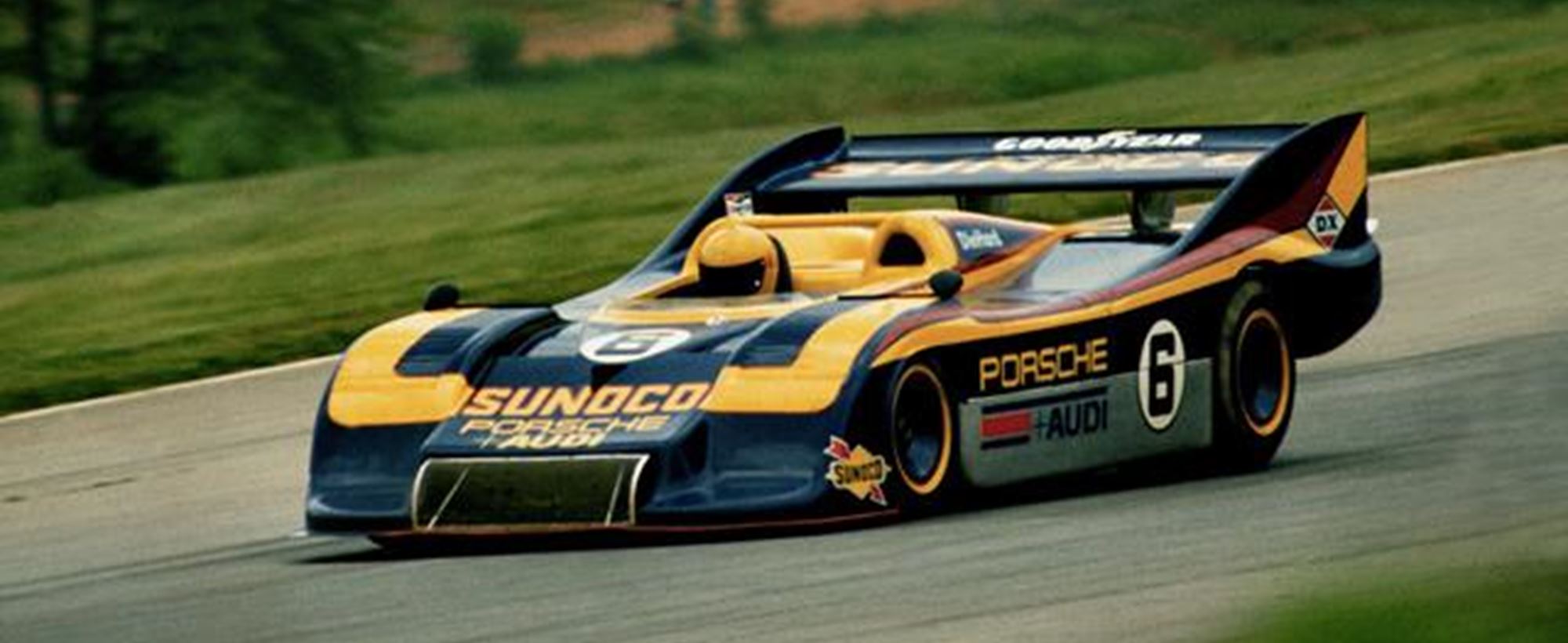
Their banner and championship-winning season came in 1973 with the fearsome Porsche 917/30. Donohue dominated the series, winning six of the last eight races and scoring 139 points compared to 62 for second-place George Follmer.
In three attempts at Le Mans, his best finish was fourth in 1967, co-driving a Ford GT40 with Bruce McLaren.
The Donohue-Penske partnership was also remarkably successful in Trans-Am racing. During the 1968 season, he won 10 of the 13 races in a Chevrolet Camaro.
In 1971, Donohue’s first two IndyCar wins came in back-to-back races on high-speed ovals at Pocono in Pennsylvania and Michigan. The following season, he gave Penske his first taste of milk and success at the Brickyard in the 1972 Indy 500, the fastest Indy up to that time, with an average speed of 262.26 km/h (162.96 mph).
In 1973, he took the only NASCAR victory of his career in the season opener at Riverside in Southern California, driving an AMC Matador.
He was also the inaugural IROC Champion in 1974, at the wheel of a Porsche Carrera RSR, winning three of the four races.
Donohue Racing from Retirement to Formula 1

In 1974, Donohue stopped his racing activities to start work on his book *The Unfair Advantage*, which he co-authored with Paul Van Valkenburgh. The retirement didn’t even last a full season, as Penske recruited him as the chosen driver for his planned Formula 1 project after Peter Revson was killed in testing at Kyalami in March.
Donohue’s return to Formula 1 racing in a Penske chassis came at the same place where he made his debut three years earlier. The 80-lap race at Mosport Park near Toronto saw him finish 12th, two laps down on race winner Emerson Fittipaldi.
The 1974 season finale was their home Grand Prix. The 59-lap race at Watkins Glen had the Penske PC1 on the seventh row of the grid after qualifying. In the race, Donohue retired on Lap 27 due to suspension issues.
For the 1975 season, the Penske team, sponsored by First National City Bank, soldiered on with their own PC1 chassis with Ford-Cosworth power. In the Buenos Aires season opener, Donohue was the first driver outside the top six points-paying positions. In the next four races, South Africa was the only place he would see the chequered flag, finishing eighth.
After an 11th-place finish in the Belgian Grand Prix at Zolder, the first points of the season were scored in Round 7 at the Swedish Grand Prix at Anderstorp. Donohue started 16th and climbed to fifth at the end of the 80-lap race.
The next race, in changing conditions at Zandvoort, saw him finish eighth, a lap down on Formula 1’s new first-time Grand Prix winner, James Hunt, in his Hesketh. Drive shaft failure on Lap 6 forced Donohue to retire from the French Grand Prix at Paul Ricard.
Penske Racing parked their own chassis for the British Grand Prix and entered Donohue in a March 751-Ford. A heavy downpour in the closing laps of Round 10 at Silverstone saw several drivers, including Donohue, go off the track. He was classified fifth, while Fittipaldi took the final Formula 1 victory of his legendary career.
The British Grand Prix would be Donohue’s last race, where he would finish and earn the final points of his Formula 1 career. The next race was at the daunting Nürburgring. A puncture on the opening lap of the 22 km historic track in the Eifel mountains led to Donohue’s DNF.
Then came the Austrian Grand Prix at the ultra-fast Österreichring.
The Last Lap: Roger Penske Remembers His First Indy Winner & F1 Driver

On August 17, 1975, during Sunday’s warm-up session, Donohue suffered a left-front tyre failure while approaching the fast uphill first corner, later known as Hella Licht, and crashed heavily into the barriers and an advertising billboard.
The flying debris also injured some track marshals, one of whom would succumb to his injuries. Donohue was extricated from the wreckage and spoke to the rescue team and Fittipaldi, who had stopped to help. Unfortunately, Donohue had suffered internal head injuries and was flown by helicopter to Graz. Despite all efforts and emergency surgery, the 38-year-old driver passed away on Tuesday.
In the aftermath of the tragedy, his widow Eden filed a lawsuit against Goodyear Tire and Rubber Company and Penske Racing. After nearly a decade-long litigation, the Akron, Ohio-based company reached a settlement to pay the $9.6 million judgment.
“Donohue really was a new breed. He was one of the first drivers who understood the car technically. Mark had put together, I think, the vehicle dynamics, so we got into some aerodynamic areas, certainly the wings, camber change, things like this.
“Mark was at the leading edge of that. Probably as fully committed a race driver as I have ever seen," added Penske of his good friend.

Latest News

Loading