Formula 1 is a sport known for its speed, excitement, and adrenaline-fueled races. However, along with the thrill of the sport, Formula 1 has also seen its fair share of tragedy.
While safety in motorsport, F1 included, has improved massively over the years, it still rmeains a very dangerous sport. Sadly, one where fatality always looms no matter what.
Over the years, several drivers have lost their lives while competing in Formula 1 races, highlighting the dangers that come with pushing the limits of speed and technology. In this report by online casinos South Africa we take a look back at some of the most tragic fatal accidents in Formula 1 history.
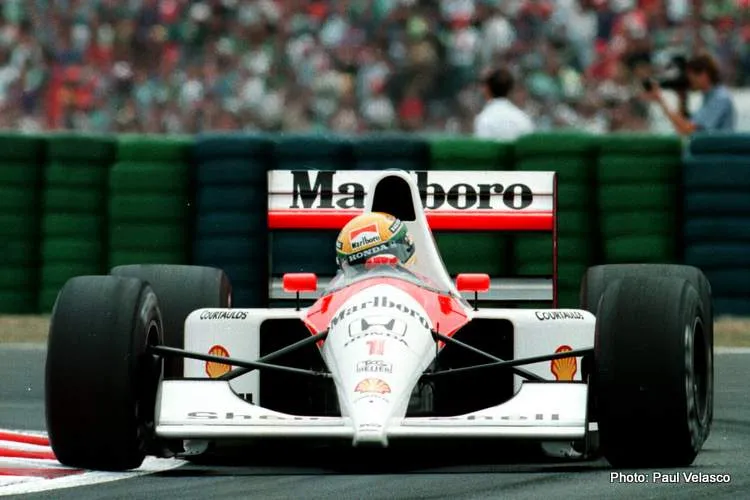
Ayrton Senna (1994): Perhaps the most well-known and tragic fatal accident in Formula 1 history was the death of Ayrton Senna. The Brazilian racing legend was killed during the 1994 San Marino Grand Prix when he crashed into a concrete wall at high speed. Senna's death sent shockwaves through the racing world and led to a renewed focus on safety in Formula 1.
Roland Ratzenberger (1994): The same weekend that claimed the life of Ayrton Senna also saw the death of Austrian driver Roland Ratzenberger. Ratzenberger was killed in a crash during qualifying for the San Marino Grand Prix, becoming the first driver to die at a Formula 1 race weekend since 1982.

Gilles Villeneuve (1982): Canadian driver Gilles Villeneuve lost his life during qualifying for the 1982 Belgian Grand Prix. Villeneuve's Ferrari collided with the March of Jochen Mass at high speed, sending him airborne into the catch fencing. Villeneuve's death was a major blow to the Formula 1 community, as he was widely regarded as one of the sport's most talented drivers.
Ronnie Peterson (1978): Swedish driver Ronnie Peterson died as a result of injuries sustained in a crash at the start of the 1978 Italian Grand Prix. Peterson's car was involved in a multi-car pile-up and burst into flames. Despite efforts to rescue him, Peterson succumbed to his injuries the following day.
Elio de Angelis (1986): Italian driver Elio de Angelis died in a testing accident at the Paul Ricard circuit in France in 1986. De Angelis' Brabham car suffered a mechanical failure, causing him to crash into the barrier at high speed. De Angelis' death was a stark reminder of the risks that drivers face both in races and in testing.

Jules Bianchi (2015): French driver Jules Bianchi died in 2015, nine months after sustaining severe head injuries in a crash at the 2014 Japanese Grand Prix. Bianchi's accident occurred in wet conditions, and he collided with a recovery vehicle that was attending to another crashed car. Bianchi's death was a sombre reminder of the dangers that still exist in Formula 1 despite advancements in safety. You can try playing some online pokies while you go through the rest of the article.
Wolfgang von Trips (1961): German driver Wolfgang von Trips lost his life in a crash at the 1961 Italian Grand Prix. Von Trips' Ferrari collided with Jim Clark's Lotus at Monza, sending his car into the crowd. Von Trips and 15 spectators were killed in the accident, making it one of the deadliest incidents in Formula 1 history.
In Closing
These 52 fatal F1 accidents serve as a sobering reminder of the risks that drivers face every time they take to the track. While safety measures in Formula 1 have improved significantly over the years, the sport will always carry a certain level of danger. "The FIA has continued to improve driver safety with new requirements every year, but as cars continue to get faster, the safety precautions have to continue to improve at a faster rate than ever," says Matthew Engelage, a motorsports expert and CEO of Chin Mounts.
As fans, we remember these drivers and their contributions to Formula 1, while also acknowledging the need for continued efforts to improve safety in motorsport.
Latest News



Loading