Formula 1, the pinnacle of motorsports, isn't just about fast cars and dazzling podium moments. Behind the scenes lies a web of logistics, a massive effort that forms the backbone of the sport.
The logistics challenge of moving the equipment of 10 teams across 20 races spanning 5 continents in a mere 9-month season demands intensive planning and precision. To achieve this, teams employ a combination of three transport modes: roadways, airways, and waterways.
Given that all teams are currently based in Europe, road transport is the norm for races within the continent. Specially designed lorries, adorned with team colours, carry the cars, tools, and equipment to the race locations.
The Formula One freight embarks on a journey covering land, air, and sea, traversing five continents within nine months. In 2021 alone, DHL, the official logistics partner, moved a staggering 1,540 tons of equipment and 532 cars, covering over 74,500 miles.
This translates to an average of 44 to 55 tons for each of the 10 teams, including a plethora of broadcast media equipment, containers of tents and hospitality gear, and over 22,000 pounds of electronic equipment per team. That's a lot of logistics.
DHL is involved in Formula 1 cargo as well as Formula E

DHL's involvement extends beyond Formula One to include Formula E, with approximately 460 tons of equipment, including electric race cars, batteries, and charging units, transported using multimodal methods.
Teams carefully pack their gear in air containers or pallets for road transport, collectively referred to as a "kit." On average, these kits reach the racetrack 14 days before the event and are removed a week afterward.
In addition to the kits, about 120 ocean containers circulate in the background, transporting less urgent items like furniture or catering equipment to race sites.
For air or road transport, the equipment must be at the track eight to 10 days ahead of the race. Duplicate kits, shipped via ocean freight, provide contingency storage in various locations on each continent.
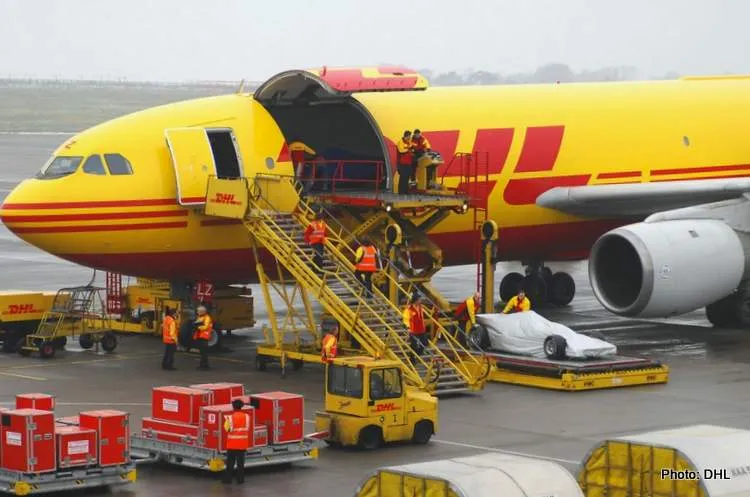
A logistics masterclass by DHL teams involved in moving F1 cars and equipment

DHL operates with three dedicated teams – inbound, on-site customer service, and pack-up – ensuring a seamless process, especially during back-to-back events. Even before the checkered flag falls at the end of a race, the DHL team is already dismantling and stowing equipment.
Before each race, priority pallets carrying material for setting up the garage arrive first at the site. This allows the logistics setup team to begin constructing work quarters before the rest of the personnel and equipment arrive.
Williams Racing notes that it takes about 60 computer screens, 400 miles of wiring, and cables to run the IT infrastructure during a race weekend. For air-transported races, teams can only commence creating their individual spaces once all the cargo has arrived to ensure fairness.
For European races, trucks are the primary mode of transportation. At this moment, trucks for sale and truck drivers are in high demand to meet the extensive demand for the sport.
Car truck transport for sale has to meet the required standards to ensure the F1 cars are delivered in perfect condition and do not stall the game.
The logistics challenge intensifies for international, or "flyaway," races. Parts are categorized into critical and non-critical, with critical parts including chassis, tires, engines, wings, computers, and IT racks.
Non-critical parts, such as garage components like jacks and tools, are divided into five sets and shipped between two global race locations. These sets, transported via sea, provide a buffer, ensuring teams can ship them well in advance to receive them on time.
Globetrotting F1 cars to their race destinations

Before air transport, cars are disassembled to their last components. The engine, gearbox, front and rear wings, mirrors, and suspension parts are removed and packed in their own foam-slotted boxes. Some teams go the extra mile, using bubble wrap as an additional precaution.
Chassis are packed in custom-made covers. Each team transports its equipment in custom-made cargo crates, designed to optimally fill the space in the planes' holds.
Most teams use cargo planes chartered by Formula One Management (FOM) in partnership with DHL for flyaway races. These planes, flying out of Munich and London, carry the equipment from the European base to race locations. Back-to-back flyaway races involve direct transit between two races, necessitating additional equipment to ensure smooth operations.
Each team carries enough spare parts to rebuild their cars, along with 40 sets of tires, 2,500 litres of fuel, 200 litres of motor oil, and 90 litres of coolant. Tools, computers, and sufficient food to prepare up to 200 meals are also part of the cargo.
The largest teams may haul as much as 50 tons of gear, while even the smallest outfits transport 30 tons of equipment.
As the global popularity of Formula One continues to rise, the logistical efforts required to transport teams and their equipment also expand.
The unsung heroes behind the scenes are the dedicated logistics teams, navigating the challenges to ensure the smooth execution of one of the world's most thrilling and technologically advanced sports.
Latest News






Loading