What Modern F1 Really Demands from Young Drivers On Their Journey To a Strong Performance?
Special FeatureThursday, 30 April 2026 at 01:05
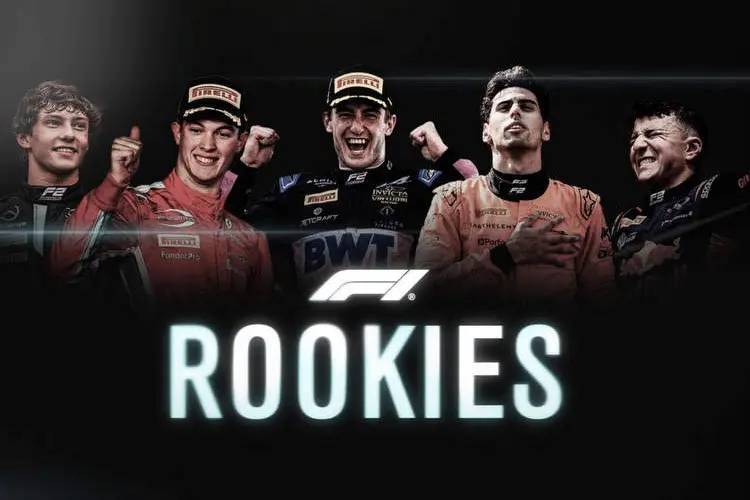
The path to motorsport used to seem like a romantic dream: a brave guy, a fast car, and a little luck. But in the modern era, everything has changed.
Formula 1 had completely transformed from a daredevil race into a battle of geeky athletes, with the shadows of corporate giants looming behind them. Today, a junior driver needs more than just a sense of speed; they need to be a versatile soldier even before they ever climb into the cockpit of an F1 car.
The system has become more rigid. Academies like Red Bull or Mercedes train children practically from elementary school. The pressure is brutal: there is no room for error. To understand the sieve through which future stars are sifted, you need to understand the skills required of newcomers today. Because knowing how to turn a steering wheel is just the tip of the iceberg.
The Foundation of Success – Beyond the Race Track
The first thing they drum into a young driver is that raw speed is simply an entry ticket, nothing more. It used to be possible to be an unsociable genius who simply floored the throttle, but things are different now. If you cannot communicate with the team or are dying in the gym, no amount of quick seconds will save you.
Here are some of the examples of what the current obsession is in the junior series:
- Brains in extreme mode. Imagine: your heart rate soars above 170, your body is pressed into the seat by 5G, and all the while you have to not only drive, but listen to the engineer’s whining in your headphones and adjust the settings on the steering wheel. This is not just concentration; it is extreme multitasking.
- You have to understand aerodynamics and what the engine engineer is saying. If you cannot clearly decipher the telemetry and explain why the car is spinning around in Turn 3, you are useless to the team.
- A racing driver as a media product. Nowadays, a junior driver is a walking brand. Sponsors do not care about your trophies if your social media reach is zero. The ability to maintain a straight face in front of the camera and not blurt out anything unnecessary to the press is now as valuable as a perfect apex.
- Life in a simulator. Real testing is scarce and prohibitively expensive. So drivers literally live in virtual reality, clocking thousands of laps so engineers can fine-tune their car for the weekend.
All of this is built up over years in junior series like Formula 2 or Formula 3. Natural talent often takes a back seat here. The winner is not the fast guy who puts in one crazy lap, but the one who does not fall apart psychologically after the first puncture.
Technology and Data – The New Standard of Motorsport
Modern Formula 1 racing is no longer about the smell of gasoline, but about endless gigabytes of data. Now, every move from a driver in the cockpit instantly turns into a graph on the engineer's monitor. Hit the brakes a millisecond too late? Steer a degree too sharp? They will «read» you instantly. Young guys have to be more than just daredevils; they are walking calculators, mentally calculating when the tires will «float» if the asphalt warms up a couple more degrees.
When millions are at stake, and the pressure is off the charts, everyone searches for their own way to stay sane. Some immerse themselves in sim racing, others in analytics. Risk is everywhere, and knowing when to pull the brakes is a skill that is just as useful in a tight corner as it is in a Win Bet online casino, when you are playing games or making bets. But whatever you say, for professionals, real adrenaline is only possible under the lights of the starting traffic lights, where any mistake is a fiasco.
Career Stage Comparison – Path to Licensure
You cannot just breeze into the Grand Prix, because you are just talented enough – the FIA has established a strict filter in the form of a superlicense system. To earn the coveted permit, a driver must earn 40 points in the junior series. This is insurance against random drivers with deep pockets but no understanding of the physics of the process. The career ladder looks something like what you are seeing in a table.
| Stage (Series) | Age | Key Objective | The Main Challenge |
| Karting | 7–14 | Basics and Aggression | Budget hunt & "meat grinder" grids |
| Formula 4 | 15–16 | Handling the Weight | Brutal G-force on the neck |
| Formula 3 | 17–19 | Mastering Aero | Chaos of a 30-car field |
| Formula 2 | 19–21 | Tyre Management | Strategy games & high-stakes pressure |
| Formula 1 | 18+ | Peak Performance | Paddock politics & technical complexity |
The difficulty does not increase linearly, but in leaps and bounds. In karting, you drive instinctively, and at pure speed, but in F2, you have to relearn. There, the winner is not the one who floors every corner, but the one who manages to find a way to cope with the fickle Pirelli tires.
This is the main paradox: to reach the elite, you sometimes need to be able to drive slower than the car allows, just to maintain your pace over the course of a race.


Latest News
Loading