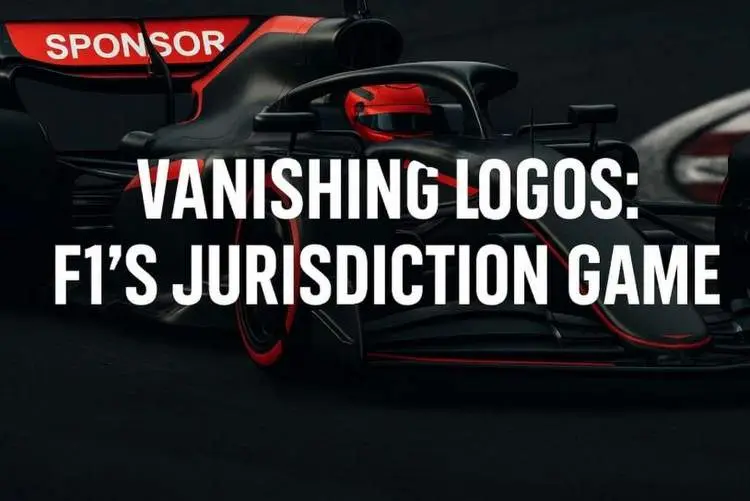
Blink. Sponsor gone. Magic? Nope. Law. Same car, new country, different rulebook. In one place a bold sidepod screams a brand. Next stop it whispers nothing at all. That swap isn’t mood. It’s compliance. And yes, it spills into your screen, your wallet, and the way you play online.
Here’s the twist. Motorsport is a
travelling circus with very serious accountants. Every weekend is a storefront.
Millions of eyeballs. Billions in perception. If you’re the kind of reader who
checks previews, then later googles best bitcoin casinos australia for a
Saturday flutter, you’re already in the crossfire. Livery here. Payment rails
there. Same forces. Same frictions. Different jerseys.
I’m your guide today. Bit of a nerd.
Slightly eccentric. Very obsessed with rules that shape money. We’ll unpack why
logos vanish, how teams keep value alive, and what this means for
you—especially if you dabble in crypto deposits, scan T&Cs, or peek at an
Aussie online casino review before lights out. Short sentences. Strong tips. A
little cheek. Plenty of skill you can use.
The jurisdiction puzzle: why logos “vanish” from race to race
A jurisdiction is just a place
where a law applies. Country. State. Sometimes a city. Formula 1 drives through
dozens each season. Each one draws its own red lines. Gambling. Crypto.
Alcohol. Tobacco. Financial services. Some say “okay, with warnings.” Others
say “nope, not here.” The same brand jumps from hero shot to blank square. All
legal. All planned.
Australia shows how layered it gets.
You’ve got national consumer rules. State advertising codes. Harm-minimisation
guidelines. Broadcasters with their own standards. Teams obey them all, or they
pay. So sometimes the on-car logo goes quiet. Messaging moves to fan zones or
long-form content. The vibe is tidier, stricter, more educational. Less “click
now,” more “here’s how this works.”
This doesn’t end at the kerb. It flows
into your feed. One country sees a punchy promo. Another sees a sober
explainer. If a guide to aus online casino payments looks different from a UK
how-to, it’s not “weird editors.” It’s the jurisdiction puzzle at work. Same
sponsor family. Different compliance clothes.
“Ghost” cases: how teams re-cut liveries and still keep the story
Teams don’t panic when a logo can’t race.
They re-cut the activation. Three classic plays:
- Aliasing. Swap the main mark for a compliant cousin. Neutral name. CSR tag. Safety slogan. Subtle but legal.
- Category pivoting. Spotlight a safe product line. Education. Tech. Community. Not the “spicy” category.
- Inventory rotation. Lose sidepod minutes. Gain garage panels, driver caps, paddock screens, documentaries, Q&As.
From outside, the partner looks
invisible. Inside, value is being rebuilt. On-car CPM down. Digital dwell time
up. If the car can’t shout, the content will explain. Fans get more context.
Brands keep relevance. Regulators stay calm. Everyone breathes.
The hidden win? Better story.
Instead of a logo blur, you get an honest piece about odds, payments, and
limits. Not fluff. Real instruction. You learn, you decide, you stay safe. The
badge is smaller. The brain is bigger. That’s progress.
The economics of activation: CPM, conversion, and the restricted-weekend tax
Think of visibility as inventory. In open
markets, car paint equals clean impressions at a predictable CPM (cost
per thousand). In restricted markets, inventory shrinks. Fewer legal
placements. Heavier disclosures. More editing on the broadcast feed. CPM rises.
CPA (cost per acquisition) often rises too, because the user journey
adds friction—age gates, warnings, KYC prompts. That extra cost? Call it the restricted-weekend
tax.
Here’s the adult takeaway: when regulation tightens, you don’t “get
creative” by hiding. You move the spend to places that survive scrutiny. Pages
with clear terms. Plain risk language. No tricks. If you need a baseline
example of the kind of broad roundup readers use when they’re trying to compare
options, use business insider
website—then
filter it through your reality: what’s legal where you are, what requires KYC,
what payment rails are actually available, and what the withdrawal rules say in
writing.
Smart teams don’t fight the law. They
budget for it. Three mixes:
●
Soft-compliance. Most things allowed. Push on-car plus social. Conversions ride scale.
●
Partial restriction. Logos limited. Messaging allowed with disclosures. Replace on-car
minutes with high-intentcontent: driver explainers, landing pages that
are clear not cute, responsible-play boxes.
●
Hard ban. No on-car. No inducements. Go long on trust: STEM activations,
charity work, safety education, executive hospitality. You bank reputation now.
You convert later, where legal.
What should you do? Don’t chase noise. In
weeks where paint goes quiet, read the long-form. That’s where the value hides.
Offers change. Law doesn’t. Your best defence is understanding the funnel and
choosing licensed platforms, especially when a review mentions the best
bitcoin casinos and you’re deciding if that’s even relevant in your
location.
Law for fans & brands: KYC, AML, Travel Rule, licenses (keep it simple)
Let’s demystify the alphabet soup.
KYC — Know Your Customer. Platforms verify who you are. Age. Identity. Address. It’s not there
to annoy you. It’s there to stop minors and thieves. Do it early. Nothing hurts
like “big win, stuck withdrawal.”
AML — Anti-Money Laundering. Systems watch patterns. Rapid
deposit→withdraw cycles. Mismatched names. Odd wallet routing. If the engine
flags, payments pause. Breathe. Answer questions. It’s guardrails, not
punishment.
Travel Rule — for crypto. When some transfers move between regulated providers, basic
sender/receiver details should travel with the transaction. Think “digital
customs slip.” Result? Exchanges may ask extra info. Providers may limit
transfers to verified addresses. Not cosy, but normal.
Your checklist
●
Use licensed operators in
your location. Period.
●
Finish KYC before big deposits. Less drama.
●
Keep the same legal name on
exchange, wallet, and operator.
●
Expect extra prompts when moving
crypto between regulated services.
●
See a bold claim in an Aussie
online casino review? Check licensing first, glitz second.
One more thing for Australian readers.
Domestic frameworks are strict. Many sites discussing best bitcoin casinos
australia compare offshore services. That’s research. Not a permission slip.
Match any advice to your law. If in doubt, sit it out.
Bitcoin vs stablecoins vs cards vs Lightning: pick the right rail
Each rail has a job. Pick by job, not
hype.
BTC on-chain.
Great for planned, larger moves. Days before the race. You accept two
frictions: confirmation time (minutes, sometimes longer) and price swings. Want
sovereignty? Fine. Just don’t cut it close to deadlines.
Stablecoins (USDT, USDC). Boring on purpose. Track fiat value. Usually settle fast. Perfect for predictable
bankrolls. Nice for clean accounting. Aware of the trade-offs: issuer
policies and chain rules exist. Read them.
Lightning (Layer-2 for Bitcoin). Speed demon. Near-instant micro-payments. Tiny fees. Lovely for tips,
small deposits, paid content. Support varies by operator. Wallet UX varies too.
When it works, it feels like tap-to-pay.
Cards. The
everyday hero. Simple. Familiar. Chargeback rights. Universal acceptance.
Sometimes fees, yes. But when you want zero crypto complexity and maximum
consumer protection, cards still slap.
Heuristic that never fails
●
BTC on-chain → bigger, planned transfers.
●
Lightning → instant micro-moves.
●
Stablecoins → stable value, fast settlement.
●
Cards → simplicity and chargebacks.
If a comparison piece names the best
bitcoin casinos then gushes about speed, ask: speed on which rail?
On-chain? Lightning? A stablecoin? Or just a fast card processor? Detail
matters. Marketing doesn’t always do detail.
The conversion maze: from logo to offer… to safe withdrawal
Map your path before you click.
Typical journey
Logo → geofenced
landing page → KYC → deposit → optional bonus → play → withdrawal.
Every step has a trap. You can dodge
them.
The four bonus terms that actually
matter
- Rollover/Wagering. How many times you must bet the bonus (and sometimes deposit) before cash-out.
- Eligible odds/games. Which bets or games count. Spoiler: not all do.
- Time limits & caps. How long you have. Max convertible winnings.
- Method restrictions. Some offers exclude crypto rails or certain e-wallets.
Treat bonuses like side quests. Optional.
If the time window or rollover doesn’t fit your week, skip it.
Protect bankroll first. Hype later.
Bankroll rules that work anywhere
●
Use fixed stake sizing.
Tiny % of bankroll per bet. Boring and brilliant.
●
Set a stop-loss before you
start. Non-negotiable.
●
Add session timers. Tilt is
sneaky. Timers beat tilt.
●
Write down the plan. Change the
plan between sessions, never mid-tilt.
Reading a guide to an australian casino
venue or a crypto comparison for an aus online casino? Same principles. If the
value lives in the small print, you read the small print. If the small print
hides landmines, you walk away.
ROI under restrictions: playbooks for marketers, teams, and grown-up brands
You can keep ROI steady if you admit one
truth. One plan doesn’t fit all markets. So build three.
Hard-ban.
On-car? No. Inducements? No. Focus on trust. Long-form explainers.
Responsible-play content that is actually useful. Community programs with
measurable outcomes. Executive hospitality with decision-makers. You win
reputation now. You harvest intent later.
Partial restriction. Logos trimmed. Messages allowed with disclosures. Build high-intent
flows:
●
Clear payout timelines (not vague
“fast”).
●
Transparent KYC steps (what, when,
why).
●
Local payment options listed
plainly.
●
Landing pages in real English, not
buzzword salad.
Fewer surprises. Less churn. Better unit economics.
Soft-compliance. Most things allowed. Do not overspend just because paint space exists.
Use the break-even guardrail:
Spend ≤ Qualified
visits × Conversion rate × Net value per new user.
Overpay and your average value collapses. Underpay and
a faster rival steals efficient reach. Discipline wins.
Crypto sponsorships? Maturing. The sugar
high is over. Fewer deals, stronger partners, heavier compliance. Good for
fans. Tougher for lazy marketers. The message is simple: clean funnels, fair
withdrawals, honest terms, robust identity checks. That’s the new paddock pass.
What’s next: 2026+ and the slow march to cleaner portfolios
Two curves get steeper.
First. More sensitive-category
tightening in certain markets. Sharper age gating. Sharper disclosures.
More “we mean it” in the enforcement.
Second.
Higher user-protection standards everywhere. Clearer terms. Faster
support. Better tools for limits, cool-offs, and self-exclusion. Fewer grey
areas. More grown-up experiences.
For Australian readers, one word: clarity.
Domestic rules are tight, so many “top lists” you see for best bitcoin casinos
australia are discussing offshore operators. Research is fine. But legality is
local. Check licensing for your state. If it’s not licensed for you,
it’s not for you. No FOMO. No drama.
Payments keep modernising. Faster rails.
Smoother on-ramps. ID checks that don’t feel like airport security in 1998. BTC
stays the sovereignty play. Stablecoins become the accounting workhorse. Cards
keep being cards. Whatever disappears from a sidepod this Sunday, your routine
can stay constant: legal, verified, disciplined.
Disclaimers & responsible play (read this, seriously)
Online gambling is entertainment. Not an
investment strategy. Laws differ by country and even by state or city. Always
use licensed operators where you live and make sure you meet age
requirements. If a site never asks for KYC, it might feel convenient. It
usually means future friction, especially at withdrawal. Convenience is not
safety.
Keep your bankroll away from rent, food,
and must-pay bills. Decide your max loss before a session. Stick to it.
If you notice chasing, secrecy, stress—those are red flags. Use deposit
limits. Set cool-off periods. Self-exclude if needed. If
gambling stops being fun, stop. Ask for help. This article is education, not
legal, financial, or tax advice.
Bonus glossary (plain English)
Jurisdiction
— where a specific law applies (country/state/city).
Geofencing — showing different content or offers by location.
Brand safety — staying compliant and protecting reputation.
KYC — “Know Your Customer”: ID/age/address checks.
AML — “Anti-Money Laundering”: systems that flag risky patterns.
Travel Rule — when certain crypto transfers move between regulated
providers, basic sender/receiver info travels too.
On-chain — transactions recorded on the base blockchain.
Layer-2 / Lightning — built on top of a blockchain for faster, cheaper
payments.
Stablecoin — crypto token designed to track a fiat currency (e.g., USD).
Rollover/Wagering — how many times you must bet bonus (sometimes
deposit) before withdrawal.
Bankroll — the money you allocate for play; plan to lose it without
harming life.
Your take-away skills (pack them for every race)
- Verification first. Finish KYC before funding. Keep ID and proof of address handy.
- Pick the right rail. BTC on-chain for bigger, planned moves. Lightning for instant micro-moves. Stablecoins for stable value. Cards for simplicity and chargebacks.
- Read the real terms. Rollover. Eligible markets/games. Time limits. Method exclusions. These decide true value.
- Budget like a race engineer. Fixed stake size. Pre-set stop-loss. Session timers. Change plans between sessions, not mid-tilt.
- Stay legal. Licensed platforms only. If the livery is blank this weekend, assume stricter rules and act accordingly.
Optional FAQ (you can render as JSON-LD or plain):
Q1: Why does the same F1 car show
different logos in different countries?
Because each jurisdiction sets its own rules for
sensitive ads. Teams obey by swapping, muting, or removing marks.
Q2: Are crypto payments faster than
cards for deposits and withdrawals?
Sometimes. Lightning is instant for small moves;
on-chain BTC can be slower. Cards are simple and come with chargeback rights.
Q3: What should I check before taking
a bonus?
Rollover, eligible games/odds, time limits, method
restrictions. If the window doesn’t fit your week, skip it.
Q4: Is it legal to use offshore sites
I find in “best bitcoin casinos australia” lists?
Legality is local. Many lists review offshore
operators. Always verify licensing for your location before you play.
Q5: What’s the safest routine for race
weekends?
KYC early. Choose one primary rail plus a backup.
Split bankroll. Set limits. Stop at your pre-set loss.
Latest News










Loading