CSGO Gambling Roulette and Formula 1: Two Worlds Where Margins Decide Everything
Special FeatureThursday, 12 February 2026 at 01:07

In Formula 1, the difference between pole position and P5 is often measured in thousandths of a second.
A team that finds an extra tenth through aerodynamic optimisation, tyre strategy, or driver precision gains an advantage that compounds over an entire race. In CSGO gambling roulette, the margins are equally decisive but measured differently, a 2.6% house edge seems negligible on any individual spin but compounds relentlessly over hundreds of bets.
Both worlds reward those who understand that tiny advantages, applied consistently, produce dramatic outcomes.
This is not a casual comparison. The culture of margin optimization that defines Formula 1 and the mathematical edge management that governs CSGO gambling roulette share a common intellectual foundation. Both attract participants who think in terms of percentages, who obsess over small improvements, and who understand that the difference between success and failure is rarely dramatic, it is incremental, systematic, and measurable.
The Margin Game in F1 and CSGO Roulette
Formula 1 engineers live in a world of marginal gains. An aerodynamic update that reduces drag by 0.5% might gain two-tenths of a second per lap. Over fifty laps, that is ten seconds, the difference between a podium finish and a points-less result.
Teams invest millions in wind tunnel testing, CFD simulation, and material science to capture these incremental advantages because they know that small edges compound into decisive results.
CSGO gambling roulette operates on an identical principle from the platform's perspective. The house edge of approximately 2.6% on standard bets seems almost trivial on any individual spin.
But across thousands of player bets per hour, this edge generates reliable revenue that compounds into substantial profitability. The casino's business model is a margin game as precise as any F1 team's performance optimization.
For the player, understanding this margin game is essential. Just as a slower team cannot overcome a fundamental car deficit through driver heroics alone, a roulette player cannot overcome the house edge through betting strategy alone.
What strategy can do, in both F1 and roulette, is optimize performance within the constraints that exist. An F1 team with the third-fastest car can still win races through superior strategy. A roulette player cannot eliminate the house edge but can manage bankroll and variance to maximize entertainment value per dollar spent.
Pit Stop Strategy and Cash-Out Timing
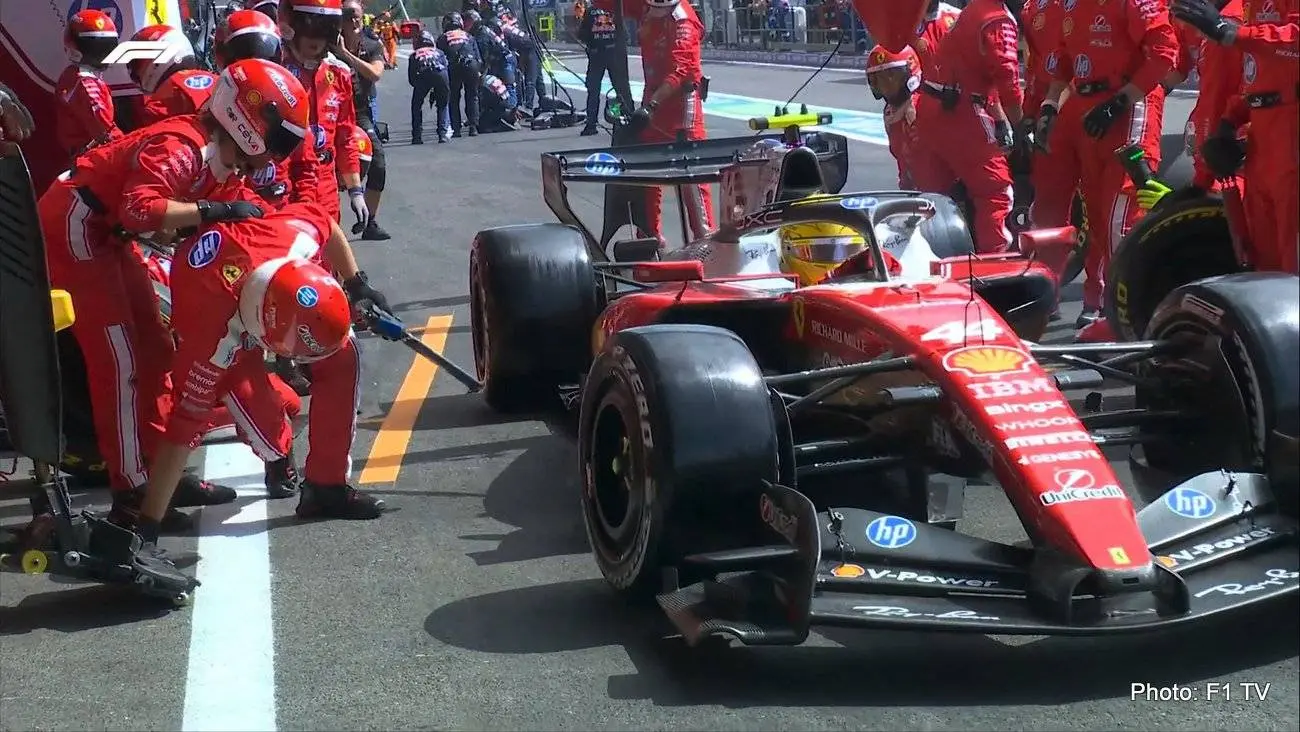
F1 pit stop strategy is one of the purest examples of real-time risk management in professional sport. Teams must decide when to pit, which tire compound to select, and whether to respond to competitors' strategies.
Pitting too early risks tire degradation in the final stint. Pitting too late risks losing positions during the stop. The optimal timing depends on constantly changing variables: tire wear, track conditions, weather forecasts, and competitor positions.
While standard CSGO gambling roulette does not have a cash-out mechanic like mines or crash games, the decision of when to stop a session mirrors pit stop timing. A player on a winning streak faces the same question as a driver on aging tires who is still holding position: do you continue to push while conditions are favorable, or do you secure what you have by stopping?
The mathematics say each spin is independent, but the psychological and bankroll management dimensions make session timing a genuine strategic consideration.
The best F1 strategists make pit stop decisions based on data rather than intuition. They model tire degradation curves, calculate gap deltas, and simulate multiple scenarios before committing.
The best CSGO gambling roulette players apply similar discipline: they set session limits before playing, define win targets and loss limits, and follow their pre-set strategy regardless of in-session emotional pulls.
Risk Tolerance in High-Performance Environments

F1 drivers accept calculated risks that most people would find incomprehensible. Braking ten meters later into a corner at 300 km/h, running millimeters from a wall in Monaco, or defending the inside line against a faster car all involve risk assessments made in fractions of a second.
The keyword is calculated; elite drivers do not take random risks; they take risks where the probability-weighted outcome favours them.
CSGO gambling roulette attracts a community with a similar orientation toward calculated risk. The esports audience that gravitates toward roulette understands probability, evaluates odds, and makes betting decisions based on mathematical reasoning rather than superstition.
This analytical approach to risk is culturally shared between the F1 and esports communities, which explains the significant audience overlap between motorsport and competitive gaming.
The green bet in CSGO gambling roulette is the roulette equivalent of an aggressive overtaking manoeuvre. The probability of success is low, but the payoff is substantial. Like a late-braking dive into Turn 1, the green bet is not irrational if the bettor understands and accepts the probability distribution.
It becomes irrational only when the bettor deludes themselves about the actual odds, just as an overtake becomes reckless only when the driver misjudges the gap.
Data-Driven Decision Making Across Both Worlds
Modern F1 generates approximately 1.5 terabytes of data per race weekend. Sensors on the car monitor everything from tyre temperature to brake wear to fuel flow, and this data feeds real-time strategy models that guide decisions during the race.
The sport has transformed from one dominated by driver instinct to one where data-informed decision-making provides decisive advantages.
CSGO gambling roulette has undergone a parallel transformation. Provably fair platforms like 500 Casino generate verifiable data for every spin. Community analytics tools compile this data into statistical distributions, outcome histories, and platform comparisons.
Players who engage with this data develop more accurate intuitions about probability and variance than those who gamble purely on feel.
The cultural parallel extends to how both communities value transparency. F1's technical regulations require teams to disclose certain performance data. Provably fair CSGO gambling roulette requires platforms to disclose cryptographic commitments that prove outcome integrity.
In both cases, mandated transparency creates a more level competitive environment and builds audience trust in the fairness of the system.
The Engineering of Probability

F1 car design is essentially probability engineering. Every component is designed to maximize the probability of performance outcomes: the probability that the engine delivers consistent power, the probability that the aerodynamic package generates sufficient downforce across all conditions, the probability that components survive the mechanical stresses of a race distance. Engineers do not guarantee outcomes; they optimize probabilities.
CSGO gambling roulette is also engineered around probability, but with a crucial difference: the probabilities are fixed and known rather than variable and estimated. The red-black probability of approximately 48.7% does not change based on conditions.
Unlike the probability of an F1 car's performance, which varies with weather, track characteristics, and component wear. This fixed-probability environment makes roulette a purer laboratory for testing how humans respond to known odds.
This distinction makes CSGO gambling roulette valuable as a learning tool for probability thinking. F1 engineers develop intuition about variable probabilities through experience and simulation.
Roulette players develop intuition about fixed probabilities through rapid iteration. Both forms of probabilistic intuition are valuable, and exposure to both contexts creates more well-rounded analytical thinking.
The Sponsor Connection Between Gambling and Motorsport
The relationship between gambling companies and Formula 1 has deepened significantly in recent years. Multiple teams carry gambling brand sponsorships, and the overlap between F1 viewership and online gambling participation continues to grow.
CSGO gambling roulette platforms exist within this broader convergence of motorsport entertainment and gambling culture, sharing an audience that is comfortable with both high-speed competition and calculated wagering.
This convergence is not merely commercial. It reflects a genuine cultural alignment between the F1 audience and the gambling audience. Both groups are disproportionately male, technically literate, comfort with data analysis, and drawn to activities where skill, strategy, and probability intersect.
As grandprix247.com covers the Formula 1 world where thousandths of a second separate success from failure, the CSGO gambling roulette community applies the same margin-obsessed mindset to a different arena where small edges similarly determine long-term outcomes.
Where Margins Lead
The pursuit of marginal gains defines excellence in Formula 1, and it defines intelligent engagement with CSGO gambling roulette. In both contexts, the participants who succeed are those who respect the mathematics, make data-informed decisions, manage risk systematically, and accept that individual outcomes are less important than long-term patterns.
The margins are thin in both worlds, and they decide everything, not through dramatic moments of brilliance, but through the quiet accumulation of small advantages applied consistently over time.
Latest News

Loading