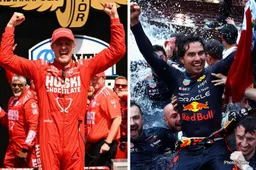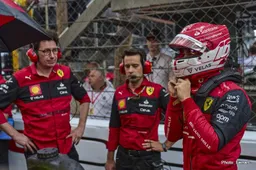
Every country has a national sport, and every region has a popular pastime. For instance, in the United Kingdom, the most popular sport is football, while in Canada, it's hockey.
These sports have been around for decades and are the de facto choice for sports entertainment to many. So, trying to draw attention to a newer sport can be challenging, so the recent surge of fans to Formula 1 is nothing short of phenomenal.
It takes years for a sport to improve its demographic, and some never successfully do so. Fans are usually reluctant to broaden their interests beyond their favourite sports, which explains why sports struggle with diversifying their audience. But Formula 1 is proof that such a tall order isn't impossible.

What is Formula 1 (F1)?
You'll be forgiven for not knowing about Formula 1 some two years ago. With the numbers the sport is pulling now and its presence on streaming, social media, and betting websites, the sport is no longer hidden.
The surge in audience numbers is akin to the steady build-up of users on betting websites. One day we're content with bookies, and the next, we prefer the autonomy of online platforms that can be accessed remotely and securely via a live internet connection.
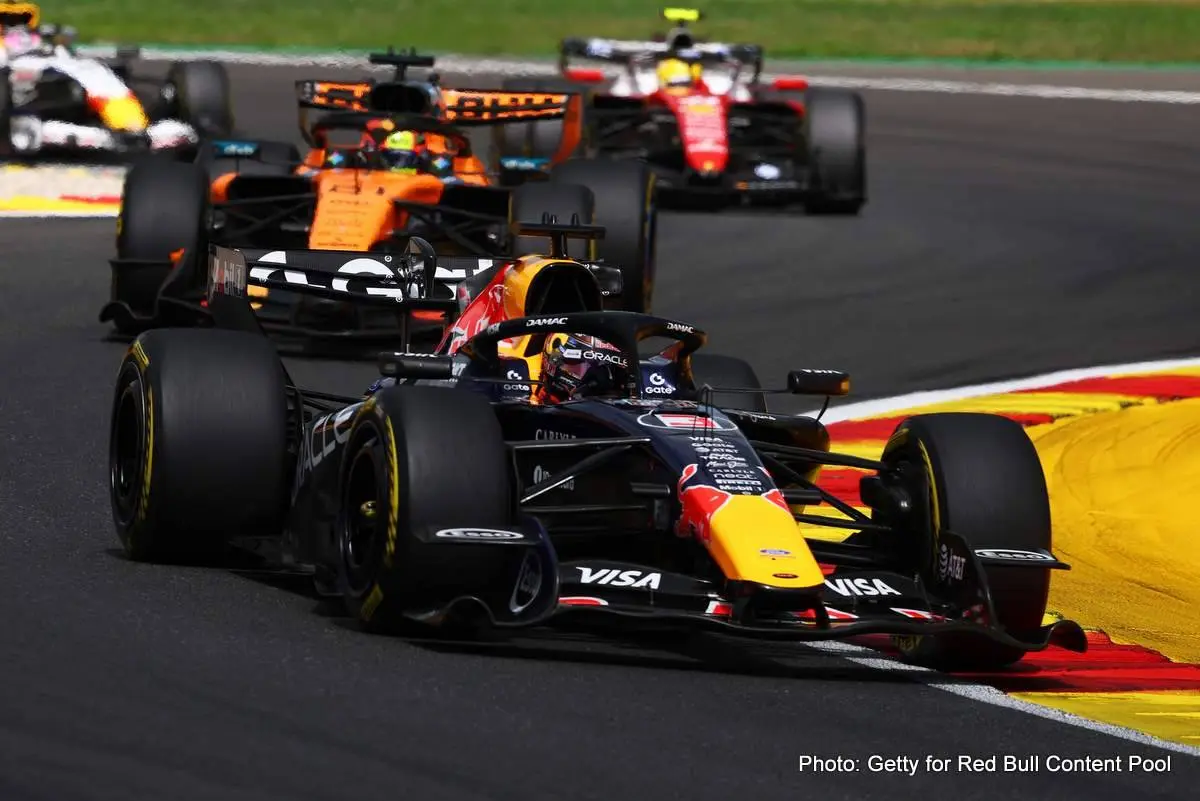
Formula 1 revolves around a simple principle: professionals driving hard and fast in open-wheel racing cars on a track. Sometimes, these tracks are specially built as racing courses; other times, they are just streets closed off from traffic. Whatever the setting, the goal remains the same: win.
Some years back, F1 won't be considered one of the fastest-growing sports with enough international pedigree to attract new, bigger audiences. The sport was considered a niche entry for some parts of South America, the Far East, Europe, Canada, and Mexico. But now, the sport has found its feet in the United States and other parts of the world. And for food reasons too.

How Formula 1 found its fame
Formula 1's newfound fame stems from, but isn't limited to the following factors:
Speed
While safety isn't 100% guaranteed in any sporting event, organizers, management, and ruling bodies do their best to ensure that athletes compete in a safe environment. While this is doubtlessly the case with F1, it doesn't appear so to viewers. The sport revolves around pushing man and machine to the absolute peak, such that it borders on concerning speed levels. The drivers are no different from daredevils to the spectating eye, which is the sport's staying power.
Netflix
Ironically, the company haemorrhaging subscribers would contribute to the rise of another. But that's exactly the case between Netflix and Formula 1. The streaming platform partnered with the racing series to create Drive to Survive.
On the one hand, the subsequent success of F1 comes from having star power and an appealing sports principle. All they needed was a platform to make the fireworks—and in came Netflix.
The Drive to Survive series was easily one of Netflix's biggest hits in 2019, which caused Formula 1 viewing numbers on ESPN to jump overnight from 547,722 in 2019 to 934,000 in 2021. The stats show that the sport gained newer audiences interested in starting and completing racing events.

ESPN
The sports broadcasting network ESPN was just as crucial as Netflix in the rise of Formula 1. Both companies struck a relationship in 2018, culminating in launching a dedicated over-the-top (OTT) streaming service called F1TV for the sports group.
Since the Drive to Survive series on Netflix, ESPN has recorded increasing numbers. By 2021, Formula 1 events were pulling in record-breaking numbers, with the Azerbaijan Grand Prix recording the highest of 1.04 million views—miles ahead of other races in the 2020 and 2021 seasons.
Evolution
Formula 1 has primarily been a male-dominated industry for most of its history. This dominance contributed to its stunted growth and limited business opportunities in the past. But the sport has since reinvented itself, embracing a more diversified system and targeting broader audiences.
For instance, in 2018, the sport launched Formula W, a female-centric version of F1. While it was a good move, it comes decades later than most sports of its stature that have female-centric divisions, leagues, and teams.
Conclusion
Formula 1 exhibits all the signs of a sport yet to reach its peak. The sport's core makes it a tempting prospect for new and existing fans, and it has the star power to pull even more attention. Coming off the hype around its partnership with Netflix certainly did the sport a world of good, and we can expect it would capitalize on that momentum.
The once-moribund sport has found a new face and evolved to the new audiences it faces. With sponsorships high and interest growing by the day, the sport has enough flexibility to fix its once rigid structure and embrace the new generation of fans and followers.
Latest News





Loading