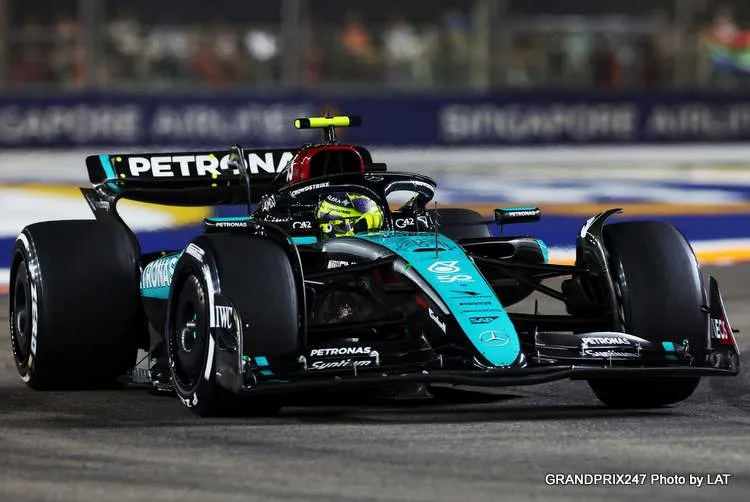
Mercedes Formula 1 boss Toto Wolff admitted how hard it is to understand how the form of their W15 fluctuates between one Grand Prix and another.
With the current set of F1 regulations already in their third season, Mercedes are yet to crack the code of the ground-effect cars, and while they have definitely improved given their woeful start with these rules in 2022, they still seem unable to understand what makes their car fast and what slows it down.
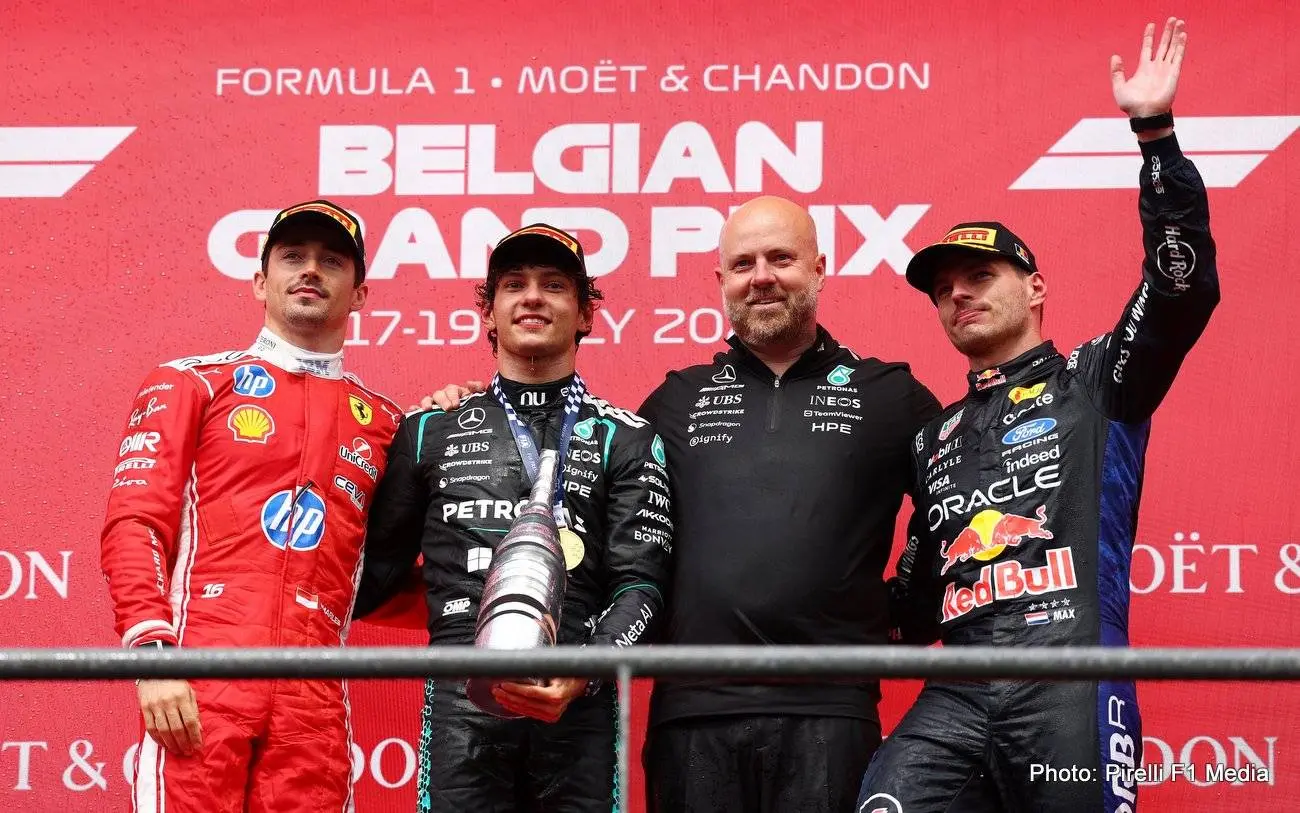
Their current F1 car, the W15, is a clear example, as they have managed to win three races with it (Austria, Britain, and Belgium), and while they entered the summer break with the winning car, they have struggled to maintain that level after the season restarted.
Wolff admitted, when speaking to Motorsport.com, that his team are having a hard time understanding the changes in their car; he said: "This variance in performance from race to race, or over a few races, is very difficult to compute, because what looks like an unchanged car can go from race winning to P6.
"The only team that is not a victim of that is McLaren, who I think have such a solid baseline and a less narrow window than all of us, that they're able to keep the performance stable.
"All of the others bounce between exuberance and depression. Before the summer, everyone wrote off Ferrari. But they have come back very strong.
"Before the summer, it was Mercedes who was the leading team, and clearly not today anymore. So it is so intricate to identify those performance contributors that at times even that most clever people are lost," he maintained.
More downforce doesn't mean better lap time

Quizzed to further explain the ups and downs in the performance of the W15, Wolff continued: "We were before the summer [break] pretty clear where the performance came from. And today we are less because what everyone seems to find out is that more downforce doesn't always translate into better lap time.
"Now, this is not the sensational news of the century, but it is the interaction between track, temperatures, tyres, balance, aerodynamics, and driver impulse, so many variables, that if you get all your ducks in one line, you are fast.
"And if there is just one factor that is out of line, you can look quickly very bad," he added.
Mercedes now continue to work and try to understand the factors that affect their F1 car's performance, Wolff said: "Every session now is, in a way, interesting, because we are able to benchmark against the good races," he said.
"We can see what's different on the car, what's different on the track, what happened with the tyres and all of that. It's not like we don't know that this car has pace. It's a race winner.
"The objective that we have set ourselves every year is to win races," the Austrian went on. "We have won three – two were on merit.
"So you can say, from that standpoint, we are meeting certain expectations. But if you look at all of the season, we're not.
"It's extremely tight now, between four teams, which is eight cars. And unfortunately, due to non-performance, DNFs, the gap to the leading team is just too big.
"So we find ourselves in a position in the constructors championship which is not satisfying at all," he admitted.
Mercedes will not give up on the current regulations

F1 will run the current set of regulations for one more season, 2025, and will make way for a new set in 2026 with major aero changes as well as new power units.
But Mercedes will not give up on the current rules in favor of having a head start for 2025 and will keep pushing, aiming for wins.
Wolff commented: "This is the crux of the matter every year, and especially if you have such a big regulatory change, are you going to compromise one year or the other?
"But I'd like to take it from Niki's [Lauda] motto, when being asked. 'Would you rather win this one or the next one?' And he says, 'Both.'
"Sometimes it is much less complex than one thinks. Probably the transition of people and capability into the 2026 regulations is going to happen a bit earlier than it would under stable regulations, but it's not going to be game-changing.
"Nobody's going to switch the machines off in January, unless you are really nowhere. But there is nothing to gain, because between P10 and P7 doesn't make a difference for us anyway.
"We are fighting for victories and podiums, and cannot write it off," Wolff concluded.
Mercedes are currently fourth in the F1 constructors' championship, 112 points behind Ferrari, who are in third, and in turn, 34 points behind Red Bull Racing, who are second. McLaren lead by 41 points from Red Bull.
Latest News
Loading

