Finally Sprint Race weekend is upon us as Formula 1's Quixotic quest to 'improve the show' at the 2021 British Grand Prix is set to make history with a new weekend format that has not been universally accepted.
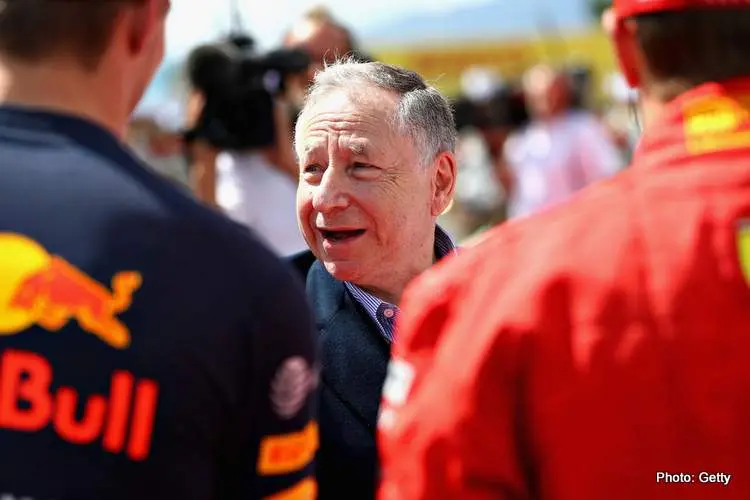
In fact, the head of global motorsport, FIA president Jean Todt - a pedigreed racing man - has little faith in while the sport's bosses are approaching the weekend ahead with some trepidation with a first "let's see if it works" attitude.
However, Todt made it clear earlier this month that he was not a fan of the concept: "Number one, we don't call that a race. I had part of the responsibility of not calling that a race.
"For me, the 'race' is on Sunday. If you ask me if I'm a big fan of that, the answer is no. I don't think F1 needs it. But on the other side, if people want to try something, it's not going to hurt the race on Sunday. It will be a different way of having a starting grid on Sunday. So it costs to nothing to try.
"I'm curious to see what will come out. But I'm sure that it will not damage the race on Sunday. People may say it was more interesting on Saturday than on Sunday, but that's not too big a risk for the image and for the credibility of the championship," warned Todt.
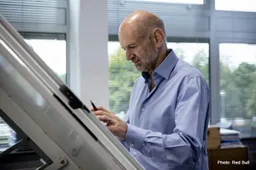
Teams are playing along but there are reservations, Red Bull's Helmut Marko aired his concerns, from a team perspective to SpeedWeek "If something goes wrong on Friday, it can ruin the whole weekend -
"The first free practice session is the only time to check and set up the car. Subsequently, parc fermé comes into effect. This means that you can only adjust something in the second free practice session on Saturday."
Ferrari boss Mattia Binotto gave the Ferrari perspective: “We have only the Friday morning before going into quali, so going straight into that with a new spec, a new format, very little experience, that will really be exciting.
“But there may be some mess, because the set-up may not be optimised, so with a lack of experience on the tyres, we can have a great race weekend in that respect," predicted Binotto.
McLaren F1 boss Andreas Seidl expressed his concerns: "Obviously, the team is putting quite a lot of effort in order to be ready for this first weekend with the sprint race.
"I guess the biggest challenge for all of us will be the operational side of things because it is quite a change having the car in parc fermé already from Friday lunchtime onwards when we go into this qualifying.
“A big challenge is as well to obviously have only one free practice session of one hour before the car is pretty much frozen in parc fermé so I guess more than ever the emphasis is being as prepared as possible, making sure you have a clean 60-minute session where you try not to go too fancy because you simply have no time to do big testing and so on," Seidl told reporters.
F1 motorsport chief Ross Brawn is of course in the support of the plan but admitted to Channel 4: "I am nervous, but that's normal. We've put a lot of work into organising sprint qualifying, so I think there's a good chance of success.
"We need to get the fans involved and make sure we have a race that really fascinates them. I think that will work, but we won't know until we get there."
Experiments and changes to race weekend timetables have been plentiful since the sport began in the fifties. But never has another 'race' with championship points on offer (as in this case for the top three) been part of the landscape. This is revolutionary and, if successful, would become the norm from next year at certain 'grand slam' Grand Prix weekends.
Brawn continued: "The best thing that can happen is that sprint qualifying becomes part of a Grand Prix weekend. Maybe not every race, but we want to stress that we want to extend the weekend.
"Now Friday also has a big event: qualifying. With sprint qualifying on Saturday and the regular race on Sunday, we're really trying to add to that, to make sure we don't take anything away from the Grand Prix," explained Brawn.
F1 CEO Stefano Domenicali added: “When we went public with the news that we wanted to try out a sprint qualification like this, the organisers who are eligible for the test immediately got a lot more ticket requests. And the TV broadcasters were thrilled. This format brings many advantages.
“The less time for free practice sessions, the more action on the track. No one waits for better conditions in the garage anymore. That has already been shown in Bahrain.
“With free practice and qualifying, the organiser can sell a better Friday to the fans. With the second free practice as race preparation and the sprint qualifying in the afternoon, a better Saturday. That’s an additional platform for stories and for the sponsors.
"The more unpredictable everything becomes, the more interesting the racing. If we don’t try it, we will never know if it is an asset or not. How many times have we changed the qualifying format in the past? Always with the intention of doing it better and getting to where we are today," ventured Domenicali.
Over the years Formula 1 points have evolved from the first six getting awarded to top five getting points with the winner getting 8, to the current system where the winner gets 25 and the top ten score. The new concept will play havoc with statistics as never before.
Domenicali does not believe so: “It’s very simple: for the statistics, the driver who wins the qualifying race on Saturday gets pole position. And there is only one winner, and he is crowned on Sunday.
"We don’t want to do this format at every Grand Prix in the future. This will be a Grand Slam for selected events which we have to discuss as a next step. But not too many. Let’s see if it works first.”
With the teams complaining that running sprint races will cost them more money to compete in rather than standard qualifying sessions, a finance package has now been agreed for sprint races to take place.
Domenicali continued: “The difference between doing a qualifying on my own on the track or in a race is not that big. The distance is about the same. If we ask for compensation for everything we want to try new, we’ll never get there.
“We should not lose sight of the big picture. We are discussing the impact on costs right now. But to be honest, the complaints came mainly from the big teams. I hope we can come to a solution there now. The other details of the format are more or less finalised.”
In an ideal world, the format has a great deal of appeal, for sure it will add storylines on Friday and Saturday and thus the general consensus from fans in the bleachers is let's give it a go.
But at the same time, among them, there will be a large portion asking: if it ain't broken, why fix it?
Latest News
Loading