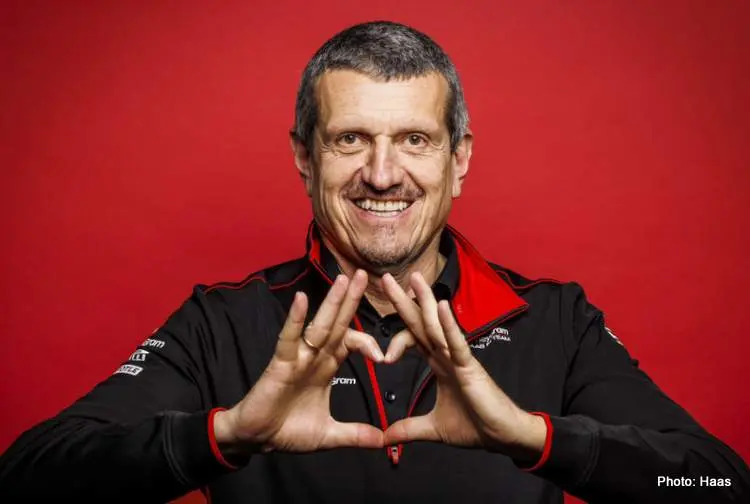
It has been quite the period of change at Haas in recent times, on the Formula 1 side of the business it was announced this week that after over a decade at the US-based racing team, team principal Guenther Steiner has now left his role
The 58-year-old Italian will now be replaced by the team's former director of engineering, Ayao Komatsu.
On the NASCAR end of the business, having experienced their worst ever racing calendar in 2023, failing to secure a single win, it seems that owner Gene Haas has decided to significantly reshape and revamp both sides of his motor racing organisation.
Focusing more on the F1 end and those changes, the Steiner decision has certainly received a mixed reaction, especially as Haas himself said in a statement.
"Moving forward, it was clear we needed to improve our on-track performances. We have had successes but we need to be consistent in delivering results that help us reach our wider goals as an organisation."
Steiner built the team using an innovative business model, and it must be said it was not fired, they simply chose to not renew his contract when it expired - but the official statement did not include a comment from him, and nor has he responded personally to multiple press requests for a response.
Did Steiner become too big for the Haas F1 team?

That has led to some obvious speculation, particularly as the F1 idea was originally pitched by him and he was the brains behind them doing effectively the bare minimum required to be considered a 'constructor', namely the design of the chassis and the aerodynamic system, everything else is purchased from Ferrari.
It is notably a very cost-effective approach given Haas was mainly interested in promoting his machine tools business, but it has led to problems as they are obviously not fully in control of everything and are limited in designs, tweaks and problem-solving (improvements) unless a part is already on a shelf.
Many commentators would note that one of their biggest problems solved over the years, basically since inception, is in fully understanding the complexities of Pirelli's tyres and the appropriate management - there has long been a noticeable difference in their qualifying times, but yet a big tendency to go backwards rapidly in the races themselves.
With such a cost-effective approach it is a trade though, however, Haas did also comment that he felt his investment had been largely wasted, or at the very least not always used entirely appropriately in more recent years.
Haas: We spend a lot of money

Gene added: "We haven't exceeded the cap but we're pretty darn close to it. I just don't think we're doing a very good job of spending it in the most effective way. We survived for eight years and we're not in a situation where we are going to go out of business. But I certainly want to be able to survive for the next 10 years."
There will be those who build on Steiner's cost-effective approach and would point out the huge role he played in keeping them going during the Covid pandemic. Having been told by Haas that they would have to close if alternative financial sources were not found, Steiner employed Mick Schumacher (Michael's son) and Nikita Mazepin, the son of Russian billionaire Dimitry Mazepin as pay drivers to secure that funding.
On top of that he found the team's current title sponsor, MoneyGram, and it is now rumoured that they are very unhappy with the decision to let him go and they fear a reduction in publicity.
Komatsu now team principal at Haas

Having now appointed Komatsu, who has been with the team since 2016, Haas made a point of commenting that it meant that 'engineering' was now a fundamental part of the heart of their management.
So fans of the sport will now naturally wonder whether that means that they intend to move away from their reliance on Ferrari in the years to come and take more ownership per se, of their own race car.
The big unknown here, given Haas are certainly, and quite understandably, not one of the major players in the sport, is how the now lack of Steiner's media appeal will effect them.
He more than came to the fore during their Netflix series where his direct, forthright and quite expletive-laden approach made him an instant fan favourite, and his book became a best seller on the back of it - at team appearances, he usually received a better ovation than their very own drivers.
Without him involved, there is a question as to whether Haas will continue to be relevant to race watchers, and maybe more importantly, sponsors - particularly if the MoneyGram rumours prove to be true.
Latest News




Loading