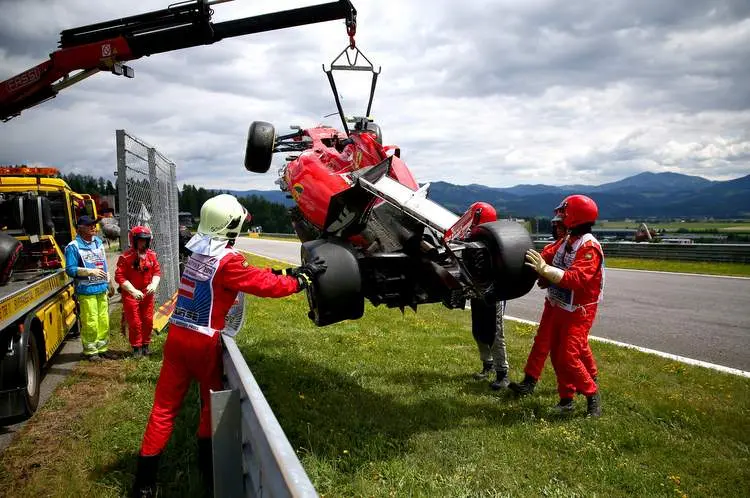
Kimi Raikkonen wanted to bring back the danger. We couldn’t blame him, even if it was lost in translation, but it was a little ironic when just a few days later at the Austrian GP he had a monumental crash with Fernando Alonso.
The Spaniard sensing the seriousness of the accident jumped out of his McLaren as soon as he possibly could and checked to see if Raikkonen was alright. Luckily he was.
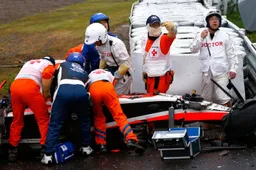
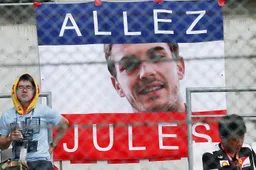
With Jules Bianchi’s passing, the first death of a Formula 1 driver during a race since 1994, we are all reminded that there’s no real need to bring back the danger – it’s already there.
In 2014 Australian cricketer Phil Hughes was struck in the back of the head by a ball whilst batting and died a short time later. While there was much mourning worldwide as everyone thought this just should not happen in cricket, at the very next Australian Test match the same protective equipment was used and the same bouncers were bowled at batsmen.
In sharp contrast Formula 1 and FIA officials quickly realised that while they couldn’t possibly modify all the JCB mobile cranes to withstand an impact such as Bianchi’s, they could alter what happens when those vehicles have to enter the racing circuit to collect a car.

So quite rapidly F1 tested and now runs the Virtual Safety Car. But this still doesn’t prevent massive accidents from occurring.
Of recent times we wondered how no one was injured when Verstappen crunched the wall in Monaco this year, when Maldonado flipped Guiterrez in Bahrain 2014 or even when Webber flew high in Valencia in 2010.
In fact it is the close racing we all crave that produces danger and was the reason in the first place why Kimi was even asked the question of how to improve the F1 show. Raikkonen’s own enormous accident at Silverstone in 2014 maybe wasn’t on his mind when he talked about bringing back the danger.
Maybe he just meant say make it harder to control the cars so that there is a threat that you can make a mistake and not be as quick. As we saw in Austria though, mistakes can be very dangerous indeed.
This threat of danger is always close in motorsport and was why Webber talked about Grosjean as a ‘first lap nut case’ and the 'reformed' Grosjean bemoaned Verstappen’s refusal to accept blame for the Monaco accident. One day Verstappen might see that with great talent comes great responsibility to those around you.

Maybe its just a self-belief thing drivers have, a state of mind, like a boxer believing in their superiority. The last driver to die in race, Ayrton Senna, was extremely sensitive to other driver’s accidents, although he was pilloried by some of his rivals and commentators who blamed his driving style on his supposed belief of his immortality.
Visibly shaken by the Ratzenberger accident, questioning the very need to continue as an F1 driver, Senna still raced the next day and paid for it with his life.
Since that terrible weekend at Imola 21 years ago, we had not had a tragedy in a F1 race until Jules Bianchi’s unfortunate death.
F1 changed quickly that day back in May 1994 and now it will change again - for Jules’s and his family’s sake it must. One thing that will not change is the danger that is motor racing.
Sempre JB.
Opinion by Matt Bolzon
Latest News
Loading