Formula 1 is as much about split-second decisions as it is about raw speed. Throughout the sport's rich history, certain strategic calls have altered race outcomes and championship standings in dramatic fashion.
These turning points often unfold in the heat of competition, when Formula 1 team principals and race engineers must weigh tyre wear, weather forecasts, and track position against their rivals' likely moves.
Some Formula 1 strategy choices stand out and still get talked about years later. Moments like unexpected pit stops leading to victory or taking a risk with tyre types show the smart decision-making happening off the track. These examples show that winning in Formula 1 often requires more than just a fast car and a talented driver. The best teams benefit from clever plans from the engineers and strategists during the race.
The Rain Master's Gamble: Barcelona 1996

When discussing strategic masterstrokes in Formula 1, Michael Schumacher's victory at the 1996 Spanish Grand Prix stands as a classic example. The race began in torrential rain, creating chaotic conditions that saw many top drivers struggle. Teams took calculated risks with their strategies, but none matched Schumacher's brilliance that day.
Starting from third on the grid, Schumacher found himself in a Ferrari that was far from the fastest car. Yet as others spun and crashed around him, his feel for the changing track conditions proved unmatched. While his rivals pitted multiple times as the rain intensity varied, Schumacher and Ferrari made ideal tyre choices at exactly the right moments.
His car control was sublime, but it was the strategic decisions that truly set him apart. By the end of the race, Schumacher had built a commanding lead over the rest of the field except for second-place finisher Jean Alesi. This performance showed how smart planning combined with exceptional skill can help overcome equipment disadvantages.
The Undercut Revolution: Singapore 2010

The 2010 Singapore Grand Prix marked a turning point in modern F1 tactics. Fernando Alonso and Ferrari executed what would become known as the "undercut" to perfection, changing how teams approach race strategy. For fans interested in the analysis of strategic decision-making in competitive environments, can explore other types of guides and comparison resources can find additional options at non.gamstop-casino.co.uk.
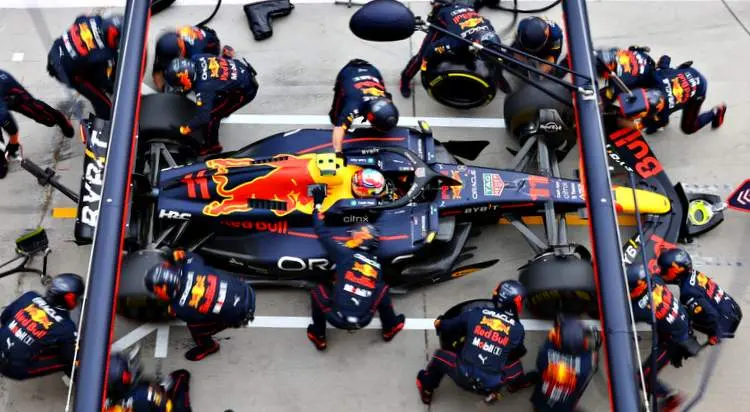
Running second behind Sebastian Vettel, Alonso's Ferrari team made a bold call to pit earlier than expected. This plan aimed to use fresh tyres to set faster lap times while Vettel remained on worn rubber. When Vettel finally pitted a lap later, Alonso had gained enough time to take the lead.
The move showed how track position could be gained not through overtaking on circuit but through strategic timing of pit stops. Teams soon began to adopt this approach, making the undercut a common tactic in Formula 1.
What made this particular undercut special was its execution under the lights of Singapore, on a street circuit where overtaking was nearly impossible. Ferrari's perfect timing changed the race outcome and showed how mathematics and split-second decisions can determine winners.
The Multi-21 Controversy: Malaysia 2013

Not all strategic decisions in Formula 1 are celebrated. The infamous "Multi-21" incident at the 2013 Malaysian Grand Prix shows how team orders can backfire dramatically. Red Bull's coded message instructed Sebastian Vettel (car #1) to stay behind Mark Webber (car #2), preserving a 1-2 finish to maximize team points.
This approach is common when a team leads a race late and both cars hold strong positions. It reduces crash risks between teammates and secures overall points. Red Bull's strategy relied on both drivers following instructions after their earlier battle.
Vettel ignored these orders, aggressively overtaking his teammate against the team's wishes. This decision created a major rift within Red Bull and sparked debate throughout the F1 community about team loyalty versus racing instinct.
While technically brilliant from a driving perspective, Vettel's choice to override team strategy damaged relationships within the garage. It highlighted the tension between team goals and individual driver ambition that often complicates planning in Formula 1.
The Mercedes Pit Stop Blunder: Monaco 2015

Sometimes the most memorable strategic decisions are the wrong ones. Lewis Hamilton's dominant lead at the 2015 Monaco Grand Prix evaporated due to a miscalculation during a safety car period. Leading comfortably with just 14 laps remaining, Hamilton's Mercedes team called him in for a precautionary pit stop.
The team believed they had enough time to pit without losing position to teammates Nico Rosberg and Sebastian Vettel. They were mistaken. Hamilton emerged in third place, with no realistic chance to overtake on Monaco's narrow streets.
This error cost Hamilton a likely victory because Mercedes failed to correctly assess the track and timing data. With incomplete information about the gaps, the pit wall made the call based on what they thought would be a safe window.
What made this particularly painful was the nature of the Monaco circuit, where track position is everything. The decision turned a potential win into a bitter third place for Hamilton in one of F1's most prestigious races.
The Wet Tyre Gamble: Brazil 2016
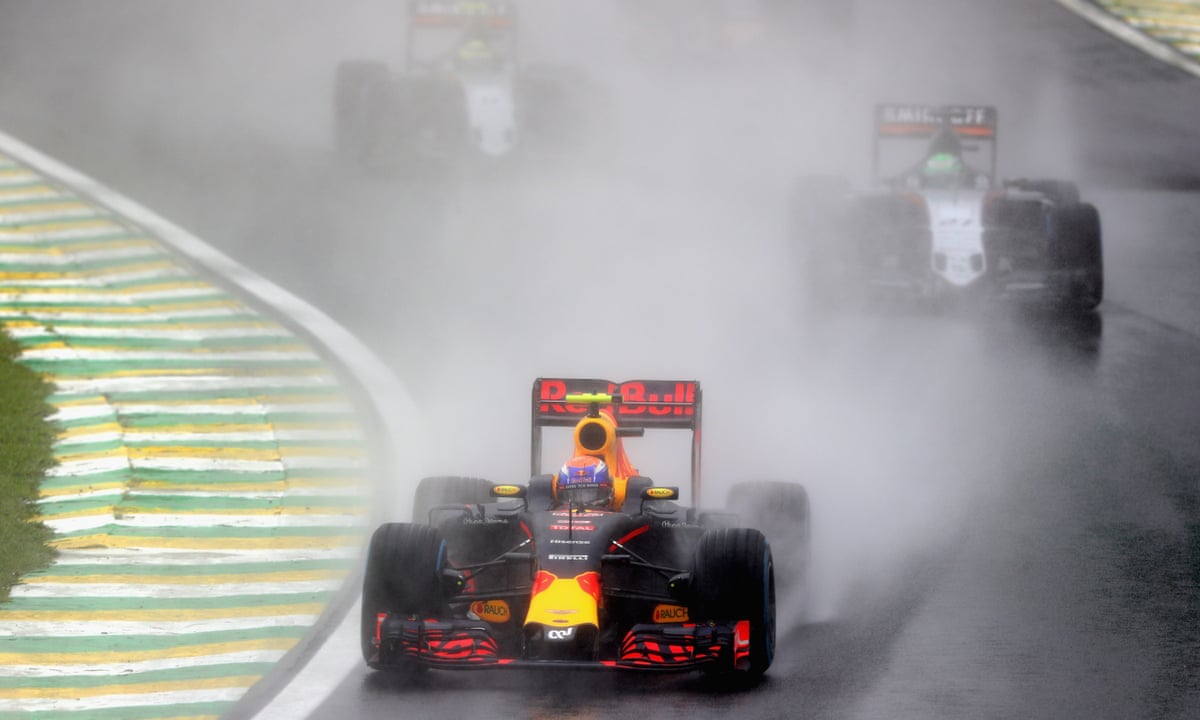
Max Verstappen's drive at the rain-soaked 2016 Brazilian Grand Prix demonstrated how a bold strategy call can lead to extraordinary results. As heavy rain fell at Interlagos, most teams played it safe with cautious tyre choices and careful driving.
Red Bull and Verstappen took a different approach. After switching to intermediate tyres too early and sliding down the order, Verstappen made a late-race gamble. While running in the midfield, he pitted for fresh wet tyres when others stayed out.
This decision, combined with Verstappen's outstanding car control, allowed him to overtake multiple cars in just a few laps. His charge through the field in treacherous conditions stunned viewers and competitors alike.
The strategy worked because it matched the right driver with the right tyre at the right moment. In rain-affected races, a wrong tyre call can increase the risk of aquaplaning and race-ending crashes.
The Overcut Surprise: Monaco 2017

While the undercut became standard practice in F1, Ferrari and Sebastian Vettel showed that sometimes the opposite approach can work even better. At Monaco in 2017, Vettel used the "overcut" brilliantly against his teammate Kimi Räikkönen.
Räikkönen led from pole position and pitted first, following conventional strategy. Vettel extended his first stint, running in clear air while Räikkönen rejoined in traffic after his stop. With lower fuel and a clear track, Vettel recorded competitive lap times despite his tyres wearing.
When Ferrari called Vettel in for his stop, he emerged ahead of Räikkönen and took control of the race. This move made clear that track position isn't always gained by pitting earlier. On circuits where traffic plays a major role, staying out longer can sometimes be advantageous.
The debate that followed centered on whether Ferrari had deliberately favored Vettel over Räikkönen. Regardless, the plans and timing were flawless and changed the outcome of one of F1's most renowned races.
Today, Formula 1 teams use advanced data analysis and simulation tools to improve their strategies. The use of predictive models and scenario planning has become a core part of race preparation. Teams now simulate countless race setups to anticipate rivals' moves and safety car deployments, making strategy more dynamic than ever.
Modern Strategy and Data: The New Era

Learning the science behind race strategy is essential for appreciating the sport's demands. Explanations of how teams employ data, probability, and game theory to make split-second calls can be found in resources that break down the mechanics of F1 tactics.
Strategic decisions have played just as important a part in shaping Formula 1 history as the legendary on-track rivalries and technical developments. Time and again, the sport has shown that championship glory depends on more than speed alone.
Top teams succeed because they unite engineering skill, driver ability, and tactical planning, reacting quickly as circumstances change during a race. Clear, informed decision-making proves decisive when the margin for error is razor-thin.
What links these famous decisions is timing and courage. Making an inspired call like Schumacher in Barcelona, pulling off a precise undercut like Alonso in Singapore, or recovering from a strategy mistake like Mercedes in Monaco defines Formula 1.
Formula 1 history shows that championship success depends not only on speed and skill but also on rapid-fire decisions made by the most alert strategists during critical moments on the pit wall.
Latest News




Loading