Pit Stop in 2 Seconds: How Formula 1 Teams Pushed Speed Into Perfection
F1 NewsWednesday, 27 May 2026 at 04:44
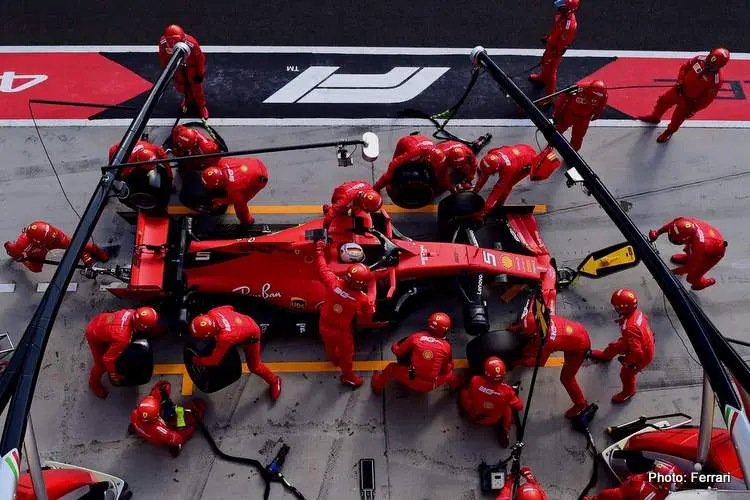
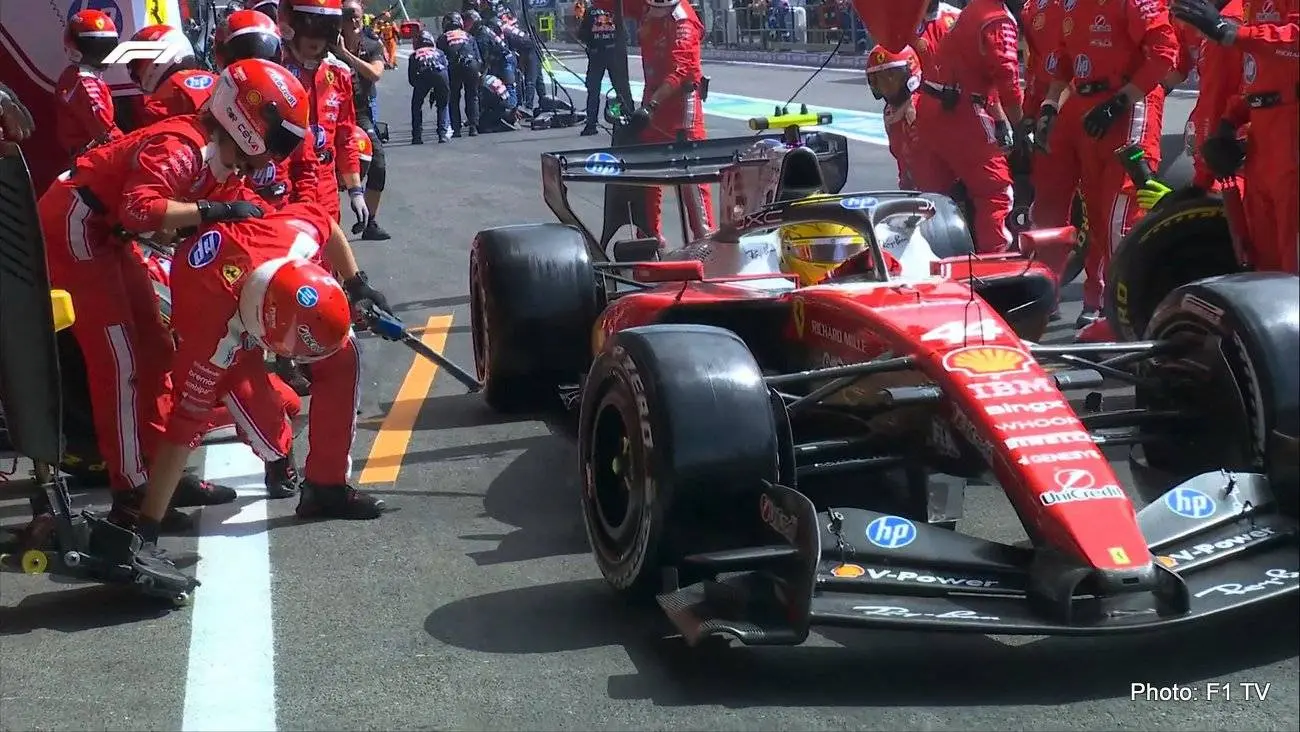
A Formula 1 car arrives in the pit lane, and honestly, it feels like time itself gets nervous. One moment it’s flying at over 300 km/h, the next it’s stopped, surrounded by a swarm of crew members moving like they’ve rehearsed a secret dance no one else fully understands.
Two seconds later—it’s gone again. That’s it. A blink. And you almost miss it if you look away for even half a second.
How did something so mechanical turn into something that feels almost artistic? Years ago, pit stops were slow, messy, and full of uncertainty. Today, they’re sharp, loud, and strangely elegant in their brutality. Nothing extra, nothing wasted.
Just movement, pressure, and precision stacked on top of each other like a tightly wound spring. As one unexpected phrase floating through online chatter puts it, “1xbet 한국어 회원가입”, even the most technical worlds somehow get echoed in the noise of the internet, where racing talk and digital trends often collide.
And yet, here’s the odd part: even with all this perfection, it never feels entirely safe or predictable. One loose wheel gun, one tiny misstep, and everything shifts. So yes, we’re talking about speed—but also about control, nerves, and trust in human rhythm under extreme pressure.
The Choreography Hidden in the Chaos

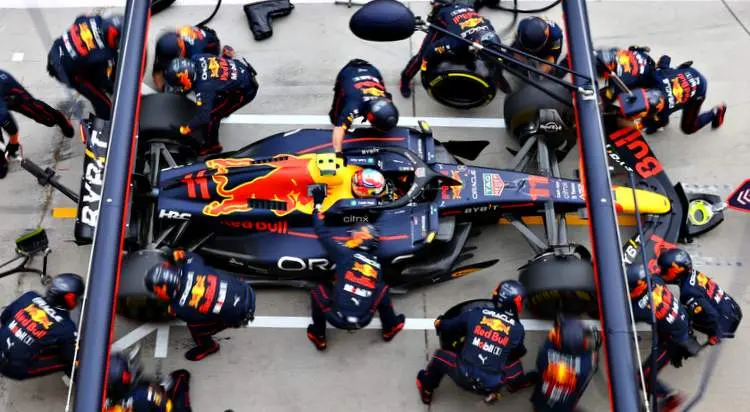
At first glance, a pit stop looks like chaos. People running in different directions, wheels flying off, sparks of movement everywhere. But step a bit closer, and it starts to look more like choreography—fast, loud choreography with no room for hesitation. Every mechanic has a role that fits like a puzzle piece, and those pieces have to lock in at exactly the right moment.
One person lifts the car. Another removes the wheel. Four others are already waiting with fresh tires, standing still but alert like sprinters before a race. Then there’s the one holding the wheel gun, eyes locked, waiting for that fraction of a second when the car is stable enough. It sounds simple when broken down, right? But under pressure, simplicity turns sharp.
What’s fascinating is how little talking happens. No shouting, no confusion—just signals, timing, and instinct. It’s almost like everyone hears the same invisible metronome ticking in the background. And if that rhythm slips even slightly, the whole stop feels off. Not always by much, but in Formula 1, “not much” can mean everything.
You might think it’s all about raw speed, but that’s not the full story. It’s about alignment between people who don’t have time to think, only react. And still, somehow, it works—again and again.
Training Until the Body Thinks First

Here’s something that might surprise you: a pit stop isn’t practiced like a task on a checklist. It’s drilled into the body until thinking becomes unnecessary. Mechanics don’t just learn what to do—they learn how it feels when everything goes right. That difference matters more than it sounds.
Day after day, they repeat the same motion. Lifting. Tightening. Releasing. Moving sideways without looking. Not because they lack skill, but because speed in Formula 1 is not built on talent alone—it’s built on repetition that removes hesitation. When there’s no time for second thoughts, the body has to take over.
And yes, mistakes happen during training too. A wheel doesn’t lock in. A gun slips. Someone arrives a fraction too early. Those moments aren’t failures; they’re adjustments. Strange as it sounds, the goal isn’t perfection in one go—it’s stability under pressure.
A mechanic once described it like catching a glass you’ve dropped a hundred times. At some point, your hand just moves before you even realize it. That’s the level we’re talking about here. No overthinking. No delay. Just motion that feels almost automatic.
Still, even with all that preparation, there’s always a trace of uncertainty. Because real races don’t behave like practice sessions, and the car arriving in the pit lane never carries the same energy twice.
Two Seconds, and Everything is on the Line

So what really happens in those two seconds? On paper, it sounds almost impossible. A car stops, four wheels are changed, adjustments are made, and the car is released again—all faster than it takes most people to blink twice. And yet, it happens. Regularly.
But here’s the part that rarely gets talked about: those two seconds carry weight far beyond their duration. Drivers are waiting, engines are still warm, rivals are circling the track, and the smallest delay can shift an entire race strategy. It’s not just speed—it’s pressure compressed into a tiny window of time.
What’s interesting is how fragile perfection feels here. A stop might be recorded at 2.0 seconds one lap, then 2.4 the next. That difference doesn’t sound like much in daily life, but in Formula 1, it’s the gap between gaining track position and losing it. And nobody forgets that.
There’s also something slightly unsettling about watching it live. You know how much coordination is required, yet it still feels like it could fall apart at any moment. Maybe that’s what makes it so gripping. You’re not just watching mechanics; you’re watching controlled risk dressed up as routine.
So Why Does It Feel So Unreal?

And even with all the data, all the sensors, all the preparation—there’s still that human edge. The heartbeat behind the numbers.
After everything, you might still wonder why a pit stop feels so dramatic. It’s just tires and tools, right? But that’s not quite it. It’s the intensity of coordination under pressure, the silence between actions, and the fact that so many things have to go right at the same time without anyone stopping to think.
Formula 1 often gets described in terms of speed on the track, but pit stops tell a different story. They show what happens when speed is compressed into teamwork. Not loud teamwork, not messy teamwork—clean, sharp, almost silent in its own way.
And maybe that’s the strange beauty of it. Two seconds don’t just represent efficiency. They represent trust—between people, between training and instinct, between chaos and control. Nothing is guaranteed, yet everything is expected to hold.
So the next time you see a pit stop flash across the screen, try not to blink. Or maybe blink once—but not twice. You might miss the whole thing.
Latest News
Loading