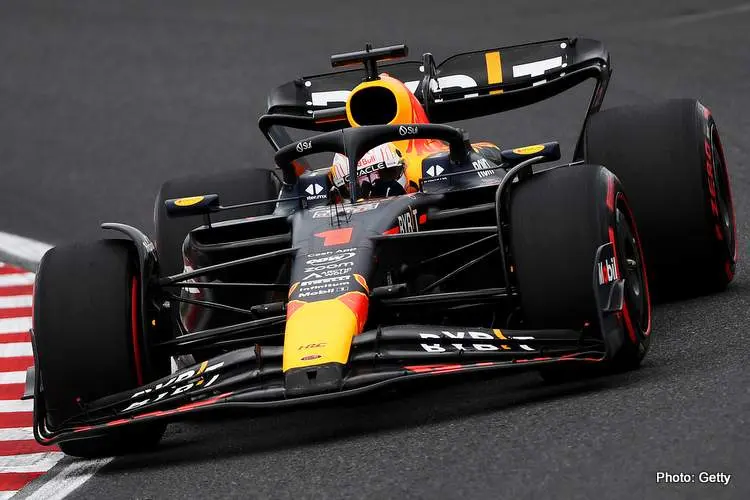
It’s not long until the latest iterations, or should I say interpretations of the 2022 Formula 1 regulations are revealed. Over the coming weeks, the teams will take turns to proudly wheel out their new 2024 offerings.
Some will proclaim their car's new competitiveness or, in the case of Alpine, lack of it. However, it is unlikely anyone will surpass Red Bull in combining effective downforce with predictable handling and competitive tyre wear.
The general assumption is that the magic is contained within the sculpted tunnels of the car’s floor, but this is only one element of the equation. Airflow is capricious by nature. Ride height, components in front of where the air will enter, and of course prevailing wind gusts can all influence the volumetric pressure under the vehicle.
Nirvana
The secret, of course, is being able to control the amount of air passing under the floor of the car. With the purpose of manipulating the center of pressure and amount of downforce generated. Ideally, you want the pressure forward when braking and turning in and rearward when exiting.
Unfortunately, this is easier said than done. However, I have a suspicion that Red Bull have come up with a solution. Logic dictates that you want this pressure to change with steering angle input. i.e., it moves forward as you turn the wheel and backwards as you return it to the straight-ahead position. The angle of the tyres do interact with airflow over the car. It would be genius if the aerodynamic design was able to leverage this.
Neither too low or too high

I mentioned ride height being a critical ingredient earlier. This, of course, is all down to the suspension and its design.
Much has been made of Red Bull’s anti-dive geometry. However, for me, the real secret is in the dampers that manage the bump and rebound. Keeping the downforce linear in its arrival and departure is key to having predictable handling. Particularly if I’m right about how the centre of pressure is moved around.
One thing is for sure, their suspension is superior to the other teams. In the mechanical grip sections, Red Bull was consistently the fastest.
Be careful what you wish for
You can also have too much of a good thing. You only want this downforce effect in the corners; once on the straight, it can suck the power out of the engine. Again, only one team in F1 managed to solve this, achieving the double benefit of great straight-line speed while not having to run the engine “full Tonto.” Thinking about it, that creates a third: extended functional engine life; boom!
Good luck everyone, you’ll need it
This is all supposition of course and I don’t want to detract from the contribution made by Max Verstappen. But, would he have dominated the season as he did without the level of predictability provided by the RB19? I expect some of the teams will be onto what Red Bull has been doing. However, the question is can they come up with a comparable package?
Personally, I can’t help but feel that the RB19 B will be Adrian Newey’s Magnum Opus and that we better get used to another year of hearing the Dutch national anthem at the end of a Grand Prix.
Latest News
Loading