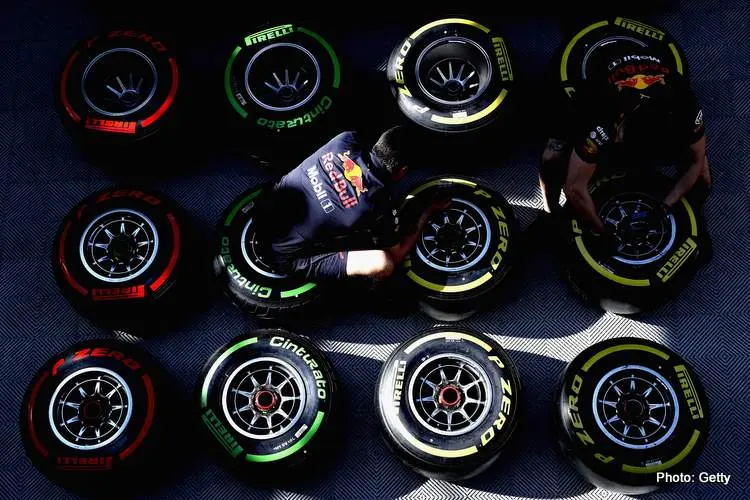
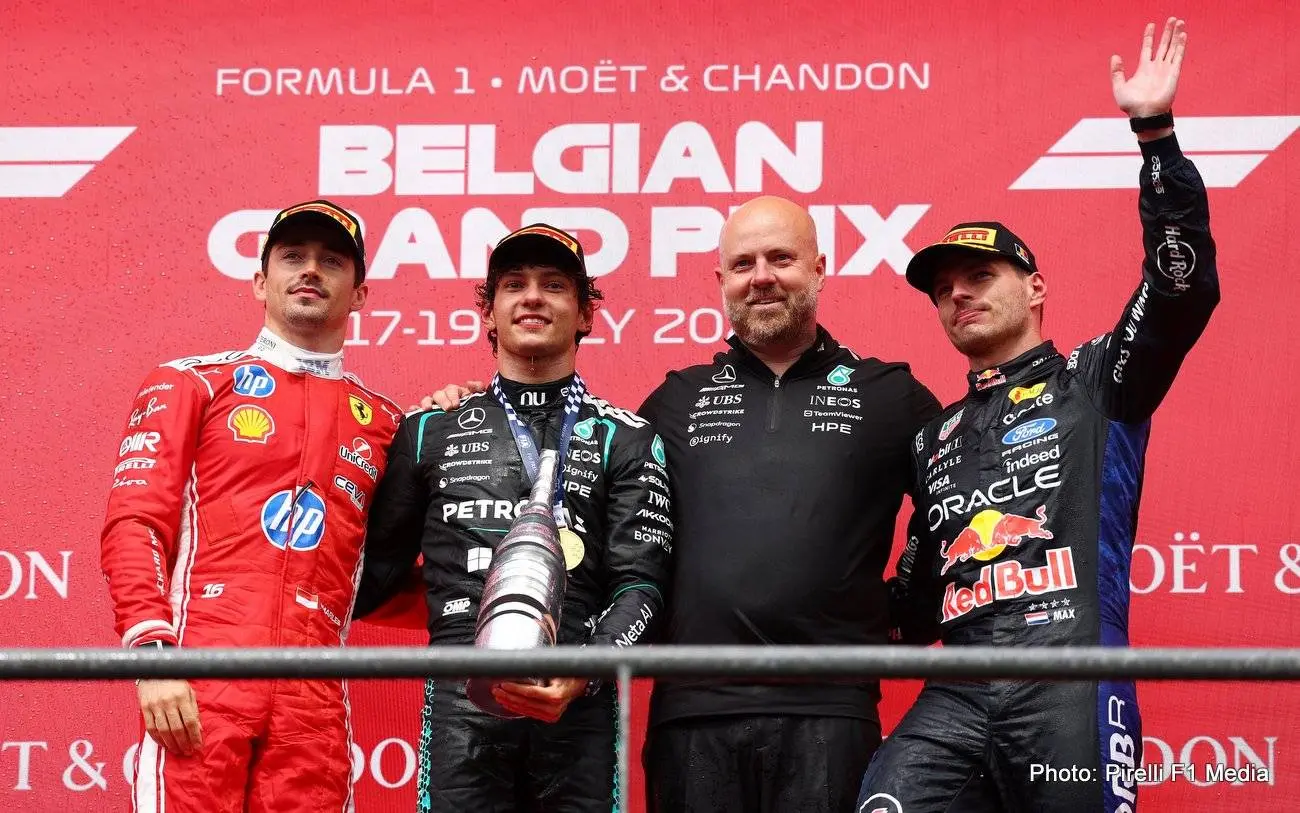
The Belgian Grand Prix highlighted the urgent need for Formula 1 to end Pirelli's long-running monopoly as sole tyre supplier.
This one-brand farce has outlived its usefulness and has become the very antithesis of what Formula 1 is supposed to represent: pure, unrelenting competition at the highest level. And I don;t see anyone rushing out because Pirelli are sole tyre suppliers to the pinnacle of the sport. Quite the opposite for many I know.
The core problem, which defies the true ethos of Formula 1, namely competition, has plagued Formula 1 for years. The one-make tyre format is fundamentally flawed. Pirelli, with no rivals to outperform, have no reason to innovate or push boundaries.
They don’t have anything to lose and arguably nothing left to gain. Whether they pay to be there or receive incentives, the structure is opaque and the result is clear: tyre development is stagnant and the racing suffers.
Formula 1 is meant to be the very summit of motorsport. So why keep tyres locked into a single supplier? The excuse that tyre competition is too expensive doesn't hold water.
On the contrary, if multiple manufacturers were involved, there would be natural competition, better technology, and better wet-weather performance. That is something Pirelli's current offering is failing to deliver spectacularly.
Michelin, Bridgestone, Goodyear, Continental, Yokohama, Hankook, Toyo etc

Of all the components on an F1 car, tyres are the most directly relevant to road technology. That alone should make them a playground for innovation, with companies eager to showcase their prowess under the most extreme conditions. Instead, we have closed the door to some of the biggest names in the industry, such as Goodyear, Michelin, and Hankook.
These are companies that are ready and willing to compete. They could collectively end Formula 1's ridiculous testing limitations by funding more days on track. Pirelli doing this solo is a thing of the shenanigan-packed Bernie Ecclestone-stained era. 'Saving' money at the expense of the sport was the claim, more like milking profits for CVC!
Those days are long gone, thankfully. The solution is simple. The FIA should set clear technical regulations that define weight, size, and construction parameters. Then open the field. Just like we have four or five engine manufacturers, we should have at least two or three tyre manufacturers. The framework exists. The will is what is missing.
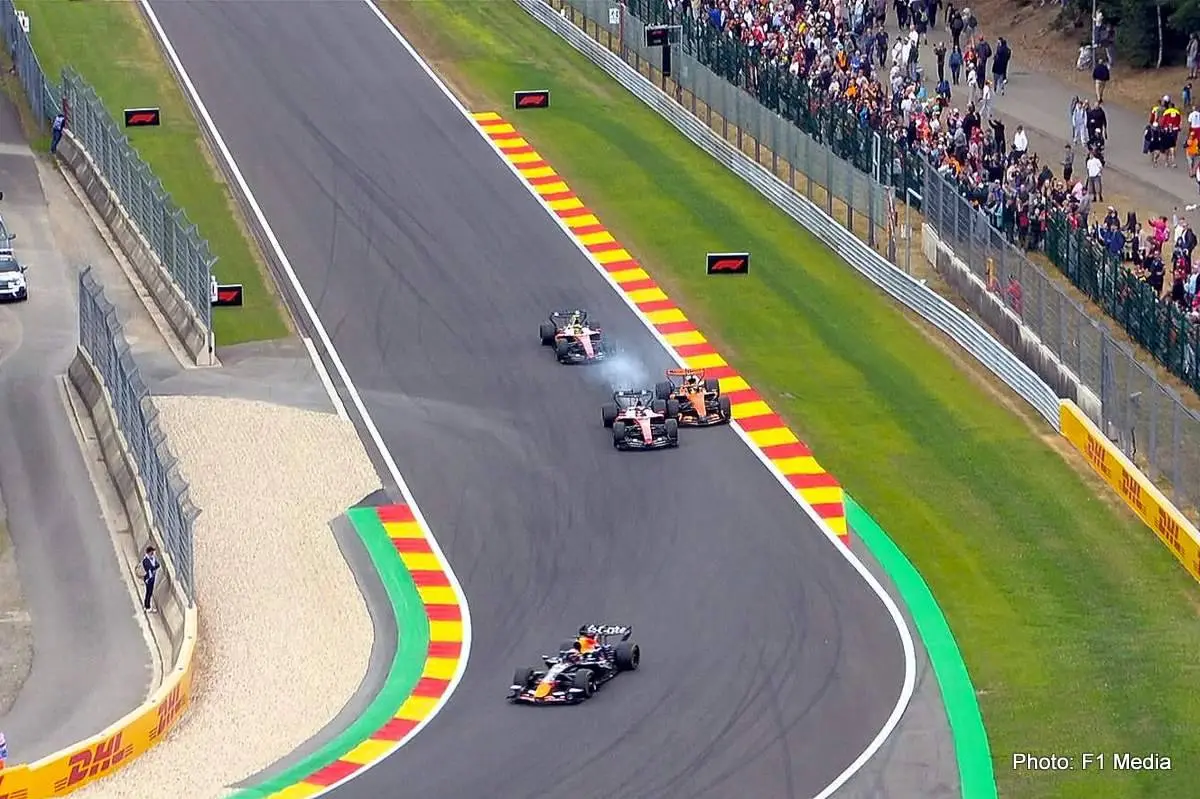
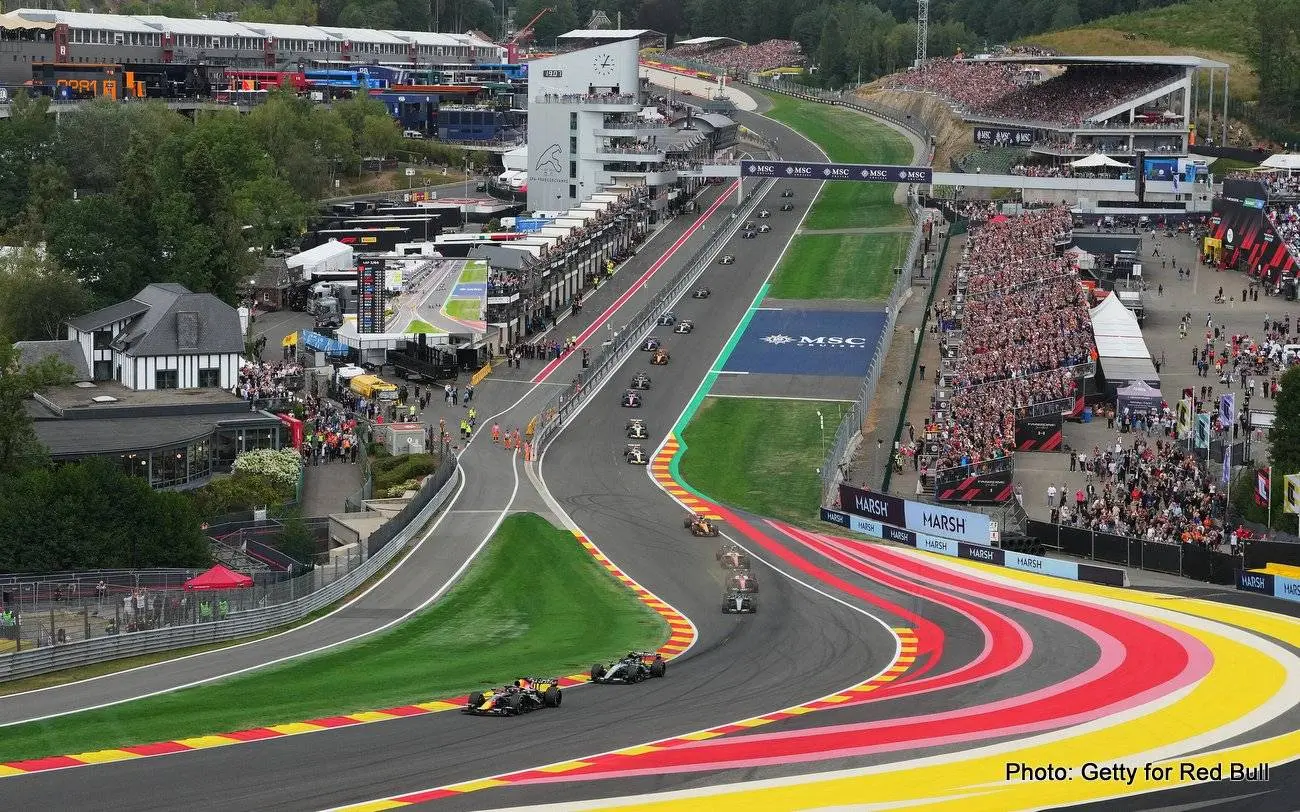
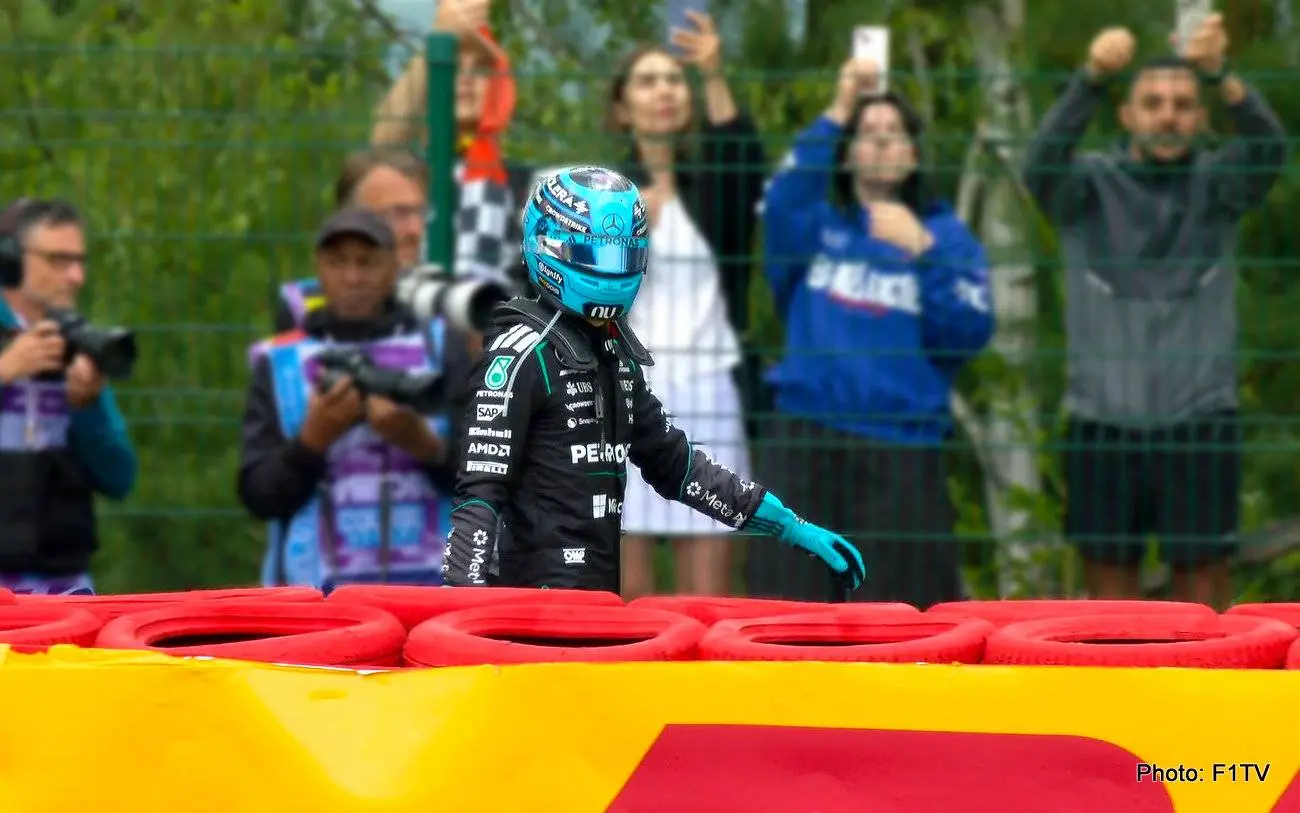
At Spa-Francorchamps, the weakness of Pirelli’s wet tyres was painfully obvious. In a true competition environment, no manufacturer would dare build such a subpar product. They would be pushed to do better because someone else would be right there, waiting to take their place. That is how real innovation works.
While many use the fake cost-cutting excuse for a sport where excess is a badge of honour, there is a very valid argument that three or four F1 tyre suppliers would be less expensive, and benefit the teams more so.
It is time for Formula 1 to stop pretending this monopoly is in the sport’s best interest. It isn’t. Not for the teams. Not for the fans. Not for the racing. Not for Pirelli. Bring back the tyre war. The sport desperately needs it.
Certainly. Here's a historical synopsis of tyre manufacturers in Formula 1 since 1950, presented in a concise yet structured format, suitable for reference or editorial inclusion:
History of Tyre Manufacturers in Formula 1

1950s–1960s: The Dunlop Era
- In the early years of Formula 1, tyres were largely supplied by British firm Dunlop, with some competition from Englebert, Pirelli, and Continental.
- By the mid-1950s, Dunlop became the dominant force, supplying most teams and winning numerous titles.
- Tyre development was primitive by modern standards, with narrow treaded tyres and minimal compound variation.
1970s: The Rise of Competition
- The 1970s saw intense competition between Goodyear, Firestone, and Dunlop.
- Firestone exited the sport after 1974, and Dunlop followed shortly after.
- Goodyear became the main supplier by the late 1970s but faced new challenges from Michelin, who entered F1 in 1977.
- Michelin revolutionised F1 by introducing the first radial tyres, offering superior performance.
1980s: Goodyear vs Michelin and Pirelli
- The early 1980s featured a strong tyre war between Michelin and Goodyear, with both claiming championship victories.
- Michelin withdrew at the end of 1984, leaving Goodyear dominant again.
- Pirelli re-entered the sport in the mid-1980s, though with limited success and a smaller footprint.
1990s: The Goodyear Stronghold
- Goodyear remained the sole or dominant supplier for most of the decade.
- After 1991, Pirelli exited again.
- In 1998, Bridgestone entered and began gaining ground.
- Goodyear withdrew after the 1998 season, ending nearly three decades of involvement.
2000s: Bridgestone vs Michelin
- The early 2000s saw one of the fiercest tyre wars in F1 history.
- Bridgestone supplied Ferrari and a few other teams, while Michelin worked with Williams, McLaren, Renault, and others.
- The competition led to rapid tyre development and performance gains.
- Controversy peaked at the 2005 United States Grand Prix, when all Michelin teams withdrew due to safety concerns, tarnishing Michelin's image.
- Michelin exited F1 after 2006, citing disagreements with FIA regulations.
2007–2010: Bridgestone Monopoly
- From 2007, Bridgestone became the exclusive tyre supplier following Michelin's departure.
- While quality remained high, tyre development stagnated without competition.
- Bridgestone announced its exit at the end of 2010.
2011–Present: The Pirelli Control Tyre Era
- Pirelli returned in 2011 as the exclusive supplier, a role it retains today.
- Under FIA mandate, Pirelli was instructed to create high-degradation tyres to spice up racing.
- This philosophy was controversial, with many drivers criticising tyre performance and lack of consistency.
- Over the years, Pirelli introduced more complex compounds and construction, including the move to 18-inch wheels in 2022.
- Despite technical advancements, criticism persists over Pirelli’s wet-weather tyre performance and the impact of sole supply on strategic variety.
Latest News

Loading