The scourge of online abuse in motorsport intensifies, with drivers across Formula 1, Formula 2 and IndyCar recently targeted by waves of digital hate, often triggered by on-track incidents or team decisions.
While the problem of online abuse has festered for years, the rise in tribalism fueled by social media and the globalisation of F1 through Netflix's Drive to Survive has brought unprecedented toxicity to the forefront.
In response, several drivers have begun taking action to counteract the abuse, with the FIA also stepping in with campaigns and statements aimed at tackling the problem head-on.
Franco Colapinto, Argentina’s rising F1 prospect, was recently caught in the middle of fan abuse after a practice incident with Yuki Tsunoda at Imola.
When some Argentine fans targeted Tsunoda online, Colapinto publicly urged restraint: “They are extremely passionate, and they are always very harsh on other people. They have to give respect.”
Tsunoda did not respond publicly, but several Argentine fans posted apologies on his Instagram. The FIA, along with Alpine, condemned the abuse.
The incident prompted a broader response from FIA, Formula 1 and motorsport's governing body, which posted a firm message on Instagram: “The recent rise in online abuse against athletes, teams and officials across our championships is unacceptable.
"We condemn any form of hate speech and will continue working with stakeholders to ensure racing remains a safe and respectful space.”
Even the big stars of Formula 1, Verstappen, Hamilton, Norris also victims

Meanwhile, Lando Norris revealed he’s scaled back his social media use, calling it a “waste of time and energy,” after years of abusive comments. F2 championship leader Alex Dunne also stepped away from online platforms following a Monaco sprint race crash in May: “It was really bad and quite upsetting,” he said, explaining why he deleted apps from his phone.
Max Verstappen has long been a lightning rod for online hate. During his heated 2021 title battle with Lewis Hamilton, Verstappen received death threats and vitriol. In a 2024 podcast, he remarked, “There are just idiots on social media… You ignore it. That’s the best way.”
Hamilton, for his part, has been a consistent advocate for reform. He joined a social media boycott in 2021 and remains vocal about inclusivity in F1, recently urging the sport to distance itself from “archaic voices.” As the only Black driver in the sport, Hamilton has faced repeated racist abuse—particularly after the 2021 British Grand Prix crash with Verstappen and the racial slur used by Nelson Piquet in 2022.
Nicholas Latifi became a prime example of the emotional and physical toll online abuse can inflict. After crashing at the 2021 Abu Dhabi Grand Prix, he was blamed for handing Verstappen the title and received death threats. Latifi later admitted to hiring a bodyguard for a London outing due to security concerns.
Jack Doohan, dropped by Alpine in favour of Colapinto at Imola this year, was targeted after a fake Instagram story circulated, falsely attributed to his father. “Please stop harassing my family,” he pleaded on social media.
The scourge of online abuse is global across all sports

Callum Ilott was hounded by fans of Agustín Canapino after a crash at the 2023 Long Beach GP. He responded on Twitter to an Argentine broadcaster but later regretted it, acknowledging it had only amplified the hate.
Fellow IndyCar driver Pato O’Ward, often the subject of heated fan debates, urged restraint after the same race: “Choose your words wisely,” he posted online. His call echoed earlier sentiments from Hamilton and Verstappen—calling for a cooling of tempers and a focus on respect.
Lance Stroll has spoken of receiving “insane hate” throughout his career—often accused of being in F1 only due to his father’s ownership of Aston Martin. Esteban Ocon, a frequent target in 2025, has been criticised more aggressively than peers like Norris, despite similar on-track incidents.
Liam Lawson also found himself in the crosshairs after replacing Sergio Perez at Red Bull in 2024. Perez, Alonso, Ricciardo, and Tsunoda fans collectively lashed out at the New Zealander, branding him “Slowson” on social media. Lawson has not responded publicly, but a string of strong performances—most recently in Monaco—have answered critics where it counts.
The impact on drivers' mental health is becoming more visible

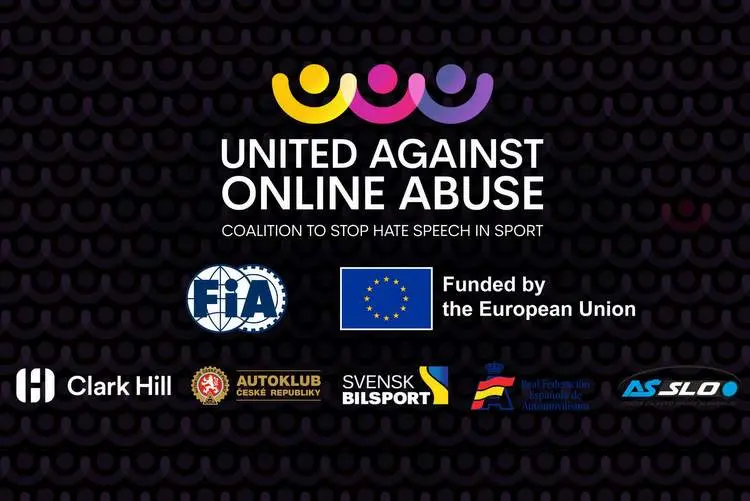
The FIA’s United Against Online Abuse (UAOA) initiative, launched in 2023, continues to gather support. Fernando Alonso has praised the campaign, and this year, it secured €400,000 in European Commission funding to build a Pan-European framework against online hate.
A joint statement from F1, F2, F3 and the FIA in June reaffirmed that “disrespect, harassment and hate have no place in sport.” The statement followed renewed abuse around the Imola weekend and was interpreted as a gesture of solidarity with Colapinto, Tsunoda, and others recently affected.
The UAOA campaign aims to work with governments and social platforms to identify and remove abusive content, with an emphasis on education and legal accountability.
The impact on drivers' mental health is becoming more visible. Latifi, Dunne, Ilott, and others have spoken of feeling overwhelmed. Many now choose to disengage from social platforms altogether—a defensive but necessary response to relentless online hostility.
Despite scattered efforts, the problem remains entrenched. Motorsport’s growing global reach has brought in new fans but also heightened tribalism. Unless fans, teams, and platforms take joint responsibility, the sport’s stars will remain at risk.
Online abuse in racing is no longer just a fringe issue—it’s a cultural crisis with real-world consequences. The fightback has begun, but the road ahead is long.
Latest News

Loading

