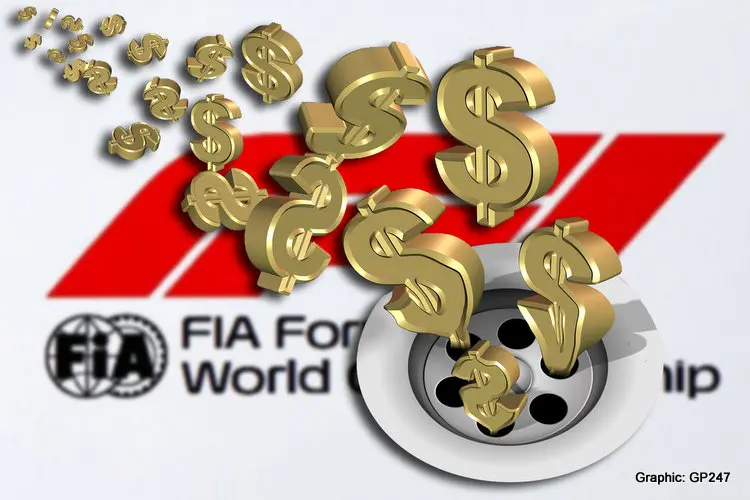
The elephant in the room every time Formula 1 stakeholders meet is the Budget Cap, or lack thereof or whatever is being planned by rule makers plotting the future of the sport while trying to reign in expenditure.
Ferrari, Mercedes and Red Bull outspend the other seven teams by substantial margins, hence they dominate the sport while the minnows battle for the crumbs.
In the modern era of Formula 1 - the abovementioned three teams battle it out for top honours - and at the same time, Formula B or Formula 1.5 is a race within the Grand Prix to be Best-of-the-Rest which no one really cares about.
From a layman's perspective imposing a mandatory Budget Cap may sound like an ideal scenario but the harsh reality is that the concept is bereft with problems, none least how to monitor what the teams spend.
However, surprisingly enough the soundbites that have emerged up until now have all been very positive in this regard suggesting progress is being made as 2021 looms closer.
But outspoken Red Bull consultant Helmut Marko has poured cold water on suggestions that a Budget Cap is close to being agreed.
Marko told Auto Bild, "We are still a long way from an agreement... Basically, we are with Ferrari and Mercedes in terms of the numbers but the other teams remain very critical, but nothing is clear because we still have to discuss which departments of a racing team are covered by the budget cap."
The report cites F1 chief Chase Carey 'leaking' a Budget Cap road map:
- 2021 Budget Cap $180-million;
- 2022 Budget Cap $165 million;
- 2023 Budget Cap $130 million;
Liberty Media is pushing the no contest narrative that the gap between the haves and the have-nots is too large, an easy sell to the masses by Carey and his capos.
But narrowing the gap by imposing a Budget Cap is hardly the solution for that first obvious reason: how do you police this effectively? Possible? Impossible? Open to shenanigans?
Marko explained, "Control is very difficult to accomplish, how do you know which computer in the end is not part of a network of a car company with a team in Formula 1?"
Another big question mark inked into the Budget Cap dossier is how do you punish offenders?
For example, Ferrari or Mercedes are bust spending one dollar more than the budget cap in place, what will officialdom decide:
- Exclude them from the season following when the offence was committed? No Ferrari or Mercedes or both on the grid could wound the sport beyond repair.
- Big monetary fine? How much? Too little (eg. $100-million) would make it worth a big team's while to bust the cap? Too much (eg. $250-million) and they may pack their toys and leave.
- Exclude them from the results from the season in which offence was committed? A realistic solution which also hits the team in the pocket...
But, the downside is with the season long over they will have to wait until midnight on 31 December to begin the audit of all teams, thereafter how long will it take before auditors sign off on the financial season review they make of each team?
An auditor mate of mine 'thumb-sucked' some numbers for the purpose of this article and calculated that a small F1 team audit could take a month in a rush, a big team audit could take double that, if not triple the amount of time.
Then, for argument's sake: if a team is found guilty, surely that will be met with an appeal, probably a complete re-audit, a process that could take months if not years!
Marko suggests that the only way to prevent teams from spending over the Budget Cap is governed by what can be developed on a car as per the rules, in other words making F1 cars less complicated without compromising the spirit of the sport is his idea for the way forward.
He concluded with a question that warrants asking, "Can you imagine dictating to a club like Bayern Munich how much money they can spend on new players in one season?"
Big Question: Is a Budget Cap the solution for F1?
https://www.grandprix247.com/2017/12/08/prost-ban-wind-tunnels-because-budget-cap-wont-work/
Latest News

Loading