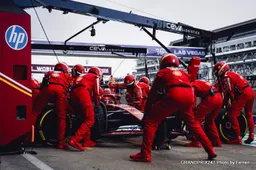
Formula 1 has been around for more than 70 years, and its unusual inventions have changed the world of motor racing and car design forever.
Since its first season in 1950, F1 has seen over thirty different constructors win, with Ferrari being the most successful team, with more than 240 victories.
The changes in F1 cars have been drastic ever since the Alfa Romeo 158 was first seen as cigar-shaped in 1950 to what they are now. These changes not only enhanced performance and top speeds ranging from nearly 180 mph during the 50s to over 200 mph today but also influenced road car design.
Other changes are seen, especially in aerodynamic science, material engineering, and fuel economy. Here are the top three cars that have made major impacts in this evolution.
1. Lotus 79

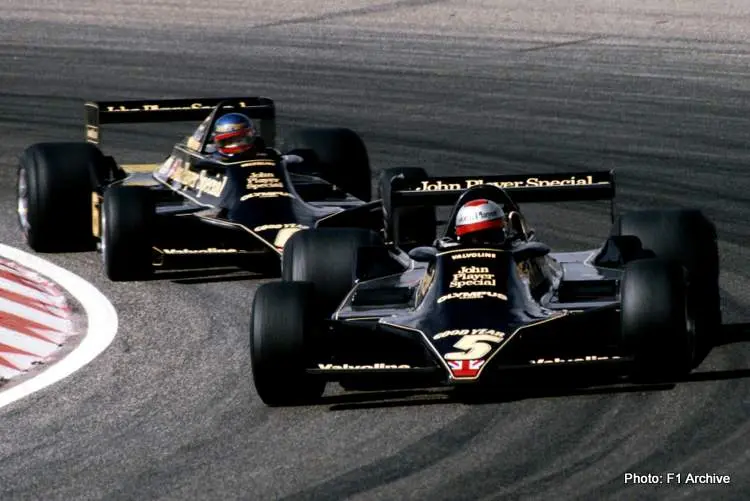
The Lotus 79, introduced in 1978, was a game-changer in Formula 1 design. For many years, this concept dominated F1 as it became the first car to exploit ground and effect aerodynamics fully. This reduced the car’s drag and ground clearance and increased cornering speeds significantly.
The Lotus 79’s innovative design permitted it to produce immense downforce without attracting any penalty from traditional wings, hence giving it a great advantage over its competitors.
The Lotus 79’s impact went far beyond its immediate track success. After introducing ground effect technology in this vehicle, other teams quickly adopted similar concepts.
Even today, techniques first used in designing this motorcar still influence modern race car aerodynamics. Some aspects of its philosophy are evident with present-day road automobiles, especially through the employment of diffusers under bodies for improved steadiness and efficiency.
2. McLaren MP4/4

The McLaren MP4/4 dominating the 1988 season, is regarded as one of the most successful F1 cars ever built. It has slimline bodywork lying low and was propelled by an efficient Honda V6 turbo engine, which made it almost unbeatable.
Gordon Murray’s brilliant design enabled it to perform exceptionally well. Moreover, Ayrton Senna’s and Alain prost’s piloting skills were other factors that contributed to its fascinating performance.
It’s worth noting that the reliability of the MP4/4 is compared to some extent with enforcers such as Florida Lemon Law, which guards consumers against defective vehicles. In just the same manner as this law guarantees integrity and trustworthiness in road vehicles, MP4/4 set new records for reliability and performance in F1.
The ultra-low body profile and tight packaging of its components became a standard for future F1 cars, emphasizing aerodynamic efficiency and weight distribution. The car's success also amplified the significance of the chassis-engine relationship. Thus enhancing closer working relationships between teams and engine manufacturers.
3. Ferrari F2004

The F2004 model was the ultimate V-10 era engineering in Formula 1, driven by Michael Schumacher and Rubens Barrichello. It was a scarlet car that won 15 out of 18 that season.
As a result, Schumacher became the world champion seven times marking his last career as well. This Ferrari’s success can be attributed to its unique aerodynamic design, powerful engine, and reliable traction control system.
One of F2004’s greatest contributions to F1 design is its refined strategy for managing airflow around the vehicle. Their complex bargeboards and front-wing designs raised new limits for aerodynamic details.
These ideas have since evolved into unique aero packages seen on modern F1 cars. Moreover, though now outlawed in F1 racing, the traction control system used in F2004 developed electronic driver aids that enhance road safety and performance for ordinary motorists.
Endnote
Each of these iconic F1 cars was a revolutionary step forward in the development of car designs and automotive technology. Their inventions were not only successful on race tracks but also influenced road vehicle manufacture, which enhanced efficiency, safety, and performance for motorists.
Formula 1 has continued to change, with new regulations coming into effect in 2026 and technologies cropping up. Wwe are reminded of these timeless machines that show how the sport has been able to innovate and influence the bigger picture in the automobile industry.
Latest News







Loading