Senna to Patrick Head: You drive this f@cking thing! [aka Williams FW16]
F1 NewsSunday, 18 August 2024 at 07:44
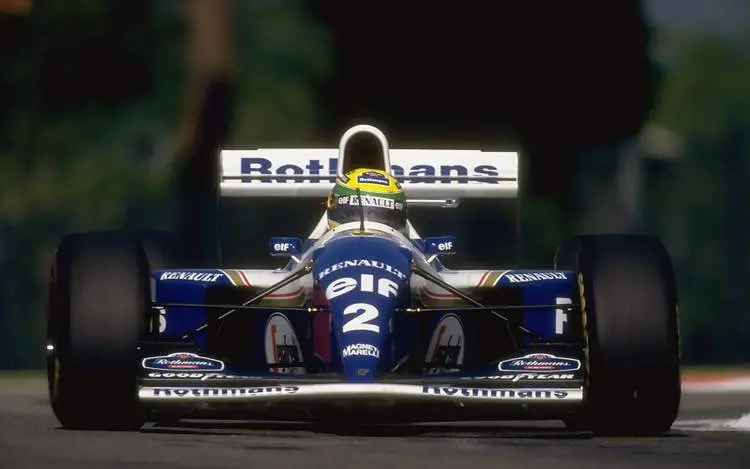
Few people in Formula 1, if any, worked as closely with legends Ayrton Senna and Alain Prost as Jo Ramirez. After all, he was at McLaren during the years of that great rivalry and recently revealed some previously unknown details about his time at the heart of this epic tale.
Ramirez was in the trenches of a 'civil war' within McLaren when Ron Dennis paired the greatest drivers of that era - Prost and Senna - in the same team. Often, Jo was called on to broker peace, offer a shoulder to cry on, and observe the two rivals as few others did.
Given how much has been written about the great Ayrton Senna, is there more to know about the Brazilian F1 driver? Believe it or not, the answer is a resounding "Yes!"
In an in-depth interview with , Mexican F1 veteran Ramirez (83) recalled gems from his career, shedding more light on how the triple F1 World Champion was wired and how he approached racing during those McLaren glory days: "Ayrton Senna was a very, very special person.
"I have never seen anyone in my life who was so involved in his work. The dedication he put into what he did was tremendous. It's been 30 years since his death, and people haven't forgotten him. I don't think there are very many drivers on the current grid who were born before that happened.
"The fact that he still has this aura with people is incredible. It's admirable. And not just because of how he drove, but also because of who he was. All of us who had the pleasure, the luck, of working with Ayrton learned something from the way he led his life inside and outside the car.
"He was so tidy... you have no idea how tidy he was! He had everything perfectly organized in his briefcase - his plane tickets, money divided into Swiss francs, German marks... He was an incredible person.
"Senna had charisma, a personality, an electricity - something that, when you were in the paddock and saw people passing by, you would say: 'Oh, Nelson Piquet, Keke Rosberg, Nigel Mansell... and wow! Ayrton Senna!' It gave you goosebumps. If he walked into a room, people listened to him."
The pursuit of excellence came with challenges for those around Senna

Ramirez recalls working with the Brazilian: "Phew! It was not easy to work with Ayrton Senna. Not at all! We knew that we had to give 110%, but when he was in the car, he would give 150%. So, it was our pleasure to do whatever he asked of us. It was a pride to have spent those years with him."
The Senna-Prost rivalry remains one of the greatest and most intriguing of all time in F1. Ramirez was in the firing line from both sides as he tried to keep harmony between the two men. Although they later became closer after Alain retired, their teammate years were not an example modern F1 teams should try to replicate.
According to Ramirez, he advises against pairing such high-level drivers in the same title-winning team: "I wouldn't do it because it's very difficult. I wouldn't repeat a Senna-Prost scenario. The experience we had at McLaren makes people think twice. I wouldn't do it because the egos of these sportsmen at this level are very big, and it's difficult.
"For example, Ayrton always had a fear. He told me: 'Alain will always have the best car because he's been at McLaren longer. He'll always have the best engine because his connection with Honda is very strong.'
"And then the time came when we received the engines and told them: 'These are the 5 engines we're going to use in this Grand Prix.' In one race, Senna's chief mechanic chose his engines, and in the other, Prost's chief mechanic did. And the mechanics didn't even have a clue which one was better.
"There is always a little variation between engines - about 5 or 8 horsepower difference - but there was no longer any suspicion or controversy. They weren't going to complain anymore. So they knew there was no favouritism. 'These are the five engines we are going to use in this Grand Prix.' In one race, he would choose one chief mechanic, and in the next, the other."
Senna: Just give me the same car as Prost's, and I'll adapt to it
![Ayrton-Senna-Alain-Prost ramirez Senna to Head: You drive this f@cking thing! [aka Williams FW16]](https://r.testifier.nl/Acbs8526SDKI/resizing_type:fit/width:1280/plain/https://s3-newsifier.ams3.digitaloceanspaces.com/grandprix247.com/images/2015-06/ayrton-senna-bra-und-teamkollege-alain-prost-fra-2-001-6925b8ec838a3.jpg@webp)
Ramirez continued: "As for the difference in the chassis, it was up to them to find the right setup. Ayrton was always afraid to change anything in the car's settings because he thought it would take away from what he had already achieved.
"Then, there came a time when he changed very few things. I told him: 'Make a big change... If you make small changes, you won't notice them.' He told me: 'Don't worry, I will notice them.' But they weren't changes that were going to make a big difference.
"In the end, he told me: 'Just give me the same car as Prost's, and I'll adapt to it.' And that was his virtue - if he didn't like the car and it wasn't to his liking, he would change his way of driving and adapt to the car."
How would Senna react to modern Formula 1? Ramirez speculated: "Imagine… when his accident happened, the tracks were changed, the rules were changed… everything was turned upside down. Surely Ayrton would be turning in his grave seeing this because he didn’t want all this to happen. Imola was a beautiful circuit; now it’s a circuit full of chicanes, and the fast corners are gone. Too much safety.
"Nobody wants to see a driver crash, but they want the track to be difficult. We’ve lost all that. Now drivers take more risks because there are more escape routes. On circuits like Monza, you can go off track anywhere and not hit a barrier or anything. And now they think about everything more…
"When Senna had his accident, the tracks and the rules were changed... everything was turned upside down. Surely Ayrton would be turning in his grave seeing that because he didn't want all this to happen," ventured the Mexican.
Ramirez: It was something very close to the limit that broke.

Of the tragic May Day at Imola during the 1994 San Marino Grand Prix, Ramirez spoke about the fatal crash: "The reason for Ayrton's accident is known, but it has been kept under wraps. If the accident had happened in another country, perhaps there would not have been so much insistence on finding a reason.
"In Italy, there had to be a reason, and you had to dig and dig until you found out why he died. The trial process lasted 10 years, and in the end, they said 'ok.' But whatever was discovered was not going to bring him back to earth. So... why make such a big deal out of it? The reason doesn't matter."
What did happen, in Ramirez's view: "It broke because they changed something on the steering wheel (TBC). It was very difficult for him to drive that car. It was a very difficult car. The same for Prost.
"When Prost came to Williams in 1993, he asked for some changes, and they told him that they couldn't change it, that that was the car. And when Senna came, a guy with much more character, he told them that he couldn't drive the car like that.
"Patrick Head told him: 'Well, that's what we have, that's the car.' So Senna replied: 'You drive this fucking thing!' Those were his words. So, they had to change it. And that change didn't work. It was something very close to the limit that broke," reckons Ramirez, in the Mundo Deportivo
Latest News
Loading