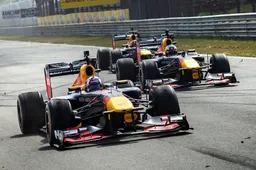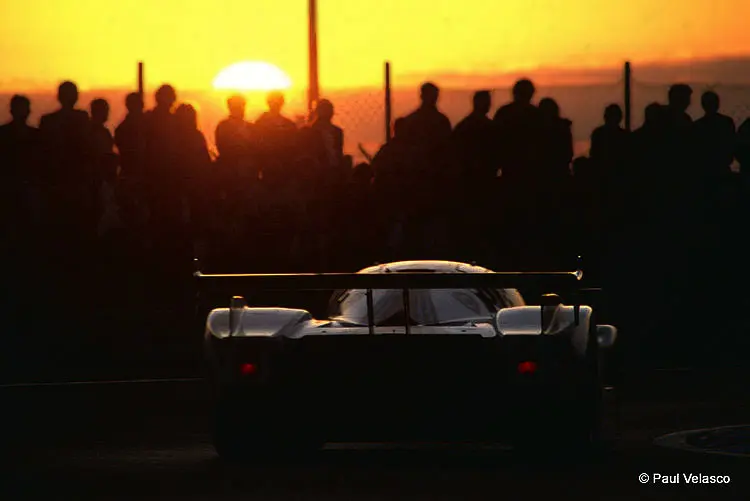
In recent days readers will have noticed that we have for the first time injected regular 2018 Le Mans 24 hours coverage in the build-up to this year's race weekend at the world's most famous endurance race, this is a Formula 1 site so what's happening?
At last count, 19 Formula 1 drivers will be in action this weekend at Le Mans, most notable being current McLaren driver Fernando Alonso and 2009 Formula 1 World Champion Jenson Button. For this alone, the race weekend alone merits our attention.
For me personally, Le Mans is a very special race. I have had the privilege of working as a photographer on several occasions at the great race, in the eighties, nineties and noughties. It's a visual paradise and an epic event to cover.
In the seventies, when my interest in the sport was piqued, Formula 1 and endurance sportscar racing existed side by side.
In those days it was common for teams, such as Ferrari, to field teams in both series with equal vigour and commitment. Drivers were thus used by teams to race in both categories.
Jacky Ickx was for many years a Ferrari driver who headed their Formula 1 programme while in tandem spearheading their sportscar efforts. Arturo Merzario and Clay Reggazoni had similar deals at the time.
This is just an example in an era when such arrangements were common among drivers and teams, at times Formula 2 was also part of a driver's annual schedule.
Their programmes were equally important, although there was a period in the early seventies when Enzo Ferrari favoured their sportscar campaigns above F1 and even threatened to pull his team from the top flight until he was convinced to do otherwise by a young Luca di Montezemolo.
During that era, sportscars or prototypes, or whatever you want to call them, thrived alongside Formula 1. At Ferrari, the synergy between the two teams was such that mechanics and equipment were shared by both operations.
Furthermore their cars were powered by the iconic flat-12 engine that served Maranello well in both disciplines during that era. A detuned version of their Formula 1 engine was bolted on to the back of their sportscar, in effect killing two birds with one stone.
In the eighties, prototype, sportscar and GT based endurance racing was at its very peak, the Group C series a proper threat to Formula 1, which a certain Bernie Ecclestone identified. Once he and his cahoots took over the FIA, in a
coup d'etat which overthrew FIA dictator Jean-Marie Balestre, things would change.
The new cabal led by Ecclestone began a systematic programme to snuff out any competition to Formula 1. Down the drain went many series including Group C. He even tried to buy MotoGP but they refused him - many believed at the time that the purchase would be to simply marginalise the two-wheel threat to his baby... Formula 1.
Since then the Automobile Club de l'Ouest kept endurance racing alive through the importance of their Le Mans 24 Hour race. The genre of racing survived and has, in fact, enjoyed a boost in popularity and exposure in recent years.
What the future holds for WEC relative to Formula 1 is uncertain for now, but the fact that Chase Carey was honorary starter last year may have marked a new era in co-operation between the two sides.
In an ideal world it would be great to have a strong World Endurance Championship (WEC) running side-by-side with Formula 1, complimenting instead of competing with one another.
Formula 1 should and will, of course, remain the pinnacle, but the WEC could be the proving ground for manufacturers or teams, and even drivers, contemplating a foray into Formula 1.
For this to happen the idea that FIA president Jean Todt has to create a single engine formula that would allow engines to be run in a mode for endurance racing (WEC) and a sprint mode for Formula 1.
This would create a scenario where manufacturers could begin a motorsport project by building an engine which they can use in the WEC to test and develop to the point that it could evolve into a Formula 1 engine.
By keeping the power units relevant and cost-effective, while making them eligible for WEC or F1 or both, manufacturers with racing aspirations would have the option of a fully fledged race team programme or merely as an engine supplier to teams, or a bit of both.
This year Toyota is the only manufacturer at Le Mans with their Gazoo Racing effort. The race is theirs to lose as it is the best chance they have ever had to grab the prestigious winners trophy that has eluded them, very cruelly too.
In a fictitious (for now) era of engine compatibility for both WEC and F!, would it not be great to have Mercedes, Renault, Ferrari and even Honda lining up on the grid this weekend alongside Toyota with Porsche, Audi and the likes still competing in the series?
Imagine an LMP1 class including: Silver Arrows shared by Lewis Hamilton, Valtteri Bottas and Esteban Ocon on the grid alongide the Ferrari LMP1 of Sebastian Vettel, Kimi Raikkonen and Charles Leclerc with the Red Bull Honda of Daniel Ricciardo, Max Verstappen and Brendon Hartley, and the Renault of Nico Hulkenberg, Carlos Sainz and Lando Norris.
How cool would that be? Realistic, not likely. But worth putting it out there and sharing the dream: yes Formula 1 is the pinnacle but sportscars can be the serious feeder series for drivers, teams and manufacturers.
The two disciplines have a place side-by-side if the genuine interests of the sport as a whole are taken into consideration by the powers that be, namely: the FIA and Formula One Management.
It is hoped they realise that the Ecclestone-style carpet bombing of other series is counter-productive as Formula 1 needs motorsport as much as motorsport needs Formula 1.
In closing, it needs to be mentioned that these LMPs are super sexy as have been their iconic predecessors and that's one of the reasons this weekend will be packed with Le Mans action.
Big Question: Does Le Mans coverage we have on grandprix247.com interest you or not?
Latest News
Loading